
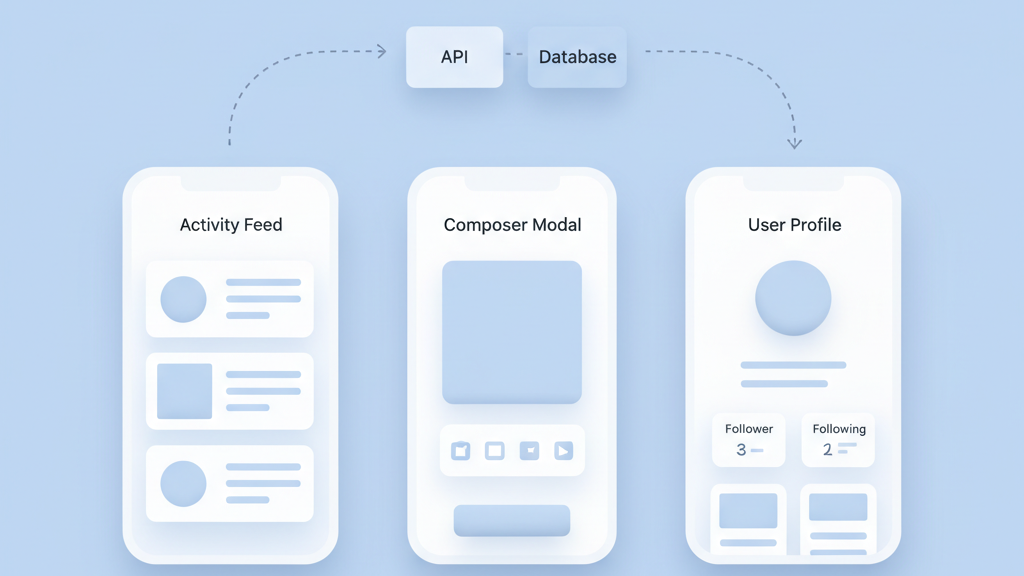
FlutterFlow for social media app MVP makes rapid prototyping practical for startups that need to validate product market fit fast. This guide walks founders and product managers through realistic choices, common pitfalls, and concrete steps to move from idea to tested release. Many startups miss this when they try to build everything at once. I will cover design patterns, data strategy, third party integrations, testing, and a pragmatic launch plan. The aim is not to promote a tool blindly. The aim is to help you decide when this approach fits your constraints and when to pick custom engineering. Expect candid trade offs and checklist style recommendations you can use in the next sprint. If you want a related deep dive, read How To Validate Market Fit FlutterFlow travel booking app MVP product strategy and validation service.
Why Choose a Visual Builder
Visual builders reduce keyboard time and let teams iterate faster on flows that matter most. For early social features speed beats polish. You can validate whether users share, follow, and engage before investing in custom UI or complex backend logic. That said visual tools impose limits on performance and custom behavior. Many founders underestimate these constraints. Choose a visual builder when your core hypothesis is about interaction patterns and network effect rather than unique animations or heavy background processing. Use short feedback cycles, and treat the output as a prototype that will evolve. Keep product goals narrow. A tight scope lets you test retention and viral loops without building a monolith first. For a practical follow-up, see How to Choose the Right MVP Development Company for Your Startup’s Unique Needs.
- Validate interaction patterns quickly
- Keep scope focused on core hypotheses
- Expect platform limitations early
- Plan for future migration
- Use iterative user feedback
Designing Core Social Flows
Design the minimum flows that prove social value. Typical flows include sign up, composing a post, feed consumption, following, and basic notifications. Prioritize the feed experience. A good feed shows why people come back. Draft simple wireframes and map user actions to data needs. Test the composer first with a small pilot. Many teams forget to test edge cases like failed uploads or rate limits. Keep UI elements standard so you can reuse platform components. Aim for one to three core tasks that a user must complete to prove retention. Use qualitative interviews alongside analytics to understand friction points and iterate the design based on that feedback. If you need implementation support, explore Mobile app development.
- Map actions to data requirements
- Prototype the feed early
- Test the composer with real content
- Design simple follow and discovery flows
- Collect qualitative and quantitative feedback
Data Model and Authentication Strategy
Pick a data model that supports scale but stays simple to implement. Start with a normalized model for users, posts, and relationships. Use a managed backend or serverless database to avoid ops overhead. Authentication should be social and email based, and you should wire roles early for moderation. Many startups ignore moderation until scale forces it. Add soft deletes and audit fields so you can recover content and investigate abuse cases. Think about queries you will run most often and design indexes accordingly. A small schema change later is fine but avoid reinventing feeds that require many joins. Aim for a model that supports simple feed queries and efficient follower lookups. Teams moving from strategy to execution can review Backend API development.
- Model users, posts, and relationships clearly
- Use managed databases to reduce ops
- Support social logins first
- Plan for moderation and soft deletes
- Optimize for common feed queries
Integrations and Third Party Services
Integrations unlock features without building them. Use CDN services for media, authentication providers for login, and analytics for behavior tracking. Payments and messaging can be added with managed APIs so you avoid building complex subsystems early. But each integration adds cost and debug surface. Many founders sign up for multiple services and then struggle with billing and latency. Choose services that offer simple SDKs and predictable pricing. Document API contracts and add health checks. Keep a single source of truth for environment variables and secrets. If you rely on external services plan for graceful degradation when they fail.
- Use CDNs for media delivery
- Pick analytics for user events
- Choose auth providers with good SDKs
- Document API contracts early
- Prepare for graceful degradation
Performance and Platform Limits
Visual builders can be performant for many use cases but have known ceilings. Measure response times for feed loads, media uploads, and navigation. Use caching to reduce redundant reads and push heavy work to background jobs when possible. Simulate real world load before launch so you do not hit throttling surprises. Many tools apply hard limits on concurrent operations and database writes. Design for graceful failures and clear UI messages when limits are reached. Plan a fallback path that keeps the app usable if platform limits are encountered. Performance tuning early avoids painful migrations at scale. A related guide worth reviewing is MVP Development for Social Media Platform – Launch Your Idea Faster.
- Measure feed and upload latencies
- Use caching to reduce reads
- Simulate expected user load
- Design clear failure states
- Plan migration paths for scale
Testing and Launch Readiness
Testing is more than QA and bug fixes. Validate user flows with a closed pilot of real users. Track activation, day one retention, and core action funnels. Run usability sessions to see where users hesitate. Include edge case tests for network failures and media retries. Prepare monitoring dashboards for key signals and set alert thresholds. Many startups launch without monitoring and then scramble to triage issues. Have a small runbook for common incidents and assign on call responsibility for the first two weeks after launch. Use staged rollouts to limit blast radius and gather feedback iteratively from early cohorts.
- Run a closed pilot before public launch
- Track activation and retention metrics
- Test edge cases for uploads and network errors
- Create monitoring dashboards
- Use staged rollouts for safer launches
Cost Trade Offs and Roadmap
Estimate costs across hosting, third party services, and platform licensing. Visual builders reduce initial engineering costs but can increase recurring fees and vendor lock in. Build a three month and twelve month cost model with conservative user scenarios. Many founders underprice operations after launch. Build a simple roadmap that separates must have features from nice to have features. Allocate budget for migration work if you outgrow the platform. A realistic roadmap aligns stakeholder expectations and helps you make rational choices about when to invest in custom engineering. Keep short feedback loops and revisit priorities monthly.
- Model three month and twelve month costs
- Plan for vendor lock in risks
- Separate must have from nice to have
- Budget for future migration work
- Review priorities frequently