
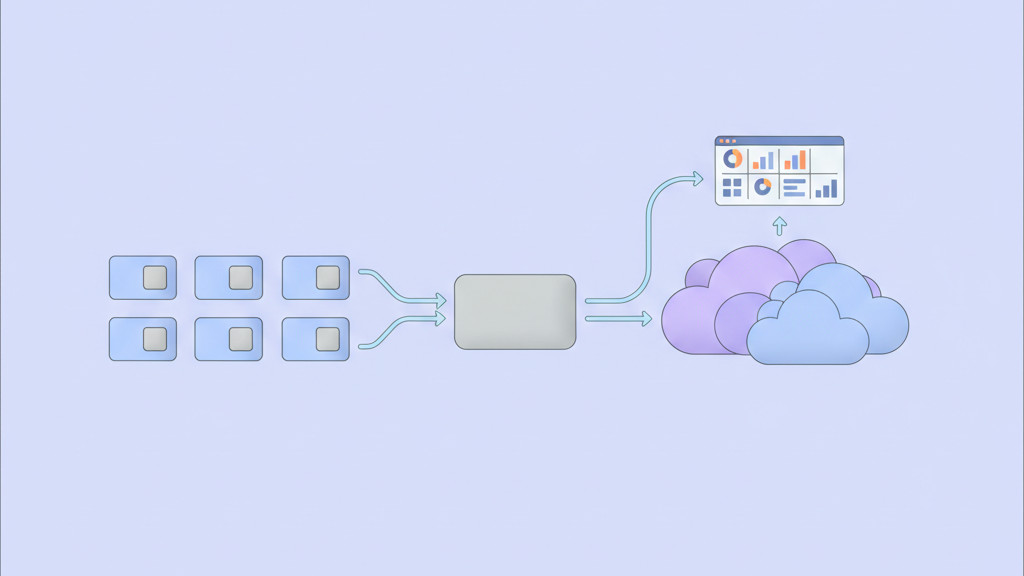
This guide walks founders and product managers through IoT device application MVP connectivity and data strategy with clear choices and trade offs. You will get a pragmatic path from sensors to dashboard and learn where to save time and where to invest. Many startups miss this and end up rebuilding core pieces later. The goal is a lean but reliable MVP that proves product market fit and keeps future scale predictable. If you want a related deep dive, read Uncovering the Untold Tactics: Navigating MVP Iteration for Product-Market Fit.
Start With Clear Connectivity Goals
Start by writing what the MVP must deliver for users and map those needs to data and connectivity. Decide if the product needs realtime control, near realtime alerts, or periodic telemetry. Each requirement changes latency cost and complexity. Sketch the minimal data points per device and a sample payload. Then estimate data volume over days and months. Many teams skip this step and then pay unexpected cloud bills or hit bandwidth limits. A clear connectivity goal helps pick radio technology, message routing, and edge processing needs. It also sets realistic battery life and hardware constraints. Keep the scope tight and test with three to five representative devices. That gives credible data for the next architecture and pricing decisions. For a practical follow-up, see Real-Life Case Studies: The Power of MVP Development for Startups.
- Define user facing requirements first
- List minimal telemetry per device
- Estimate data volumes over time
- Test with a small device set
Design a Minimal Data Model
Design a compact data model that captures the essential state and events for the MVP. Avoid dumping raw sensor streams unless you need them for validation. Choose typed fields for common values and a small optional payload for diagnostics. Use versioning in your schema so you can evolve fields without breaking old devices. Plan for timestamps and device identifiers that survive network hiccups. Think about indexing fields you will query often on the dashboard. Many founders assume they can fix data models later but reworking schemas across devices is costly. Keep the model small and document it in a single README or lightweight spec. That reduces ambiguity for firmware and backend teams and shortens iteration cycles. A related guide worth reviewing is How To Budget An MVP For Early Teams (enterprise app MVP pricing for small businesses USA).
- Keep the model compact
- Include device id and timestamps
- Version the schema from day one
- Document fields for firmware teams
Pick Networks and Protocols Wisely
Choose the network and protocol that fits the product constraints and business model. If the device is mobile use cellular or low power wide area options. For fixed deployments Wi Fi or Ethernet may be cheaper. Select protocols that match latency and battery goals. MQTT suits telemetry and pub sub. HTTP is simple for occasional uploads. CoAP or lightweight custom UDP can reduce overhead for constrained nodes. Think about roaming devices and handoffs between networks. Also check regional operator support and certifications early. A wrong network choice can force hardware changes later. Build a short matrix of signal type cost range latency and power to compare options. This makes trade offs explicit and helps partners evaluate feasibility quickly. If you need implementation support, explore Mobile app development.
- Match network to mobility and power needs
- Use MQTT for streaming telemetry
- Prefer simple protocols for early builds
- Evaluate operator support in target regions
Architect The Backend For The MVP
Design a backend that can ingest device telemetry, process it, and surface useful views without over engineering. Start with a simple ingestion pipeline that validates schema and stores raw events in a cost effective store. Add a separate processed store for time series or aggregated metrics used by the UI. Use serverless or managed streaming to reduce ops overhead in the early phase. Implement a lightweight device registry for metadata and firmware state. Keep analytics and heavy processing on a separate path so it does not block real time alerts. Many teams couple everything into one database and later face scaling bottlenecks. Build clear boundaries between ingestion, processing, and presentation to make future scaling predictable and cheaper. Teams moving from strategy to execution can review Backend API development.
- Separate raw ingestion from processed stores
- Use managed services to reduce ops
- Create a simple device registry
- Isolate heavy analytics from real time paths
Make Security Practical Not Perfect
Implement security controls that protect data and customer devices while staying realistic for an MVP. Use mutual authentication or per device credentials for any network access. Encrypt data in transit with TLS and at rest where possible. Plan for secure key provisioning and a revocation process for compromised devices. Log important security events centrally and set simple alerts for anomalies. Avoid long lived master keys baked into firmware. Many startups delay security and then face lost trust or compliance issues. Focus on controls that map to real risk for early customers. Build a plan to harden and audit these controls as you scale. A documented security checklist will help with sales conversations and pilot agreements.
- Use per device credentials
- Encrypt in transit and at rest
- Plan key provisioning and revocation
- Log and alert on security events
Test, Update, And Automate Device Workflows
Create a test harness that exercises real network conditions and failure modes. Simulate poor signal battery drain and firmware crashes. Automate end to end tests from device to dashboard. Build a robust over the air update path that can deliver small incremental changes and supports rollbacks. Use signing for firmware and a staged rollout to reduce risk. Many founders ignore OTA and then struggle to fix bugs in the field. Also automate metrics collection for health and usage so you can spot regressions quickly. Keep the CI pipeline focused and fast. Small automated checks that run on every change prevent regressions and speed up iteration during pilots.
- Simulate real world network failures
- Build signed incremental OTA updates
- Automate end to end tests
- Collect health metrics automatically
Define Launch Metrics And A Scaling Plan
Decide what success looks like for the MVP and instrument your system to measure it. Track device uptime message success rates latency and data cost per device. Monitor customer value metrics such as time to first useful alert or task completion. Use these indicators to decide when to invest in higher redundancy or cheaper data plans. Plan capacity and cost models for the next milestones and include firmware update windows in cost forecasts. Many teams focus on device count but ignore operational load from support and updates. Build a simple operational playbook for common incidents. That reduces churn and keeps your roadmap aligned with real operational effort.
- Track uptime and message success rates
- Measure customer value outcomes
- Forecast data and operational costs
- Create an incident playbook for support