
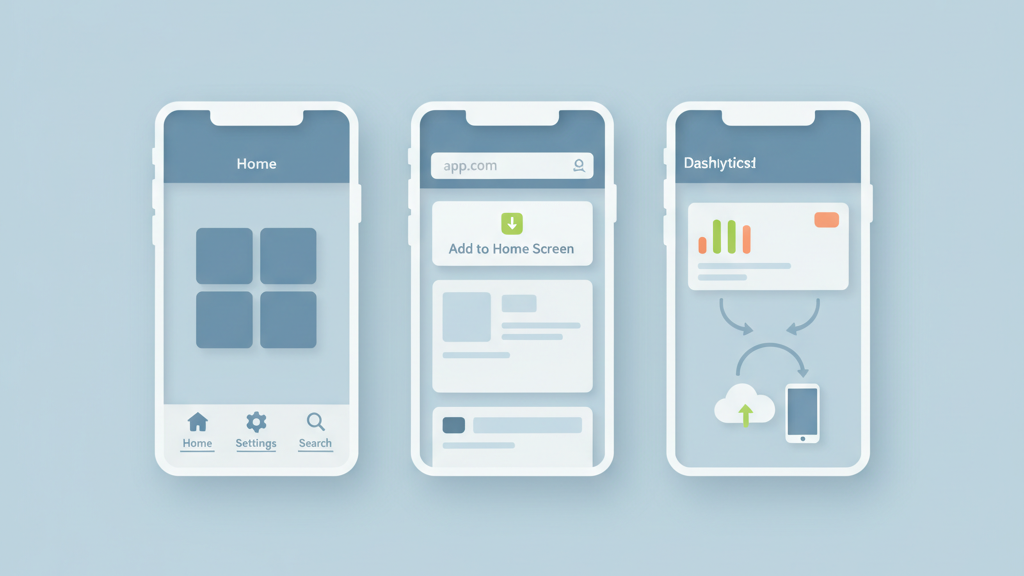
Native apps vs progressive web apps for startups is a question every founder and product manager will face when planning mobile strategy. This post walks through real trade offs, not marketing claims. It will help you weigh speed to market, performance, device access, discoverability, and long term costs. Many startups miss hidden operational costs, and that can sink momentum. I share clear criteria you can use in planning, plus practical warnings about platform lock in and user expectations. Read on to find a decision path that fits a lean product roadmap and realistic growth goals. If you want a related deep dive, read Build A Lean Booking Product For Fast Launch.
Performance and User Experience
Performance and user experience matter most when customers judge your product. Native apps usually deliver faster animations, smoother input handling, and lower latency for complex interactions. They can use compiled code and native UI components which often feel more polished. Progressive web apps can match simple app flows and content delivery, and modern browsers have improved rendering and caching. However many PWAs still lag on heavy graphics, haptic feedback, and advanced gestures. For startups that rely on delightful moments to win users, native can be worth the extra cost. For content driven or utility startups that value reach and iteration speed, a PWA often provides adequate performance while saving development time. Consider what users expect from your category and test prototypes early on real devices to feel the difference firsthand. If you need implementation support, explore Mobile app development.
- Test prototypes on target devices early
- Measure frame rate and input latency
- Prioritize perceived speed over raw metrics
- Use native only for complex animations
- Choose PWA for content first products
Development Speed and Cost
Time and budget determine what you can ship. Building fully native apps requires separate iOS and Android work or a cross platform native framework which still needs platform specific tuning. That doubles design and QA effort in many cases. Progressive web apps let a small team iterate on one codebase and push updates instantly without app store approvals. This lowers initial cost and accelerates feedback loops. Many founders favor PWA to validate product market fit quickly. If the business model depends on deep device integration or platform specific monetization then native investment makes sense. Keep in mind maintenance costs over time. Many startups underestimate the ongoing cost of OS updates, multiple SDKs, and store compliance. A realistic budget should include support for both user facing code and platform upgrades. For a practical follow-up, see How To Validate Market Fit FlutterFlow travel booking app MVP product strategy and validation service.
- Start with a single codebase to test demand
- Budget for platform specific QA
- Plan for store review time if native
- Reserve funds for OS updates
- Use PWA to shorten feedback loops
Access to Device Features
Device access drives core capabilities in many startups. Native apps can access a wide range of sensors, background services, secure storage, and advanced camera features. This opens possibilities for AR, offline encryption, and deep system integration. Progressive web apps have improved and can use service workers, geolocation, camera access, and push notifications in many browsers. But PWAs still face limits with background execution, advanced Bluetooth profiles, and some health or payment integrations. If your product depends on continuous background location or specialized hardware, native is the safe choice. If your features are primarily front end with occasional device access, a PWA may be sufficient. Assess the exact APIs your product needs and prototype those calls before committing to a platform strategy.
- List required hardware APIs up front
- Prototype critical integrations early
- Avoid PWAs for continuous background tasks
- Use native for advanced sensor work
- Reevaluate API support with each OS release
Distribution and Discoverability
How users find and install your product shapes acquisition cost. Native apps benefit from app store discoverability, featuring opportunities, and native monetization pathways. Stores also add friction with reviews and approvals. Progressive web apps can be discovered through search, social links, and shared URLs which reduces friction for first time trials. PWAs can be installed from the browser but they rarely appear in store charts. For startups focused on viral growth and low friction onboarding, a PWA can lower the barrier to try. For products that rely on heavy app store discovery and paid placement, native stands a better chance. Many startups use a hybrid approach with a PWA for acquisition and a native app for power users. That can be effective but it requires careful data and session sync design.
- Use PWA links for social sharing
- Consider app store for paid acquisition
- Reduce install friction with one click flows
- Track acquisition channels separately
- Plan sync between web and native users
Offline, Reliability, and Security
Reliability is a trust signal for users. Native apps can store encrypted data locally, handle offline workflows, and recover gracefully from network issues. PWAs use service workers to cache assets and provide offline pages, which works well for many content use cases. Security models differ and each platform has trade offs. Native apps run in a sandbox and can use platform security features for keys and biometrics. PWAs rely on browser security and HTTPS which is robust but different. Many startups underestimate edge cases like partial sync, conflict resolution, and data migration. If your product needs firm guarantees about data integrity or offline first behavior, native will be easier to control. For light offline support and fast loading, a PWA can be a pragmatic choice.
- Design clear offline flows
- Encrypt sensitive data on device
- Test sync and conflict scenarios
- Use service workers for cache strategies
- Audit storage policies for compliance
Maintenance and Long Term Scaling
Think beyond launch when choosing technology. Native codebases require ongoing maintenance for platform changes, dependency updates, and compatibility testing across devices. That can scale costs as user numbers grow. Progressive web apps avoid app store resubmission and let you deploy fixes faster, but they also depend on browser vendors and web standards which evolve. Both approaches need monitoring, analytics, and incident response practices. Startups that do not plan for long term maintenance often face technical debt that slows feature delivery. Choose patterns that align with team skill sets and hiring plans. If you expect rapid pivoting, a single web codebase can reduce overhead. If you plan to build a defensible technical moat tied to device features then native investment may pay off in the long run. Teams moving from strategy to execution can review Software maintenance and scaling.
- Estimate yearly maintenance costs
- Choose tooling that your team knows
- Monitor app health proactively
- Plan for dependency upgrades
- Avoid quick hacks that create debt
A Simple Decision Framework
Make the decision by matching product needs to platform strengths. Start with user jobs to be done and rank them by impact and technical risk. If reach and fast iteration matter most pick a PWA to validate assumptions and learn quickly. If deep device access or high fidelity interactions are core to value pick native. For many startups the right path is phased. Launch a PWA to acquire early users and validate retention metrics. Then invest in native when you see clear signals that the incremental value justifies the cost. Many founders make this pragmatic move successfully. A practical warning is to avoid splitting effort too early across many platforms before product market fit. Focus on learning fast with the smallest viable investment. A related guide worth reviewing is Uncovering the Untold Tactics: Navigating MVP Iteration for Product-Market Fit.
- Rank features by user impact
- Validate with a single codebase
- Move to native when needed
- Use metrics to justify platform shifts
- Avoid parallel heavy development early