
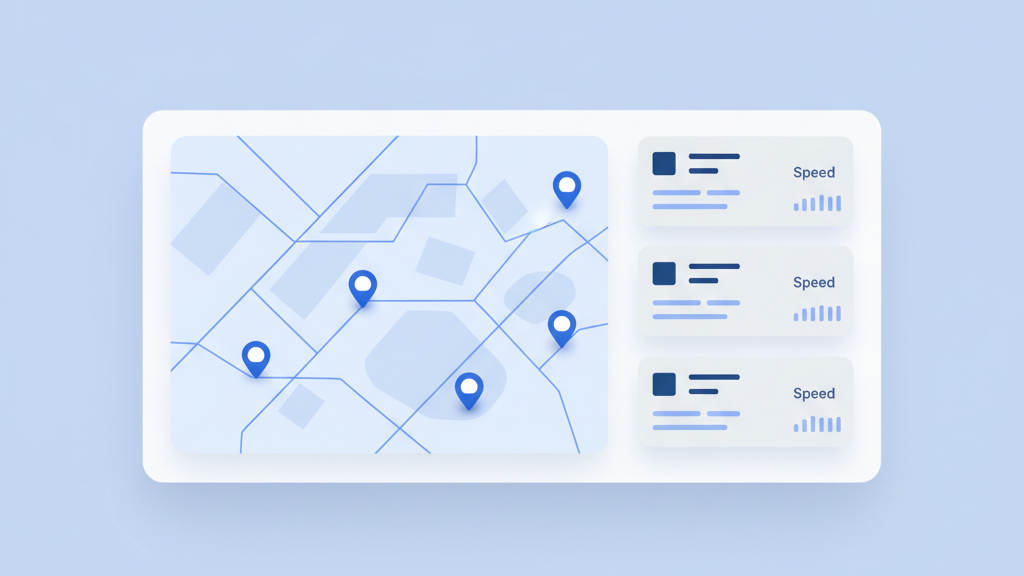
Starting an enterprise level logistics project feels like a massive undertaking. Most founders try to build everything at once and fail. Focusing on a logistics tracking platform MVP for enterprise fleet management allows you to validate core features without wasting resources. You need to identify what the big players actually need versus what is just a nice feature to have. This guide looks at the essential steps to get your fleet management tool off the ground. We will cover technical architecture, user roles, and how to prove value to stakeholders. Building for the enterprise is different than building for consumers. You need a higher level of reliability and a deeper understanding of industry workflows.
Prioritize Core Problem Solving Over Features
Enterprise logistics is a complex environment. Many founders think they need to replicate every single feature of a legacy system right away. That is a fast way to burn through a startup budget. Instead, focus on a logistics tracking platform MVP for enterprise fleet management that solves a core friction point. For many fleets, this is simple visibility. Managers often have no idea where their trucks are in real time. They rely on phone calls and manual spreadsheets to keep track of assets. By digitizing this one workflow, you provide immediate value to the organization. Many startups miss this by trying to add complex AI routing before they even have a solid GPS ping. Enterprise clients are often slow to adopt new technology. They need to see that your system is stable before they commit to a larger rollout. A lean MVP allows you to prove that stability without the noise of unnecessary features. You should focus on high quality data ingestion above all else. If the location data is laggy or inaccurate, the whole system falls apart and trust is lost. Start with a clean interface that shows exactly what is happening on the road. This build and learn cycle is vital for enterprise products. It allows you to pivot based on actual fleet data rather than guesses. Trust is the currency of the enterprise world. You earn it by delivering a reliable tool that makes a dispatcher work faster. Every successful enterprise tool started by solving one small problem exceptionally well before expanding into a full suite of services. If you need implementation support, explore FlutterFlow development.
Technical Architecture and Data Integrity
Choosing the right technical architecture is the difference between a scalable product and a prototype that breaks under pressure. Your backend must be able to handle thousands of concurrent pings from different devices simultaneously. We often suggest using a micro services approach even at the MVP stage for fleet tools. This allows you to scale the tracking module independently from the reporting or user management modules. Use a robust message broker to manage the flow of incoming GPS data packets. This ensures that no data is lost during peak hours when every vehicle is active. Enterprise fleet management requires a level of uptime that consumer apps do not. If your system goes down, a company could lose thousands of dollars in misplaced cargo or idle drivers. You should also consider how you will store this data for long periods. Cold storage for old logs can save a lot of money on cloud costs as you grow. Many founders ignore the cost of data until the first big bill arrives. It is better to plan for this early in the development process. Your database choice should favor write heavy workloads because GPS coordinates come in every few seconds. A combination of a relational database for user data and a specialized database for tracking points is usually the best bet. This separation ensures that your primary user database remains fast even as your tracking logs grow into the millions of rows. If you want a related deep dive, read How to Choose the Right MVP Development Company for Your Startup’s Unique Needs.
- Real time GPS data streams
- Automated geofencing alerts
- Historical route playback
- Vehicle health diagnostics
- Driver identification systems
Optimizing User Experience for High Stress Environments
User experience in the logistics sector is often overlooked but it is a major competitive advantage. Most enterprise tools look like they were built decades ago. You have a massive opportunity to win users over with a modern and responsive interface. However, do not confuse modern with complex. A dispatcher is usually looking at multiple screens and handling radio calls at the same time. They do not have time to navigate through deep menus or complex settings. The dashboard should highlight exceptions rather than showing everything at once. If every truck is on time, the screen should be quiet. If a truck is delayed or off course, that should be the only thing grabbing their attention. This exception based management is what enterprise leaders actually want. It allows them to scale their operations without hiring more staff to watch maps. On the driver side, the app must be incredibly simple and resilient. Drivers are often in areas with poor cellular coverage or no data at all. Your app must work offline and sync data once a connection is restored. If the app crashes or fails to sync, the driver will likely stop using it entirely. Many product managers forget that the driver is the primary source of your data. If they are unhappy, your data quality will suffer. Keep the interactions minimal and the buttons large so they are easy to press even in a moving vehicle. Teams moving from strategy to execution can review Mobile app development.
Integration Strategy and API First Development
Integrations are the lifeblood of enterprise software and your MVP should reflect that reality. Your product should not be a closed box. It needs to play nice with the software the company already uses for its daily operations. This includes fuel card systems, electronic logging devices, and warehouse management systems. While you do not need to build every integration for the initial launch, you must have an API first mindset. This allows the enterprise IT team to pull data into their own custom dashboards or reports. It also makes your product much stickier within the organization. Once a company has integrated your tracking data into their internal workflows, they are much less likely to switch to a competitor. Many startups fail because they try to replace the entire ecosystem instead of augmenting it. It is much easier to be a valuable part of an existing workflow than to change it completely. Focus on standardizing your data formats so they are easy for other systems to read. Use clean API responses to ensure they are easy for other developers to work with. You should also document your API early in the project. Even if it is just for internal use, it helps your team move faster and stay organized. A well documented system is a sign of a professional product and gives confidence to your early adopters. For a practical follow-up, see Building an MVP for Enterprise CRM Workflows and Integrations.
- Standardized API endpoints
- Support for ELD protocols
- Webhook event triggers
- Custom report builders
- External ERP connectors
Proving Value Through Analytics and ROI
Finally, you must think about the business case and the return on investment. Enterprise sales are driven by clear financial gains. Your tracking software should make it easy for a fleet manager to show their stakeholders how much money they are saving. This could be through reduced fuel consumption or better vehicle utilization rates. Even in the MVP, you should include a basic analytics dashboard that focuses on the metrics that matter to the executive team. They do not care about individual GPS pings or map icons. They care about the bottom line and operational efficiency. If you can prove that your tool reduced idle time by even a small percentage, the contract renewal is guaranteed. This focus on business value is what separates a successful startup from a failed project. It is also important to have a clear roadmap for the future. When you present the MVP to a potential client, show them what features are planned for the next six months. This gives them a sense of security that the product will grow with their specific needs. Do not over promise on features, but show that you understand the future of the logistics industry. The world is moving toward full automation and your platform should be ready for that shift. Start small, prove the value, and then expand the scope to cover more of the supply chain. A related guide worth reviewing is Building an Analytics Dashboard Software MVP for Product Managers: A Practical Guide.