
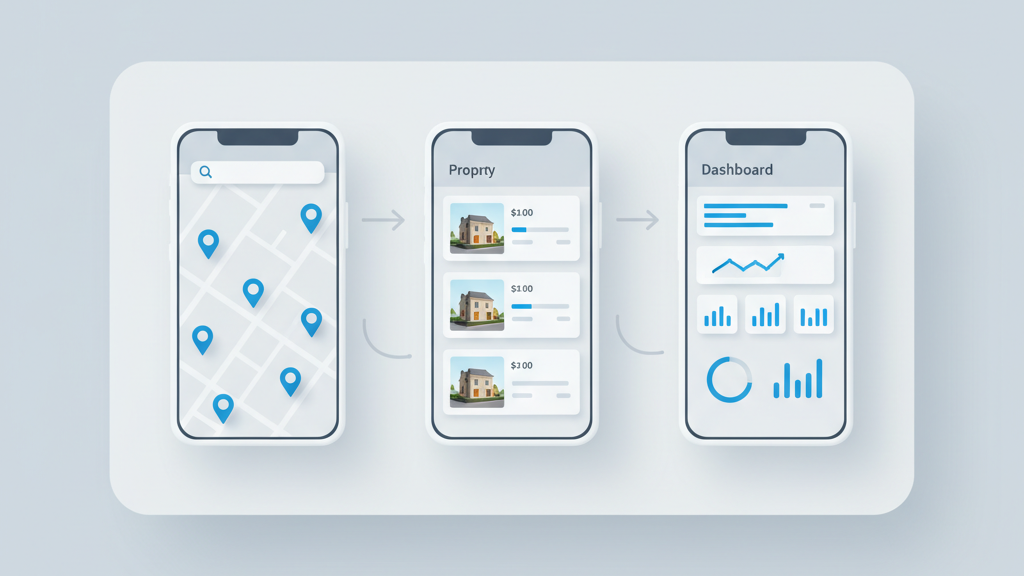
The real estate market is changing quickly and founders need to move faster than ever. Modern technology allows small teams to build powerful platforms without the traditional overhead of a massive engineering department. Utilizing FlutterFlow proptech app MVP development and technical decision consulting is the smartest way to launch a functional product while keeping costs low. Many startups miss this opportunity by sticking to legacy development methods. They spend months on features that users might not even want. This guide explains how to use low code tools to validate your business model and build a foundation for long term growth.
The Strategic Advantage Of Rapid Prototyping
Real estate technology requires a unique mix of speed and reliability. Founders often feel pressured to build a perfect product on the first try. This approach usually leads to wasted capital and missed deadlines. Selecting the right tools for your initial launch determines how quickly you can react to user feedback. Low code development provides a visual environment where you can see changes in real time. It removes the barrier between design and logic. You can build a fully functional prototype that feels like a native app. This is vital for showing your value to investors and early adopters. Many people think low code means you cannot scale. That is a common myth. If you structure your data correctly from the start you can grow without hitting a wall. The goal is to reach the market before your competitors do. You need to focus on core features like property listings and user profiles. These are the elements that prove your concept. Everything else can be added later as you gather data from real users. A clear roadmap helps you stay on track and avoid unnecessary features. If you want a related deep dive, read How to Choose the Right MVP Development Company for Your Startup’s Unique Needs.
Making Smart Architecture Choices For Your Proptech App
Technical decisions made during the MVP phase carry heavy consequences. You must decide where your data lives and how it moves through your system. Choosing a backend like Firebase or Supabase depends on your specific needs for real time updates. Real estate apps often require instant notifications for new listings or price drops. You need a system that handles these events efficiently. Consulting with experts helps you avoid choosing a stack that limits your future options. It is important to consider how you will integrate with external real estate data sources like MLS feeds. These integrations can be complex and require a solid plan. You should also think about user authentication and data privacy. Property data is sensitive and must be handled with care. A well designed architecture allows you to add features like virtual tours or mortgage calculators later. If you start with a messy structure you will spend more time fixing bugs than building new tools. Small mistakes in the beginning become big problems as your user base grows. Practical experience shows that a clean database schema is the most important part of your technical foundation.
- Select a scalable backend like Firebase for real time data sync.
- Plan for MLS integration early to ensure data consistency.
- Implement robust user authentication for buyer and seller security.
- Focus on a clean database schema to prevent future technical debt.
- Prioritize cloud functions for complex business logic calculations.
Designing For The Real Estate User Experience
The user interface of a proptech app must be intuitive and clean. Users expect to find information quickly without digging through menus. High quality photos and clear maps are the most important elements of any property platform. FlutterFlow makes it easy to create beautiful layouts that work on both mobile and web. You can use prebuilt components to speed up the design process. However you should customize these components to match your brand identity. A generic look can hurt your credibility with users. You want to provide a seamless search experience with filters for price and location. These filters must work instantly to keep users engaged. Many founders focus too much on fancy animations and forget about performance. A slow app will drive users away regardless of how good it looks. You should also consider how the app works on different screen sizes. A buyer might start their search on a phone and finish it on a laptop. Providing a consistent experience across devices is a major competitive advantage. Simple navigation and clear call to action buttons help users take the next step in their journey. If you need implementation support, explore FlutterFlow development.
Leveraging Custom Logic And Third Party Services
While visual builders handle the interface you will eventually need custom logic. This is where professional FlutterFlow proptech app MVP development and technical decision consulting provides the most value. You might need custom code for complex search algorithms or financial models. FlutterFlow allows you to write custom functions and actions in Dart. This means you are never truly stuck with just the built in features. You can connect to any API to bring in external data. For example you could pull in local school ratings or neighborhood crime statistics. These data points help buyers make informed decisions. You should also consider payment integrations for services like background checks or application fees. Using established providers like Stripe ensures that transactions are secure and reliable. The ability to mix standard components with custom code gives you the best of both worlds. You get the speed of low code and the flexibility of custom development. This hybrid approach is the standard for modern high growth startups. It allows you to build a unique product without reinventing every single part of the software stack. For a practical follow-up, see FlutterFlow Healthcare Telemedicine App MVP Validation and Compliance Consulting: Strategic Growth for Startups.
Ensuring Security And Compliance In Tech
Security is not something you can add to an app after it is built. It must be part of your plan from the first day. Real estate platforms deal with personal documents and financial data. You have a responsibility to protect this information from unauthorized access. This is especially true if you plan to operate in different regions with various laws. Many startups miss the complexity of compliance until it is too late. You should implement role based access control to ensure that only authorized users can see certain data. For instance a buyer should not see the private contact information of a seller without permission. Regular audits of your backend security rules are necessary to catch potential leaks. You should also use encrypted connections for all data transfers. Experts can guide you through the process of setting up secure servers and managing API keys. It is better to spend a little more time on security now than to deal with a data breach later. A secure platform builds trust with your users and protects your reputation in the industry. Teams moving from strategy to execution can review Web app development.
- Use role based access control for data privacy.
- Audit backend security rules regularly to find vulnerabilities.
- Encrypt all sensitive user data during transit and at rest.
- Follow local regulations for data storage and user consent.
- Set up secure API management to prevent unauthorized access.
Scaling Your App Beyond The Initial Launch
Launching your MVP is just the beginning of the journey. Once you have users you will need to iterate based on their behavior. You might find that some features are ignored while others are used constantly. This feedback is essential for your growth. FlutterFlow proptech app MVP development and technical decision consulting ensures that your app can handle more traffic as you scale. You should monitor performance metrics to identify bottlenecks. As your database grows you may need to optimize your queries to maintain speed. You might also decide to export your code and move to a fully custom environment. FlutterFlow allows you to do this easily which prevents vendor lock in. This flexibility is a major reason why many founders choose this platform. You can start small and move toward a more complex system as your revenue increases. The transition should be planned carefully to avoid downtime. Keep your focus on solving problems for your users. If you provide real value the growth will follow naturally. Stay agile and be ready to change your strategy as the market evolves. A related guide worth reviewing is The Strategic Guide to Building a Fintech Lending App MVP on FlutterFlow.