
Building a financial product requires a balance between speed and security. For many entrepreneurs, the goal is to reach the market quickly to test a lending thesis. This guide details a FlutterFlow fintech lending app MVP product strategy for US founders that focuses on speed and security. You can build a powerful application that meets user needs without spending a year in development. By using low code tools, you can iterate on your loan models based on real market data. This approach reduces your initial capital expenditure while maintaining a professional standard of quality. If you want a related deep dive, read A Guide for USA Founders: Building a FlutterFlow Subscription SaaS App MVP.
Understanding US Regulatory Compliance and Data Privacy
Building a fintech app in the United States requires more than just a great user interface. You must navigate a complex landscape of state and federal regulations. Many startups miss this and end up with heavy legal fines before they even reach their first thousand users. This is why your FlutterFlow fintech lending app MVP product strategy for US founders should start with a compliance audit. You need to understand the Truth in Lending Act and how it affects your loan disclosure screens. Your app must show annual percentage rates and total repayment costs clearly to the user. This is not just about being helpful. It is a legal requirement in the US market. You should also consider how you will handle Know Your Customer requirements early in the process. Integrating an identity verification service like Persona or Veriff is essential for any lending platform. If you ignore these steps, you risk being shut down by regulators. A lean MVP does not mean a non compliant MVP. You can still use FlutterFlow to build these features quickly. The platform allows for custom API calls that can connect to any compliance tool. Focus on security from day one. Use secure storage for sensitive user data. Do not store social security numbers in plain text on your database. These small choices will define whether your startup survives the first year. I recommend hiring a legal consultant to review your user flows before you launch. It is much cheaper to fix a flow in the design phase than it is to rebuild it after a regulatory audit. You should also ensure that your privacy policy and terms of service are easily accessible within the app. Transparency builds trust with your users and keeps you on the right side of the law. For a practical follow-up, see How To Validate Market Fit FlutterFlow travel booking app MVP product strategy and validation service.
Prioritizing Core Features for Your Lending MVP
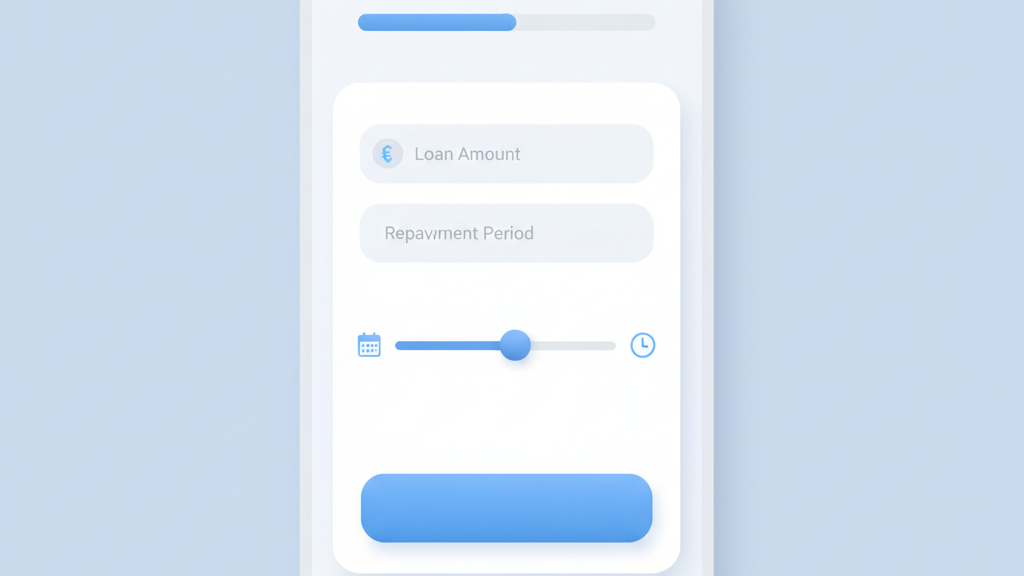
Once you have handled the legal aspects, you must decide which features are essential for your launch. A common mistake is trying to build a full bank in the first version. Instead, focus on the primary user journey of applying for a loan and receiving funds. Your lending app needs a robust loan calculator that helps users visualize their debt. It also needs a clean dashboard where they can see their balance and next payment date. Using FlutterFlow makes it easy to build these interactive components without writing much code. You can use built-in widgets to create responsive forms that look great on both iOS and Android. This allows you to test your value proposition with real users faster than traditional development. I recommend keeping the initial feature set very small. Only include what is necessary to prove people want to borrow money from your platform. You can always add more complex tools like credit score tracking later. For now, focus on the speed of the application process. US consumers expect a seamless digital experience. If your app is slow or confusing, they will go to a competitor. You should also consider adding a small help section or a chat feature to answer user questions. This reduces friction and helps you gather qualitative data about what users find confusing. Many startups miss the importance of communication in the early days. If a user feels stuck during an application, they will likely abandon the process. Make sure your navigation is intuitive and your call to action buttons are clear. A successful MVP is one that solves a specific problem for a specific group of people. If you need implementation support, explore Mobile app development.
- Dynamic loan calculator with amortization schedules
- Automated identity verification using third party SDKs
- Real time bank account linking for instant verification
- User dashboard for tracking active loans and payments
- Secure document upload for income verification
- Push notification system for payment reminders
Technical Architecture and Backend Selection
The technical side of a FlutterFlow fintech lending app MVP product strategy for US founders involves choosing the right backend. Firebase is the most common choice for FlutterFlow users because it offers real time data sync and easy authentication. However, for a fintech app, you might need a more structured SQL database like Supabase or Xano. These tools provide better support for complex relational data which is common in lending systems. You need to track loans, payments, users, and interest rates across multiple tables. Many startups miss this distinction and struggle with data integrity later. Your backend should be the single source of truth for all financial transactions. Do not rely on local state inside the app to manage money. Every action should be validated on the server to prevent fraud. FlutterFlow makes it easy to connect to these backends using REST APIs. You can build a very powerful system by combining the speed of low code with the power of a custom backend. This approach gives you the flexibility to scale as your user base grows. It also makes it easier to pass security audits required by institutional lenders or partners. You should also implement a robust logging system to track every transaction and user action. This is vital for debugging and for financial audits. If a user claims a payment was not recorded, you need a clear audit trail to investigate. I suggest using cloud functions to handle sensitive logic like interest calculations. This keeps your business logic secure and centralized. A well structured backend is the backbone of a successful lending platform. It allows you to automate repetitive tasks and focus on growing your business. Teams moving from strategy to execution can review FlutterFlow development.
Integrating Third Party Financial Services
No lending app is an island. You will need to connect to the broader financial ecosystem to be successful. This means integrating with credit bureaus and payment processors from the start. Plaid is often the gold standard for connecting to user bank accounts in the US. It allows you to verify income and view transaction history without asking for manual bank statements. This automation is a key part of a modern low code finance strategy. You also need a way to move money. Stripe or Dwolla are great options for handling ACH transfers. These integrations can be complex, but FlutterFlow simplifies the process through its API connector. You can map the data from these services directly to your UI elements. This reduces the time spent on manual data entry for your team. Many founders try to build these systems from scratch, but that is a waste of resources. Use established providers that already have the necessary licenses and security infrastructure. This allows you to launch faster and with more confidence. You should also plan for error handling in your integrations. Bank connections often fail, and you need a way to guide the user through a retry process. I recommend setting up webhooks to receive real time updates from your payment processors. This ensures your app reflects the current status of every transaction. If a payment fails, your app should notify the user immediately. This proactive communication prevents confusion and builds a better user experience. Focus on creating a seamless bridge between your app and the financial world.
- Plaid API integration for financial data access
- Stripe Connect for automated loan disbursement
- Firebase Authentication for secure user logins
- Cloud functions for server side financial calculations
- Encryption protocols for protecting sensitive data
Product Iteration and Scaling Your Platform
After your MVP is live, the real work of product strategy begins. You must listen to user feedback and look at the data to see where people are dropping off. Many founders get discouraged if their first version does not go viral immediately. Success in the lending space is often a marathon rather than a sprint. You need to monitor your default rates and adjust your underwriting models accordingly. FlutterFlow allows you to push updates to your app quickly. This agility is your biggest advantage over established financial institutions. You can test new interest rates or different application flows in days rather than months. Use this time to refine your user experience and build trust with your audience. Lending is a business built on trust. Your app must look professional and function perfectly. Even small bugs can make users feel like their money is not safe. Constant iteration and attention to detail will help you find product market fit. Focus on providing value to a specific niche in the US market. Whether it is small business loans or personal credit lines, being the best in one area is better than being average in many. I recommend setting up a feedback loop where you interview your first hundred users. Their insights will be more valuable than any generic market research. Pay close attention to how they describe their pain points. Use this information to prioritize your next set of features. Scaling is not just about getting more users. It is about building a sustainable business model that works for everyone. Keep your eyes on the data and be ready to pivot if necessary. A related guide worth reviewing is Uncovering the Untold Tactics: Navigating MVP Iteration for Product-Market Fit.