
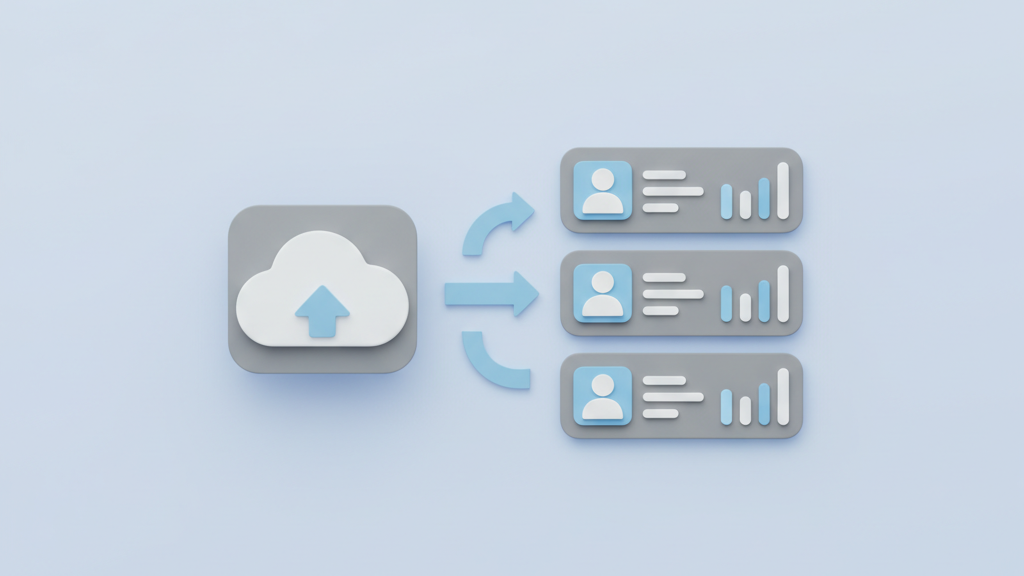
Hiring is a high cost activity for any growing company. Founders often spend hours looking at resumes that do not fit the job description. This manual labor is expensive and slows down your overall growth. You need a recruiting application MVP for automated candidate screening to test your business idea quickly. This approach lets you validate the core value of your software without spending a massive fortune on development. We see too many teams build full platforms before they have a single active user. Start small and focus on the data first. If your tool can save a recruiter five hours every week, you have a viable product. The goal of an early version is not to replace the human element of hiring. Instead, the goal is to give recruiters a better starting point for their interviews. A lean approach helps you find the right market fit before your capital runs out.
The Problem with Manual Candidate Sourcing
Many startups try to build a massive hiring platform right out of the gate. This is a common mistake that leads to wasted resources. A recruiting application MVP for automated candidate screening solves this by filtering candidates before a human even sees them. Focus on the parsing logic first. Many founders get distracted by a fancy interface and ignore the underlying data pipeline. If your system cannot accurately read a resume, the automation will fail. This manual burden is why recruiters are looking for new tools. You should identify the specific pain points in their current workflow. Most teams use simple spreadsheets or outdated databases that do not talk to each other. Your MVP can bridge this gap by offering a central place for screening logic. Do not worry about being a LinkedIn killer yet. Focus on solving the immediate problem of high volume noise. When you filter out eighty percent of unqualified leads, you provide immediate value. This helps you build trust with your initial user base. Keep your scope narrow and your logic transparent. Many startups miss this simple fact and try to build too many features at once.
Core Features for High Impact Screening
To build an effective tool, you must define the features that drive the most impact for users. The most important part of your system is the parsing engine. This engine extracts skills, experience, and education from a variety of file formats. After you have the data, you need a scoring mechanism. This mechanism compares the candidate data against your specific job requirements. You can use simple keyword matching or more advanced logic for this part. It is better to start with basic rules that work than complex AI that confuses the user. Transparency is very important. Show the recruiter exactly why a candidate received a high or low score. This builds confidence in your automated process. If a recruiter does not understand the score, they will stop using your tool. You should also consider how easy it is to upload data. A simple drag and drop interface is often enough for a first version. Focus on the speed of processing. Users expect results in seconds, not minutes. These core features form the backbone of your application. You can always add more complexity after you prove that your logic works.
- Resume parser for PDF and Word files
- Customizable job requirement templates
- Automated scoring and ranking engine
- Batch candidate upload functionality
- Simple candidate status dashboard
- Search and filter tools for results
Technical Architecture and Data Security
A recruiting application MVP for automated candidate screening must be fast and secure. Your technical architecture should prioritize data privacy from the very first day. Handling candidate resumes means you are dealing with sensitive personal info. You should use a cloud provider that offers built in security features. Encryption at rest and in transit is a basic requirement for HR tech. Beyond security, you need a database that can handle unstructured data. Resumes come in many different shapes and sizes. A flexible database schema will save you many headaches as you scale. Performance is another major factor for success. If a recruiter has to wait ten seconds for a candidate list to load, they will go back to their old ways. We recommend building a lean backend with clear API endpoints. This makes it easier to add new features later as you learn from your users. Keep your code clean and document your technical decisions. This helps when you need to bring in more developers or secure more funding. Avoid over engineering your infrastructure in the beginning. Use managed services where possible so you can focus on your unique features.
Designing a Functional User Experience
The user experience of your screening tool should be simple and functional. Founders often think they need a beautiful dashboard with many complex charts. In reality, a recruiter just wants to see a list of qualified people for their open roles. Focus on the data presentation first. Use clear labels and a consistent layout for all your screens. The screening results should be the focal point of the application. You should also think about how the user interacts with the results. Give them a way to quickly approve or reject a candidate. Small details like keyboard shortcuts can make the tool feel more professional. You do not need a complex onboarding flow for your MVP. Just show the user how to get their data in and how to read the scores. Feedback loops are very important for improving your product. Give the user a way to correct the system if a score seems wrong. This manual override helps you improve your logic over time. Keep the interface uncluttered and focus on the primary action.
- Clean list views with sortable columns
- Progress indicators for file processing
- Individual candidate detail pages
- One click approval and rejection buttons
- Simple search bar for quick lookups
Validation and Scaling After Launch
Once your MVP is live, your main job is to listen to your early adopters. Talk to every recruiter who uses the tool. Ask them where the automation feels weak or where they feel they are losing control. You might find that your parsing logic misses specific industry terms or technical skills. These insights are more valuable than any feature roadmap you created before you launched. Some founders ignore this feedback and keep building what they want. That is the fastest way to lose your market position. You should also look at how users interact with the data in your system. If they are exporting everything to a spreadsheet, your interface is not doing its job. Use this behavioral data to decide which features to build next. Eventually, you can add more advanced features like video interviews or automated scheduling. But for now, stay focused on the screening part. Success comes from solving one small problem exceptionally well. Do not try to be everything to everyone on your first day of operation.