
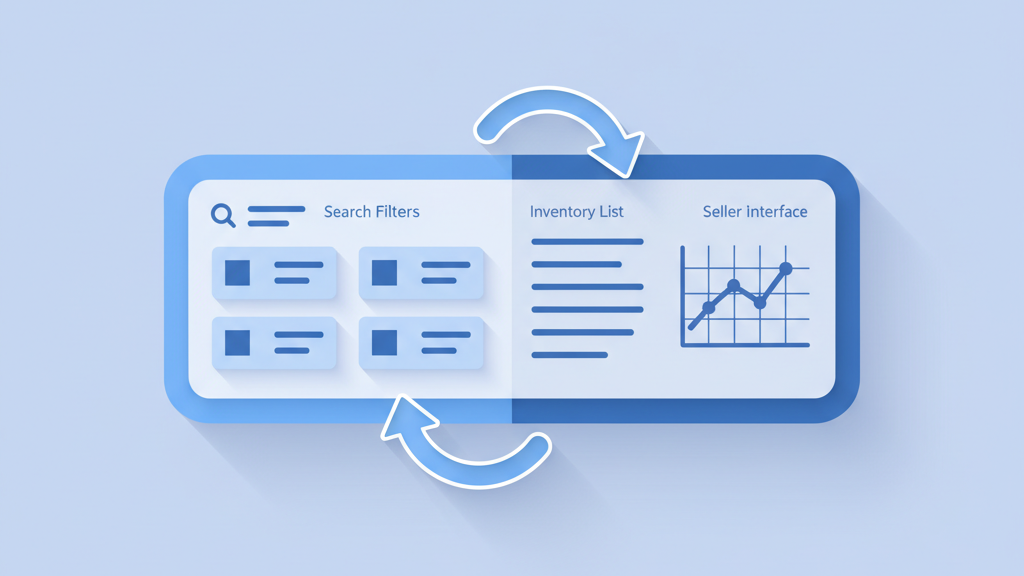
Launching a new digital marketplace is one of the most challenging projects a team can undertake. You are not just building one product. You are building two different experiences that must work in perfect harmony. One side of your platform needs to attract sellers or service providers. The other side must convince buyers that your solution is the best choice. This dual nature makes marketplace platform MVP development for startup founders a complex task. Many founders try to build too much too soon. They add complex features that users do not actually need. This leads to wasted budget and slow launch times. A successful MVP should focus on solving a specific problem for a specific group of people. It must facilitate a transaction with as little friction as possible. If your core value proposition does not work with a simple setup, more features will not save it. Focus on building a thin slice of value that proves your business model can actually scale.
The Importance of Niche Focus and Liquidity
The biggest mistake in marketplace platform MVP development for startup founders is trying to be everything to everyone. You cannot compete with giants like Amazon or Uber on day one. Instead, you should find a narrow niche where you can become the market leader quickly. This is often called the atomic network strategy. By focusing on a specific city or a specific type of service, you can create a sense of density. Density is what makes a marketplace feel alive. If a buyer comes to your site and sees only two listings, they will leave and never come back. If a seller lists a product and gets no inquiries, they will delete their account. Many startups miss this vital point during the early stages. You must manually recruit your first users to ensure both sides are active. This might mean doing things that do not scale. You could spend your days calling potential sellers or running targeted local ads. The goal is to reach a tipping point where supply and demand naturally find each other. Once you have a small but active community, you can start to think about broader expansion. Real growth happens when your users find consistent value in every visit.
Selecting Essential Core Features
When you start the development process, you must be ruthless with your feature list. Every line of code costs money and adds complexity to your maintenance. Your first version should only include features that are absolutely necessary to complete a transaction. Many founders get distracted by shiny objects like advanced AI recommendations or complex social feeds. These are distractions that do not help you validate your core business. You need a way for sellers to list their offerings easily. You need a way for buyers to find those listings. Finally, you need a way for money to change hands securely. Any feature that does not directly support these three goals should be moved to a later phase. It is better to have a simple product that works perfectly than a feature rich product that is full of bugs. You should also consider how you will handle disputes and refunds. While these are not fun features to build, they are critical for building trust with your users from the very beginning. A simple admin panel is also required so you can manage users and transactions without touching the database.
- Search functionality with basic filters
- User registration and profile management
- Secure payment gateway integration
- Listing management for supply side users
- Internal messaging or notification system
- Basic transaction history and receipts
Choosing the Right Technical Foundation
Picking your tech stack is a decision that will stay with you for years. For marketplace platform MVP development for startup founders, the focus should be on speed and flexibility. You want a stack that allows your team to push updates daily. Many modern agencies recommend using frameworks like React or Vue for the frontend. These tools allow you to build a responsive interface that feels like a native app. On the backend, Node.js or Python are popular choices because they have massive libraries for marketplace functions. You should also think about your database structure. Marketplaces involve complex relationships between users, listings, and orders. A relational database like PostgreSQL is usually the safest bet for data integrity. Avoid the temptation to use cutting edge tools that lack documentation. If your developers get stuck, you want them to be able to find answers quickly. Scalability is important, but you should not over engineer for millions of users before you have your first hundred. Use cloud providers like AWS or Google Cloud to handle your hosting. These platforms allow you to start small and increase your resources as your traffic grows.
Building Trust and Security into the Platform
Trust is the most valuable asset in any peer to peer economy. If users do not feel safe, they will not share their credit card info or meet strangers. You must implement security measures from the start. This includes using SSL certificates and following PCI compliance for payments. Do not store sensitive payment data on your own servers. Use a third party like Stripe to handle the heavy lifting. Identity verification is another way to boost confidence. You can integrate tools that check government IDs or verify phone numbers. Ratings and reviews are also vital. They allow the community to self moderate by rewarding good behavior and flagging bad actors. Many startups miss the importance of a clear set of community guidelines. You need to tell your users what is allowed and what is not. This helps you justify banning users who try to cheat the system. Transparency is key. Be clear about your fees and your refund policies. If a user feels like they are being hidden from the truth, they will take their business elsewhere. A trusted marketplace is a profitable marketplace.
Launch Strategy and Growth Metrics
A common mistake is thinking that if you build it, they will come. You need a proactive launch strategy to get your first users. Many successful founders start with a manual concierge model. This means they act as the middleman to ensure every transaction goes smoothly. This gives you direct insight into user pain points. During this phase, you should track your metrics closely. Look at your liquidity rate, which is the percentage of listings that lead to a sale. If your liquidity is low, you either have the wrong supply or not enough demand. Monitor your customer acquisition cost to ensure your business model is sustainable. High churn is a sign that your platform is not providing enough value. Use heatmaps and session recordings to see where users get confused. This data is more valuable than any opinion. It shows you exactly what needs to change in your next version. Effective marketplace platform MVP development for startup founders requires a constant loop of building, measuring, and learning. Do not be afraid to pivot if the data shows your original idea is not working.
- Track the ratio of buyers to sellers
- Measure the average time to first sale
- Monitor user retention across cohorts
- Analyze the source of your most active users
- Calculate the lifetime value of each participant
Managing Costs and Development Timelines
Building a custom marketplace is a significant investment of time and capital. You should expect the development process to take several months. Rushing the build often leads to technical debt that will slow you down later. It is helpful to break the project into two week sprints. This allows you to see progress and make adjustments along the way. Be realistic about your budget. Software development involves unexpected challenges that can increase costs. It is wise to keep a contingency fund for these moments. Many founders find that hiring a professional agency is more cost effective than building an in house team from scratch. An agency brings experience from other projects and can help you avoid common pitfalls. They already have the workflows and tools in place to build high quality software. This allows you to focus on the business side of the startup, such as marketing and partnerships. Your goal is to get to market with a solid product as fast as possible. Once you have real users and revenue, you can seek more funding or hire your own full time engineers.