
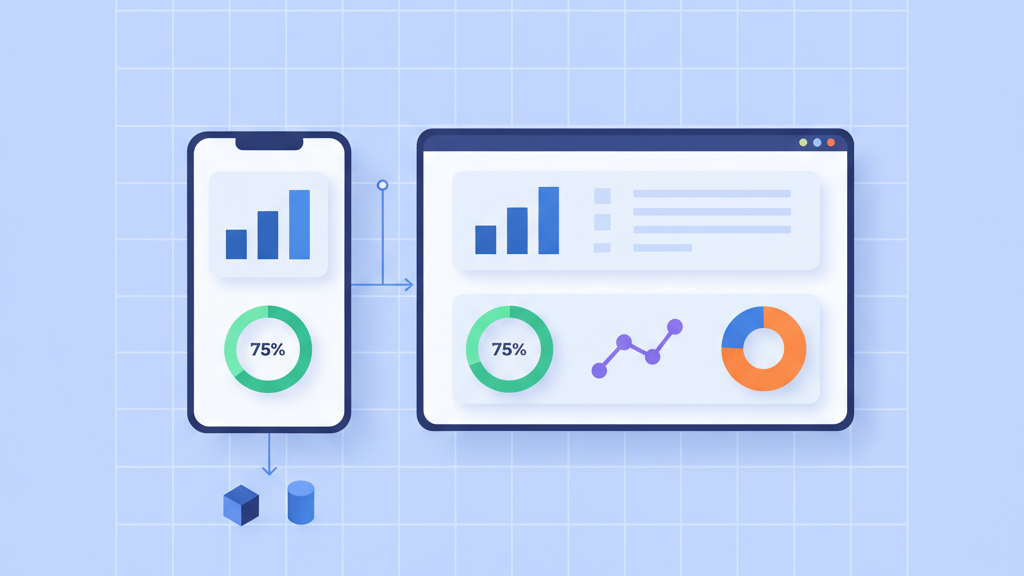
Startup founders often struggle to turn raw data into actionable insights for their users. Building a custom tracking tool from scratch can take months of engineering time and thousands of dollars in budget. Using FlutterFlow analytics dashboard app MVP development and validation services allows you to skip the long wait and get a working product into the hands of your customers quickly. This approach focuses on high speed delivery and rigorous testing to ensure your product actually solves a problem. We will look at how to build a robust dashboard that scales while keeping your initial costs low.
The Strategic Value of Speed in Product Development
In the current market speed is the most important asset for any early stage venture. If you wait too long to show your users a dashboard you might find that the market has already moved on or a competitor has filled the gap. Many teams spend far too much time building custom charts from scratch which delays their time to market significantly. FlutterFlow changes this dynamic by providing a visual interface that links directly to backend sources like Firebase or Supabase. This low code approach does not mean you sacrifice power or flexibility. It means you get to the feedback loop faster than your competitors. Many startups miss this point and focus on perfection rather than progress. You can create high fidelity prototypes that feel like final products without burning through your entire seed round. It is a smarter way to manage engineering resources while staying agile. You should focus on getting a version one into the world so you can start collecting real user behavior data. This is how you avoid the trap of building a tool that nobody actually needs.
Core Elements of a Successful Analytics MVP
Building an effective product requires more than just dragging widgets onto a canvas. FlutterFlow analytics dashboard app MVP development and validation services focus on creating a functional core that proves your business model. You need to identify the most critical metrics that your users care about. Many founders make the mistake of overcomplicating their first version with too many features. This leads to a cluttered interface that confuses the user rather than helping them. A clean layout with clear navigation is always better than a complex system that nobody uses. Focus on the primary goal of the dashboard first and then expand later. Your MVP should include the following core components:
- Real time data synchronization for live metrics
- Custom API integrations for external data sources
- Responsive layouts for mobile and web views
- User authentication and role based access control
- Interactive filtering and sorting of data sets
Validation Is the Key to Long Term Success
Validation is the step where most software projects fail. It is not enough to just build a working app. You must ensure that people actually want to use the tool you created in their daily workflow. Many startups miss this by assuming their internal vision matches market reality. Our approach involves setting up telemetry to see how users interact with your charts and graphs. If users are not clicking on a specific report then that report should not exist in the final version. This data driven mindset helps you pivot before you waste months on the wrong features. A dashboard is only valuable if it leads to a decision. If your users just look at the screen and close the tab then you have not provided real value yet. Proper validation services help you find the friction points in your user journey. You can then refine the user experience based on actual behavior rather than guesses. This iterative process is the only way to build a product that people will eventually pay for. It turns a risky bet into a calculated business move.
Technical Performance and Scalability Standards
Performance is a common concern for low code development projects. People often worry that a visual tool cannot handle large data sets or complex logic. This is a common misconception among traditional developers who are used to manual coding. FlutterFlow generates clean code that runs on the high performance Flutter framework. This means your dashboard will be fast and responsive across all devices and screen sizes. You can also export the code if you ever decide to move away from the platform. This provides a safety net that many other proprietary tools lack. You are not locked into an ecosystem forever. This flexibility is vital for startups that plan to scale rapidly to thousands of users. You can start small and grow your infrastructure as your user base expands. It provides the perfect balance between speed of launch and long term technical stability. Using modern backend solutions like Supabase allows you to handle millions of rows of data without slowing down your UI. This ensures that your MVP can grow into an enterprise grade solution over time.
Integrating Workflows and External Systems
Integrating with existing workflows is another hurdle for new analytics tools. Your dashboard should not exist in a vacuum. It needs to talk to the tools your customers already use every day. This might include CRM systems or marketing automation platforms or financial databases. Using FlutterFlow analytics dashboard app MVP development and validation services ensures that your data pipelines are robust and secure from the start. Security is often an afterthought for MVPs but it should be a priority from day one. Protecting sensitive user data builds trust and prevents legal issues later on. A well designed backend architecture makes this possible without slowing down the development cycle. You should focus on these integration points to provide a seamless experience:
- Automated data ingestion from third party tools
- Secure cloud hosting with encrypted data storage
- Email and push notification alerts for key events
- Downloadable reports in PDF or CSV format
- Webhooks for connecting with external automation platforms
Moving From MVP to a Full Product Launch
The final stage of the MVP journey is preparing for a full launch. By now you have tested your dashboard with real users and gathered enough feedback to know what works. You should have a clear roadmap for future features based on the validation phase. Do not be afraid to cut features that did not gain traction during the testing period. Less is often more when it comes to data presentation. Focus on the high impact areas that your users raved about. This lean approach keeps your development team focused and your budget under control. FlutterFlow analytics dashboard app MVP development and validation services provide the foundation you need to attract investors or go to market with confidence. You have a proven concept and a working product that can scale to meet demand. That is a powerful position for any founder to be in. The goal is to move from a prototype to a polished tool that users depend on for their daily operations. With the right foundation you can continue to innovate without the technical debt that usually plagues early software products.