
Every B2B startup faces the same hurdle after launch. You built a great tool, but users get stuck before they see the value. This guide covers the essential B2B software MVP onboarding flow best practices that help your users find success quickly. We focus on practical steps to reduce friction and improve the initial experience for your first customers.
The Core Purpose of Early Onboarding
Most founders think onboarding is just a series of tooltips. This is a common trap that leads to high churn. In reality, a good onboarding strategy focuses on reducing time to value. Your users are busy professionals. They do not want a tour of your entire interface. They want to solve a specific problem. If your MVP requires ten steps before the user sees a result, you have already lost them. Many startups miss this and focus on showing off every feature they built. Instead, identify the one core action that makes your product worth using. Build your entire flow around that single moment. This is often called the aha moment. For a project management tool, it might be creating the first task. For an analytics tool, it might be connecting a data source. The goal is to move the user from sign up to success as fast as possible. This requires stripping away unnecessary form fields and welcome messages. Keep the initial entry path clean and direct. Every extra click is a chance for a user to walk away. Focus on the outcome, not the interface. If you can help a user achieve a small win in under two minutes, they are much more likely to return. This is the foundation of long term retention in the B2B space.
Designing for Multiple User Personas
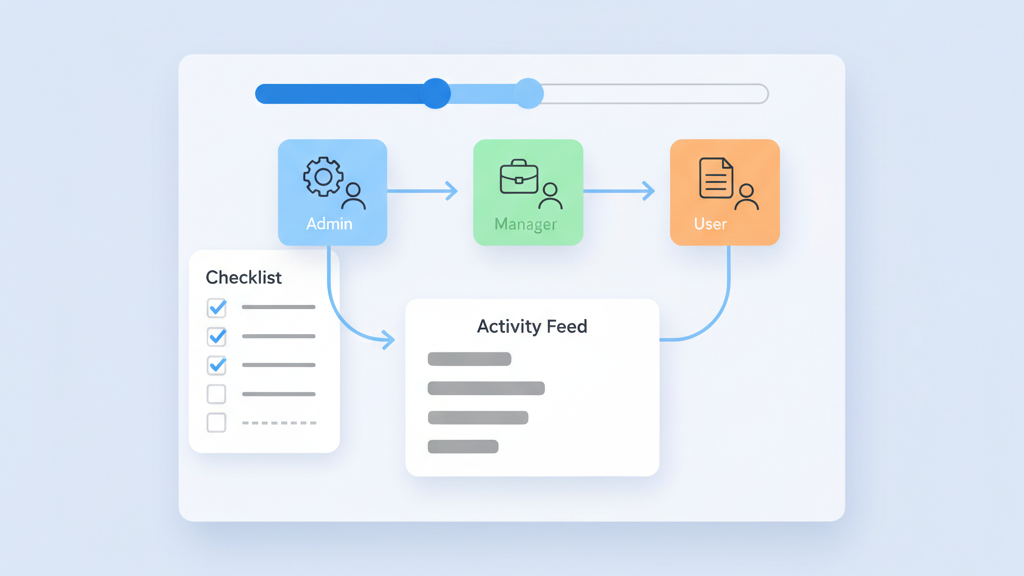
B2B software usually involves multiple stakeholders with different goals. An admin needs to set up permissions and billing. An end user just wants to get their work done. Treating these users the same way is a recipe for confusion. Your onboarding should branch based on the user role. This ensures that a manager does not see technical setup guides. Likewise, a staff member should not be forced to look at billing settings. Many startups miss this nuance and create a generic flow for everyone. A good onboarding path asks one or two qualifying questions at the very beginning. This allows you to serve the most relevant content immediately. It also helps you gather data on your user base. You can use this information to customize future email campaigns or in-app messages. Personalization does not have to be complex. Even a simple choice between different use cases can significantly improve the experience. By showing users that you understand their specific job, you build trust quickly. This tailored approach makes the software feel like a tool designed for them rather than a generic solution. Use these steps to guide different user types.
- Identify the primary goal of each user persona
- Create a branching logic at the start of the session
- Provide specific checklists for administrative setup tasks
- Hide advanced features from basic users during the first visit
- Offer role-specific templates to speed up the work process
The Power of Empty States and Templates
Empty states are one of the most neglected parts of an MVP. When a user first logs in, they usually see a blank dashboard with no data. This is intimidating and unhelpful. Instead of showing a zero state, use this space to guide the user toward action. You can provide sample data or templates to show what a finished project looks like. This helps the user visualize the value of your tool. Many founders think that a clean interface is always better. In a B2B context, a blank screen looks like work that needs to be done. It creates a mental burden for the user. You should fill these empty spaces with educational content or clear calls to action. A simple button that says Create your first report is better than a message saying No reports found. You can also use ghost elements. These are grayed out versions of what the UI will look like once data is populated. It provides a sense of structure and helps users understand where things will go. This reduces the learning curve significantly. Every empty screen is an opportunity to teach the user how to succeed. If you leave them staring at a white page, they will feel lost. Use these areas to reinforce the value proposition of your product.
Reducing Technical Friction for New Users
Friction is the enemy of any B2B software MVP onboarding flow best practices implementation. One of the biggest points of friction is data entry. Users hate manual typing. If your tool requires a lot of data to work, you must find ways to automate the process. This might mean adding a CSV uploader or connecting to a third party API. Even a simple integration with a tool like Google or Slack can make a huge difference. It allows the user to bring their existing workflow into your app. This creates an immediate sense of ownership. If the data is already there, the user is less likely to abandon the tool. You should also consider the technical hurdles. Some B2B tools require a code snippet to be installed on a website. This is a massive friction point because it often requires help from a developer. If your MVP has this requirement, you need to provide very clear instructions. Send an email template that the user can forward to their technical team. Provide a sandbox mode where they can test things out without installing anything. The easier you make it to get started, the faster you will see growth. Follow these methods to reduce friction during setup.
- Implement social sign on to speed up account creation
- Provide clear file templates for bulk data imports
- Use progress bars to show how close the user is to finishing
- Offer a one click integration with common industry tools
- Include a checklist of required items before starting the process
- Send automated reminders for users who get stuck halfway
Measuring and Iterating on Success
You must treat your onboarding as a living part of the product. It is not something you build once and forget. You need to collect data on where users are dropping off. Use tools like PostHog or Mixpanel to track every step of the flow. If you see that eighty percent of users quit on the third screen, you know exactly what needs to be fixed. Many startups guess what the problem is instead of looking at the data. This leads to wasted development time on the wrong features. You should also talk to your users directly. Ask them what was confusing or what they expected to happen. This qualitative feedback is just as important as the numbers. Sometimes a small text change can solve a big problem. You might find that a certain technical term you used is confusing to your target audience. Or perhaps the save button is not where they expect it to be. Iteration is the key to a successful MVP. By constantly refining the flow, you ensure that more users reach the aha moment. This creates a positive feedback loop of growth and retention. Your onboarding process should evolve as your product and your understanding of the market grow.