
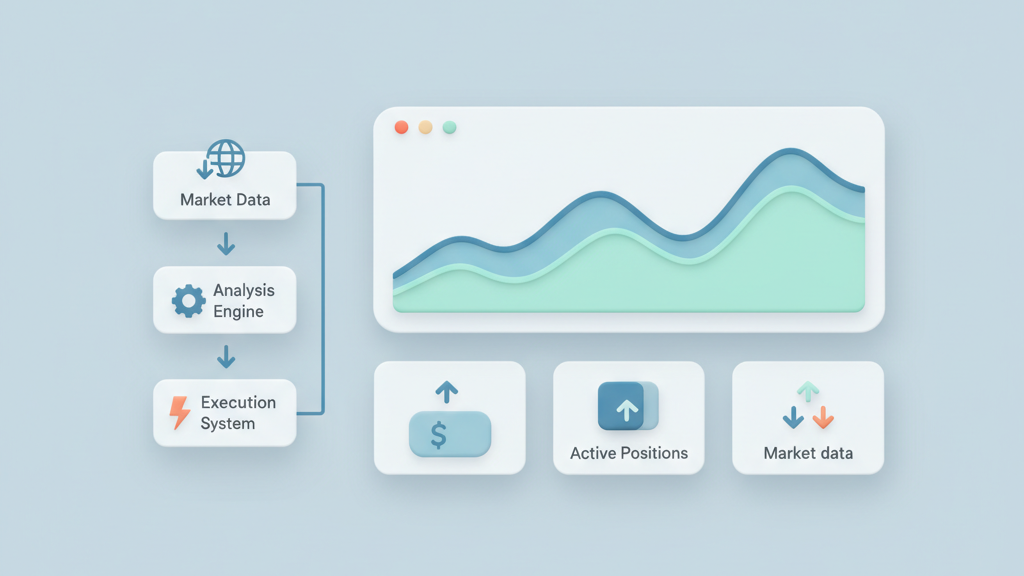
Startups often struggle to bridge the gap between financial strategy and technical execution. At Indent Technologies, we specialize in building these bridges. This guide explores How We Create Algorithmic Trading Scripts Using Python and Its Various Libraries to help founders launch faster. We focus on practical steps and robust architecture. Our goal is to provide a roadmap for building scalable trading systems that can handle the demands of modern financial markets. If you want a related deep dive, read How We Build Algo Trading Scripts Using Python and Various Libraries.
Choosing the Right Language for Financial Apps
Python is the primary choice for modern trading because it balances speed and readability. While some argue that lower level languages offer more performance, the development velocity of Python is unmatched for startups. We use it to prototype and deploy complex financial models in weeks rather than months. The ecosystem of tools allows us to focus on the logic of the trade instead of the low level plumbing of the system. Many startups miss this and spend too much time on infrastructure. We believe that getting to market quickly is more important than microsecond latency for most retail and mid frequency strategies. Our team relies on a core set of tools that handle everything from data manipulation to machine learning. We also find that the community support for Python is a major advantage. If we encounter a bug in a financial library, there is usually a fix available within hours. This reliability is essential when you are handling real money. We avoid the complexity of manual memory management and instead focus on the accuracy of the signals. This approach allows us to iterate on the strategy without worrying about system level crashes. By the time a startup needs the performance of C plus plus, they usually have enough capital to rebuild that specific module. For the MVP phase, Python is the clear winner for every founder we work with at Indent Technologies. For a practical follow-up, see Micro SaaS Software MVP For Niche Productivity Tools That Work.
- Pandas for data manipulation.
- NumPy for numerical calculations.
- TA Lib for technical indicators.
- Scikit Learn for predictive modeling.
Building a Reliable Market Data Pipeline
Real time data is the lifeblood of any trading script. We often see founders struggle with data latency and cleaning. When we build these systems, we prioritize clean data pipelines from reputable providers. Using libraries like CCXT for crypto or Alpaca for stocks allows us to standardize the incoming data format. This standardization is critical because different exchanges often return data in slightly different ways. We write custom wrappers to ensure that our internal logic always receives the same structure. This prevents the system from crashing during high volatility events. Many developers underestimate how messy market data can be. A single missing decimal point can ruin a strategy. We implement strict validation checks at the ingestion layer to catch these issues before they reach the execution engine. This proactive approach saves our clients from costly mistakes during live trading sessions. We also store historical data in optimized formats like Parquet to speed up our research process. Having quick access to years of market data allows us to refine the algorithms without waiting for slow database queries. We emphasize the importance of data integrity at every step of the development cycle. If the input is wrong, the output will be wrong regardless of how good the algorithm is. We spend a significant amount of time building these data bridges to ensure a smooth transition from research to live trading. We avoid using unreliable third party data aggregators for live systems. Instead, we connect directly to the exchange feeds whenever possible. A related guide worth reviewing is Custom Trading Algorithms: How We Help Build Trading Automation Systems Using Python.
Implementing Strategy Logic and Indicators
The core of the system is where the mathematical strategy lives. We implement these using Python classes that are easy to test and modify. This modular approach allows us to swap out strategies without rewriting the entire codebase. We focus on clear logic that handles entry and exit signals with high precision. It is vital to separate the signal generation from the order execution. This separation allows us to run simulations more effectively. We also integrate risk management rules directly into the strategy layer. This ensures that the bot never takes a position larger than the predefined limit. We find that simple strategies often perform better than overly complex ones in changing markets. Most successful founders start with a clear, basic idea and refine it over time. We help our clients translate their market intuition into a set of logical rules. These rules are then coded into the engine using libraries like TA Lib. This library provides hundreds of technical indicators that we use to identify market trends. We make sure the code is readable so that the client can understand exactly what the bot is doing at any moment. Transparency is a core value in our development process. When the logic is clear, it is much easier to debug and improve. We focus on these core strategy components.
- Trend following logic.
- Mean reversion calculations.
- Statistical arbitrage modules.
- Stop loss automation.
- Position sizing rules.
Validating Success through Backtesting
Before any capital is put at risk, we run extensive backtests using historical data. Backtesting is not just about seeing if a strategy made money in the past. It is about understanding the drawdown and the volatility of the returns. We use libraries like Backtrader to simulate real world conditions. This includes accounting for slippage and transaction costs which many amateur developers ignore. If you do not account for the cost of the trade, your backtest will look much better than reality. This is a common trap that we help our clients avoid. We also perform walk forward analysis to ensure the strategy is robust across different market cycles. A strategy that only works in a bull market is a liability. We look for consistency and manageable risk profiles. This phase of development is where we spend the most time because it provides the confidence needed to go live. We often find that a strategy needs several rounds of optimization before it is ready for the real world. We use historical data from various sources to ensure the bot can handle different market regimes. This rigorous testing process reduces the chances of unexpected behavior during live execution. We believe that a good backtest is the foundation of any successful trading operation. Without valid proof of performance, moving to a live environment is a gamble rather than a business decision.
Production Deployment and Infrastructure
Moving from a local script to a production environment requires a stable infrastructure. We typically deploy trading bots on cloud providers like AWS or Google Cloud. This ensures high availability and low latency connectivity to the exchange servers. We use containerization tools like Docker to make the deployment process repeatable and reliable. This means the code runs the same way on a developer machine as it does in the cloud. We also implement comprehensive logging and alerting. If the bot loses its connection or encounters an error, the team needs to know immediately. We set up automated triggers to pause trading if certain risk thresholds are met. This level of automation is what separates a professional trading system from a hobby project. We also focus on the security of the hosting environment. We restrict access to the production servers and use encrypted connections for all data transfers. Many startups forget that their trading script is a valuable piece of intellectual property. We take every precaution to ensure the code and the data remain secure. Our deployment strategy is designed to be scalable. As your trading volume increases, we can easily add more resources to handle the load. We use these infrastructure tools for every launch. If you need implementation support, explore FlutterFlow development.
- Docker containerization.
- AWS cloud hosting.
- Prometheus for monitoring.
- Slack alerts for errors.
- Automated database backups.
Ensuring Security and Risk Management
Security is the most critical part of any fintech application. We never store API keys in plain text. We use secret management tools to keep sensitive credentials safe. Beyond technical security, we also implement financial safety rails. These rails include daily loss limits and maximum order sizes. We believe that protecting capital is just as important as generating profit. Many startups focus only on the upside and forget that one bad trade can wipe out an account. We build systems that are designed to fail safely. If something goes wrong, the system should default to a neutral position. This philosophy helps our clients sleep better at night knowing their funds are protected by smart code. We also perform regular audits of the execution logs to ensure that every trade matches the intended strategy logic. This level of oversight is necessary to maintain trust in the automated system. We also consider the impact of market liquidity on our trades. We write scripts that avoid entering large positions when the market is thin. This prevents the bot from moving the price against itself. These small details make a big difference in the long term profitability of the system. We prioritize safety over aggressive growth at every stage of the project. Teams moving from strategy to execution can review Mobile app development.
Partnering for Long Term Scaling
Scaling a trading business requires more than just good code. It requires a partner who understands the intersection of finance and technology. At Indent Technologies, we provide the technical expertise to turn a vision into a live product. We focus on clean, maintainable Python code that can grow with your user base. Our team handles the heavy lifting of API integrations and data processing so you can focus on the alpha. We have seen how the right technical choices early on can prevent massive headaches later. Choosing Python was the first step toward building a flexible and powerful system. We continue to stay at the forefront of the industry by adopting the latest libraries and best practices. How We Create Algorithmic Trading Scripts Using Python and Its Various Libraries is a process of constant refinement. We do not just build the code and leave. We offer ongoing support to ensure the system adapts to new market conditions. Our goal is to build long term relationships with founders who are serious about their trading business. If you are ready to take your strategy to the next level, we are here to help you build the engine that drives it. We work closely with your team to ensure that every requirement is met and that the system performs as expected in a live environment. We provide these services for our clients.
- Custom API development.
- Scalable cloud architecture.
- Ongoing performance tuning.
- Security first development.
- Dedicated technical support.