
Founders often ask for a quick budget estimate for cross platform MVP apps USA when they start product planning. This guide breaks cost drivers into clear areas, so you can stop guessing and start planning. I focus on typical choices that matter to budget, like framework selection, team model, and third party costs. Many startups miss integration and testing costs, so expect surprises if you skip those line items. This intro sets the tone for hands on, practical estimates you can adapt to your project. Read with a calculator handy and plan conservative buffers. The goal is not to promise exact numbers but to help you build a defensible budget that investors and stakeholders can trust. If you want a related deep dive, read Startup MVP Launch Budget Estimate For USA: A Practical Guide.
Estimating Core Costs
Start by listing core cost buckets for an MVP and assign rough ranges to each. Include design, front end development, backend services, integrations, hosting, testing, and project management. Use a pragmatic rate table for people and services and estimate hours for each feature. Many founders underbudget for backend and integrations. Be conservative with integration effort if you rely on external APIs. Consider using a minimal feature set to reduce scope with the aim of validating user demand. For cost control, plan two sprints of buffer and a small maintenance allowance. This approach gives you a realistic baseline and makes it easier to explain trade offs to investors or early customers. If you need implementation support, explore Backend API development.
- List core buckets first
- Estimate hours per feature
- Include integration work
- Add buffer and maintenance
Platform Choices and Trade offs
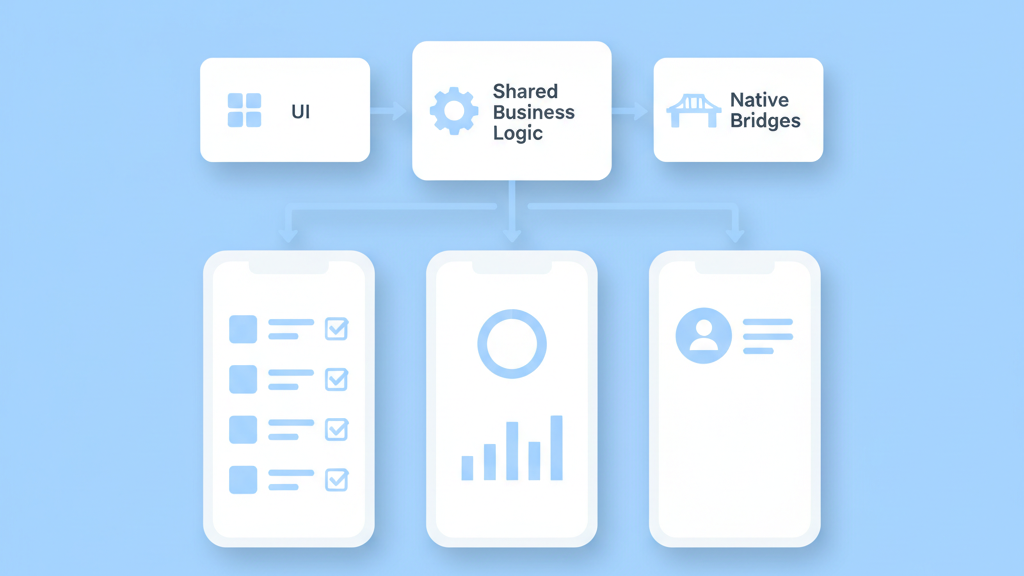
Choosing a cross platform framework cuts development time but adds trade offs. Frameworks save work when UI and business logic can be shared. They become costly when the app needs heavy platform specific features or performance tuning. Evaluate the need for native modules early. If you expect camera, AR, or advanced offline features you may need native bridges. Weigh developer availability and long term maintenance when selecting a stack. Many startups pick a framework based on a single hire instead of future hires. That is risky. Pick a stack that matches the team you can recruit in the USA and factor any third party plugin costs into the initial estimate.
- Match framework to app needs
- Plan native module risks
- Check developer availability
- Add plugin license costs
Design and UX Budget
Design is often treated as optional but it drives user retention and conversion. Allocate time for user flows, wireframes, clickable prototypes, and final screens across platforms. Account for design handoff time and iterations after user testing. If your MVP requires polished animations or a custom component library the budget should rise accordingly. Consider hiring a product designer with mobile experience who can create reusable components and a basic style guide. Many startups skip usability testing and then pay later with low retention. A small design investment up front improves the quality of feedback you gather during launch and reduces expensive redesigns after the product hits users. Teams moving from strategy to execution can review Mobile app development.
- Include prototypes and handoff
- Budget for iterations
- Hire mobile experienced designers
- Run quick usability tests
Development Team Models
Your hiring model shapes the estimate more than any single technology. Compare inhouse teams, contractors, and agencies. Inhouse hires add recruitment time and benefits costs but give long term ownership. Contractors are faster to start but require strong product management. Agencies can deliver predictable timelines but come at a premium. In the USA market rates vary widely by experience and location. Calculate blended hourly rates for your chosen model and apply those to feature estimates. Many founders assume a single rate for all tasks. That is wrong. Use tiered rates for senior architects, mid level developers, and juniors to reflect real costs. For a practical follow-up, see How to Calculate a Real Price Estimate for Web App MVP Development USA.
- Compare hiring models
- Use blended hourly rates
- Plan recruitment time
- Tier rates by seniority
Third Party Services and Licensing
Third party services can accelerate development but add recurring costs that affect your runway. Include analytics, push notifications, authentication, payment processors, crash reporting, and mapping services in your estimate. Some services have free tiers that are fine for early tests, while others require paid plans once usage grows. Licensing fees for SDKs or enterprise services can be unexpectedly high. Many startups forget to model monthly and annual fees separately. Add estimated monthly spend and multiply into your runway model. Also plan for a modest contingency for switching providers if you outgrow a service during scale up.
- List recurring services clearly
- Check free tier limits
- Model monthly costs into runway
- Add contingency for migration
Testing and QA Expectations
Testing is not optional if you want credible user feedback and sustainable growth. Budget for device testing across common screen sizes and OS versions in the USA market. Include time for automated unit tests, end to end tests, and manual exploratory testing. Plan for bug fixes after each test cycle and reserve time for performance tuning. Many startups skip test automation and then spend more time fixing regressions as the codebase grows. For cross platform apps, test both shared logic and platform specific UI. Factor in device cloud costs or device lab time if you need broad coverage for launch. A related guide worth reviewing is MVP Development for TravelTech Apps: Launch Smart Travel Solutions for the US Market.
- Test across devices and OS versions
- Include automation and manual tests
- Reserve time for bug fixes
- Budget device cloud costs
Timeline Risks and Buffering
Timelines directly influence cost because longer projects increase overhead and staffing needs. Estimate best case and conservative timelines and translate those into cost ranges. Add buffers for unknown integrations, delayed API responses, and hiring gaps. Many founders assume no delays and then need emergency fixes that are expensive. Use milestone based budgeting to control spending and make go no go decisions at key points. Keep the initial scope small enough to deliver a validated prototype in the first three to four months if possible. This gives you working momentum and reduces the risk of running out of funds before learning what matters to users.
- Create best and conservative timelines
- Add buffers for integrations
- Use milestone based budgeting
- Aim for a quick validated prototype
Putting Together a Realistic Estimate
Combine your buckets into a simple spreadsheet and produce low, medium, and high estimates. Use realistic hourly rates and include both one time and recurring costs. Present estimates as ranges with clear assumptions so stakeholders know what moves the needle. Many startups present a single number and then face scope changes that invalidate the plan. Highlight the assumptions that change cost most such as team model, required native work, and third party service tiers. Finally choose a contingency percentage and state a funding ask that covers product build plus six months of operations to reduce execution risk. This method gives you a defensible budget to share with investors and partners.
- Produce low medium high ranges
- Document key assumptions
- Include one time and recurring costs
- Add contingency and runway