
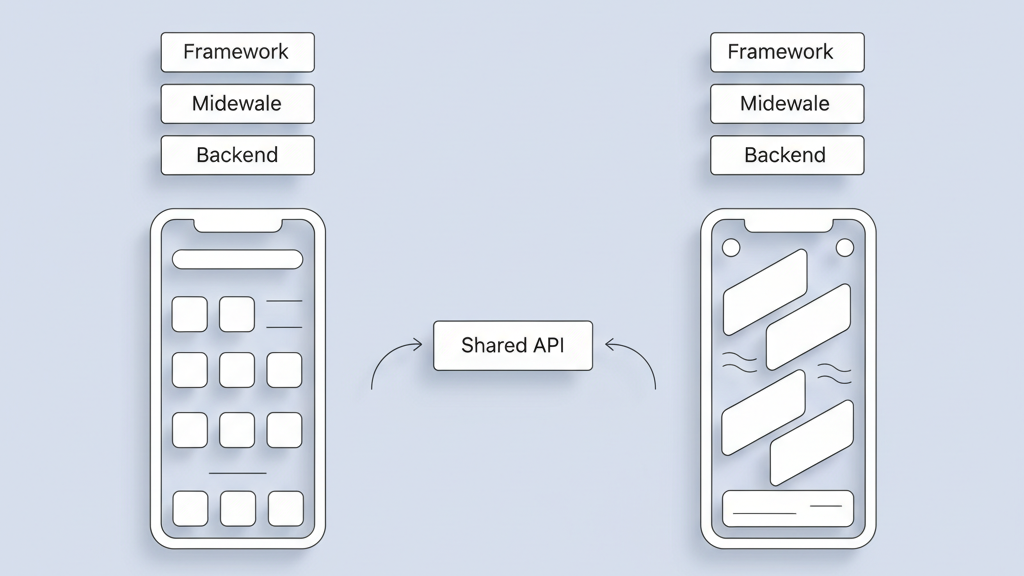
Choosing between Flutter vs React Native for MVP apps comparison can feel like a technical sword fight. This guide cuts through vendor hype and focuses on what matters to founders and product managers. You will get a clear view of trade offs for speed, developer availability, UI fidelity, and long term maintenance. Many startups miss this step and pick a stack that creates more work later. I offer plain language guidance and real world warnings so you can make a pragmatic choice and move faster with less risk. If you want a related deep dive, read Flutter vs React Native: Which Is Better for Your MVP Development?.
When To Choose Flutter
Flutter shines when your MVP needs a unique polished interface and consistent visuals across devices. The framework bundles a rich widget set so designers see fewer surprises in development. If you have a small team that can learn Dart or hire a single cross platform specialist you can build predictable screens faster. The hot reload loop feels snappy which reduces feedback time between design and code. Flutter also offers better control over complex animations and custom UI elements which is handy for consumer facing apps that need a wow factor. A practical warning, the ecosystem is younger than its competitors and some niche native libraries may need custom plugins or native work. Plan for a small buffer when integrating unusual hardware or platform specific services. For a practical follow-up, see Budget Estimate for Cross Platform MVP Apps USA: A Startup Guide.
- Best for custom and consistent UI
- Good for single team ownership
- Hot reload speeds iteration
- Expect occasional native plugin work
When React Native Makes Sense
React Native often wins when you need quick hiring and reuse of web talent. JavaScript experience is common which means you can assemble teams quickly and tap into a broad library ecosystem. It can also be a pragmatic choice if your MVP will evolve into a hybrid product that shares logic with a web front end. The framework maps components to native UI elements so you get a more native feeling out of the box for standard controls. That said you may hit fragmentation across devices and OS versions which requires more testing. Many product teams appreciate the low entry barrier but they should budget for native bridges and occasional platform specific debugging. React Native is practical for early validation when speed of team ramp matters more than pixel perfect visuals. If you need implementation support, explore MVP development for startups.
- Good for JavaScript teams
- Faster hiring and ramp
- Better native look for standard controls
- Prepare for device fragmentation
Development Speed And Tooling
Speed matters for MVPs because every week you delay feedback you lose learning. Flutter offers a cohesive SDK and consistent tooling which reduces time spent on build chain issues. Reactive widgets and a single rendering engine cut down platform specific tweaks. React Native can be very fast in practice when you reuse web code and leverage the huge npm ecosystem. Tooling varies by community plugins and native modules which can add integration time. Debugging tools and hot reload like features exist in both frameworks but real speed comes from team familiarity. A mild opinion is that startups should pick the environment their team can master in weeks rather than months. Many startups miss this and chase the newest tech instead of focusing on developer productivity.
- Pick the stack your team can learn fast
- Consider existing code reuse
- Assess plugin maturity early
- Measure real developer velocity
Performance And Native Access
For MVPs raw performance is rarely the top priority but perceived performance is crucial. Flutter tends to provide smooth animations and consistent frame rates because it renders UI in its own engine. This matters for apps with rich graphics or motion heavy interfaces. React Native uses native components which helps with default responsiveness for standard controls. However bridging to native modules can introduce overhead for complex interactions. If your MVP relies on heavy background processing, real time audio, or low latency sensors test early on real devices. A practical warning is that emulators hide performance problems. Always validate with the lowest end devices you expect users to run. The trade off is simple, more native access may cost more integration time.
- Test on real low end devices
- Flutter gives smoother custom animations
- React Native uses native controls
- Native modules add integration cost
UI Consistency And Design Handoff
Design handoff can be a major drag on MVP velocity. Flutter reduces surprises because designers can expect the same layout rules across platforms. That consistency is useful when you want pixel stability early. React Native is better if you want platform native patterns to feel familiar to users on iOS or Android. Designers who lean into platform conventions will save time with React Native. In both cases using a component library and strict style tokens speeds work. A small warning, leaving design decisions to developers can cause technical debt if you skip a style system. Invest a few days upfront to build shared components and you will cut down on regressions and rework.
- Use a shared component library
- Decide on platform fidelity early
- Allocate time for design tokens
- Avoid design drift during sprints
Maintainability And Team Skills
Maintainability matters when you want to iterate after product market fit. Flutter codebases are often easy to reason about when teams follow a clear state management approach. The ecosystem encourages certain patterns which can help new engineers onboard. React Native projects can become fragmented if teams mix many native modules and custom bridges. The large JavaScript community makes it easier to find contractors fast. For long term health, document platform specific parts and write integration tests. A mild opinion is that code quality beats choice of framework when teams are small. Many startups assume the framework will save them from poor practices. It will not, so invest in a clear code style and testing early on. A related guide worth reviewing is Uncovering the Untold Tactics: Navigating MVP Iteration for Product-Market Fit.
- Document native integrations
- Keep a clear state strategy
- Write integration tests early
- Prioritize code quality over hype
Cost And Time To Market
For founders the bottom line is time to learn and cost to ship. React Native can reduce hiring cost if you already have web developers who can transition to mobile. That reuse often shortens time to market. Flutter can be cost effective when you need a single developer to control end to end UI and deliver consistent design. Be realistic about hidden costs like native plugin development, QA across devices, and performance tuning. A strategic tip is to scope the MVP tightly and avoid redoing core features across platforms. Many startups try to launch with too many device specific features and waste runway. Aim for the smallest testable product and measure customer response before investing in perfecting cross platform quirks. Teams moving from strategy to execution can review Mobile app development.
- Scope the MVP tightly
- Estimate native plugin costs
- Reuse web talent when possible
- Measure before optimizing