
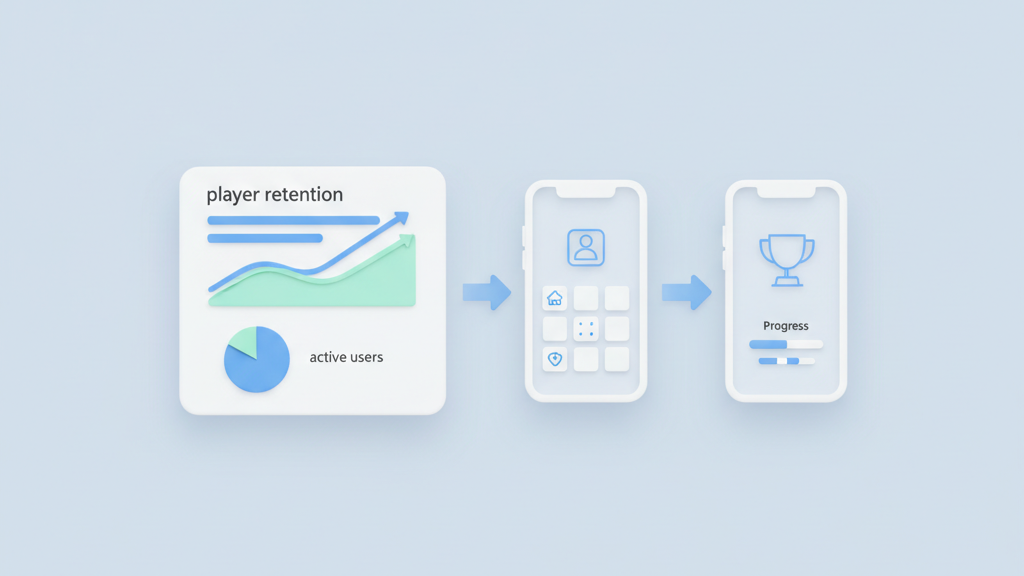
Most game ideas fail because they take too long to reach actual players. Founders often spend months on complex engines before knowing if the core loop is even fun. At Indent Technologies, we help teams skip the waste. Our approach focuses on a FlutterFlow gaming app MVP prototyping and player validation service for founders to build lean and test fast. This strategy allows you to prove your concept without a massive upfront investment. You get a functional game environment that users can touch and feel in weeks. By prioritizing speed and real world data, you can build a product that people actually want to play.
The Shift in Modern Game Development
The traditional path for building a mobile game is expensive. Most founders start with Unity or Unreal immediately. While these engines are powerful, they are often overkill for a simple proof of concept. Building a prototype should be about speed. You need to know if your mechanics work. You need to see if people will play the game more than once. Many startups miss this and spend their entire budget on graphics before testing the gameplay. Using a low code approach changes the math for early stage founders. It allows you to create a high fidelity experience that connects to real databases. You can manage player profiles and leaderboards easily. This speed is a competitive advantage in a crowded app store. You can iterate based on what people actually do rather than what you think they want. It is a shift from heavy engineering to rapid product discovery. This method reduces the financial risk of launching a new title. You can test multiple concepts for the price of one traditional build. It is the smartest way to enter the gaming market today.
Essential Features for a Gaming MVP
A successful minimum viable product in gaming is not a half finished game. It is a focused experience that highlights the unique selling point of your app. You must decide which features are essential for the first version. Adding too many social features or complex animations too early can hide the core experience. We find that focusing on the feedback loop is the most important part of early development work. You want to see how users interact with the main mechanic. If your game relies on speed, the prototype must feel responsive. If it relies on strategy, the logic must be sound. Building these elements in a visual environment helps you spot flaws in the logic. It also makes it easier to change the direction if the initial feedback is negative. Founders should focus on these five areas to ensure their prototype delivers value:
- Simple core gameplay mechanics
- Basic player profile management
- Leaderboards for social proof
- Reward systems for retention
- Easy onboarding for new users
The Power of Early Player Validation
Player validation is the secret weapon for any successful gaming startup. It involves getting the prototype into the hands of real people as soon as possible. You should not wait for the game to look perfect. In fact, raw feedback on a simple prototype is often more honest. People focus on the fun factor rather than the visuals. We recommend a structured approach to this validation. You should track specific metrics like session length and return rate. Many founders get distracted by vanity metrics like total downloads. What really matters is if the same users come back the next day. A professional validation process provides the data needed to make these calls. It helps you decide whether to pivot or double down on your current direction. This data is also vital when you start talking to investors. They want to see that people actually like your game. Showing them a validated prototype is much stronger than showing them a pitch deck. It proves that there is a market for your idea.
Technical Advantages for Founders
FlutterFlow is not just for business apps. It has become a powerful tool for building interactive gaming experiences. The ability to integrate custom code allows for complex game logic while keeping the UI development fast. You can use Firebase for real time data which is perfect for multiplayer elements. The platform handles the cross platform deployment automatically. This means you can test on both iOS and Android without doubling your work. Founders love this because it saves time and money. You get a product that looks and feels native. The visual builder makes it easy to adjust the layout based on player feedback. You can move buttons or change colors in minutes. This flexibility is essential when you are trying to find the perfect user experience. The following technical benefits make this approach ideal for startups:
- Visual UI builder for fast iterations
- Native performance on iOS and Android
- Seamless Firebase integration for data
- Custom action support for complex logic
- Built in version control for teams
Avoiding Common Prototyping Pitfalls
Many founders fall into the trap of over engineering their first release. They want every feature to be perfect. This leads to long development cycles and missed opportunities. Another common mistake is ignoring the backend until it is too late. Even a simple game needs a scalable way to store player data. You should also be careful about the tools you choose. Some platforms are easy to start with but impossible to grow. Our chosen stack offers a balance of speed and scalability. You can start small and add complexity as your user base grows. This keeps your costs manageable. It also allows you to focus your energy on the most important part of the business which is growth. If you spend all your time fixing bugs, you will never have time to find new players. Practical prototyping is about making smart choices early on. It is about building a foundation that can support a hit game.
From Prototyping to Market Success
Once you have validated your game, the path forward becomes much clearer. You have a solid foundation and a list of requested features from real players. This is where many founders decide to either polish their current build or move to a more complex engine. If the game logic is simple, you might stay on your current platform for a long time. It can handle high user counts if the backend is structured correctly. If you need intense 3D graphics, you now have the data to justify the move to a high end engine. Either way, you have avoided the risk of building something nobody wants. You have a roadmap based on reality. This is the ultimate goal of the prototyping phase. It is about reducing risk while maximizing the chance of a viral hit. Success in the gaming world is hard to predict, but data makes it much easier to achieve. We help you find that data through smart development practices.