
Starting a medical technology company requires more than just a great idea. You need a platform that balances speed with strict security rules. Building a new medical tool requires a mix of speed and safety, and FlutterFlow healthcare telemedicine app MVP validation and compliance consulting provides exactly that. Many startups focus too much on features and forget that data privacy is the actual product in healthcare. This guide explores how to use low code tools correctly while meeting industry standards. Working with experts on this process helps founders avoid common mistakes and ensures their ideas meet market needs.
The Importance of Market Validation in Healthcare
Healthcare is a difficult market for new software because the rules are strict and the users are busy. Most people think they can just build a feature and then figure out the legal side later. This is a mistake that can kill a company before it starts. Proper FlutterFlow healthcare telemedicine app MVP validation and compliance consulting provides a clear path for development. It helps you focus on what doctors actually want to use during a busy shift. Many startups miss this and build complicated tools that just get in the way. Validation means talking to real users and getting feedback on a basic prototype. You need to prove that your solution solves a real problem before you spend too much money. It is better to find out your idea is wrong in the first week than in the sixth month. Indent Technologies focuses on helping teams navigate these early decisions. We look at the technical requirements and the market needs at the same time. This approach ensures you do not waste resources on features that will never be used. A good MVP is about quality over quantity. Founders who invest in these services early on usually find more success in the market. You must be willing to change your plan based on what the data tells you. This is the only way to build a product that people will actually pay for in the long run.
Technical Steps for HIPAA Compliance
Compliance is the most important part of any medical application. You must protect patient data at every level of your software. FlutterFlow is a powerful tool for building interfaces, but the backend must be handled with extreme care. When you are building a product in this space, you need to follow certain technical steps:
- Sign a business associate agreement with every cloud provider you use
- Encrypt all sensitive data while it is stored in your database
- Use secure authentication methods to verify every user identity
- Set up an audit log that records every time a medical record is viewed
- Mask personal identifiers in any logs used for debugging
Leveraging Low Code for Speed and Stability
FlutterFlow offers a visual way to build apps that can significantly reduce the time to market. This is perfect for founders who need to show progress to investors or early users. However, using a low code tool does not mean you can ignore the technical details. You still need a strong backend strategy and a clean data model. In our experience, many teams treat low code as a shortcut that allows for messy logic. This creates a mess that is hard to fix later. A professional consulting service helps you maintain high standards while moving quickly. You get the speed of FlutterFlow without the typical drawbacks of a poorly planned project. This means you can launch your medical app with confidence. You will know that the app can handle a growing number of users without breaking. It is about finding the right balance between rapid development and long term stability. Most successful startups use this balance to their advantage. They focus on the core user experience while keeping the architecture clean. This strategy allows for easy updates and new features as the market changes. Building a healthcare tool is a marathon, not a sprint. You need a foundation that can last for years.
Core Features for a Telemedicine MVP
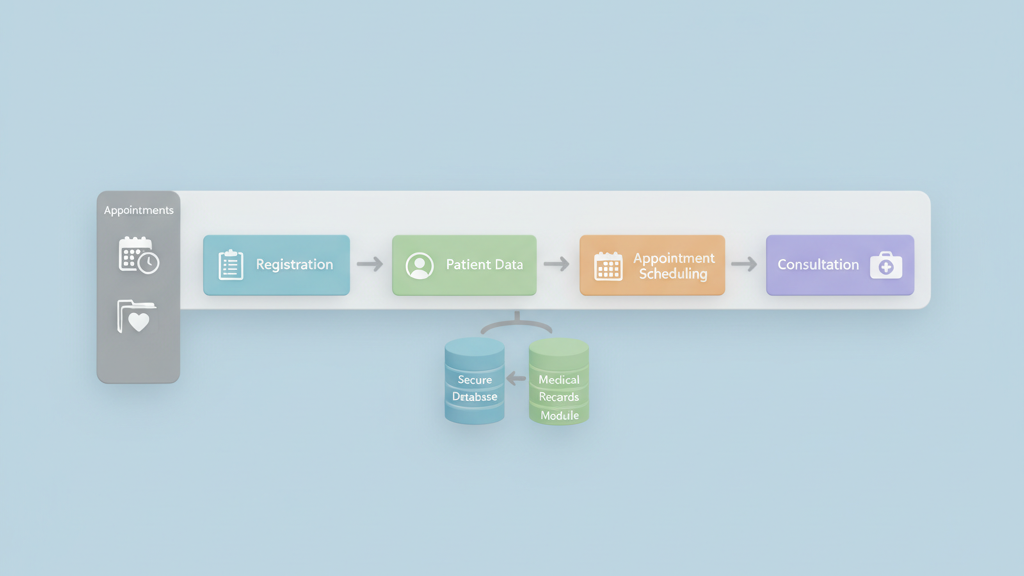
When you are designing the first version of your telemedicine product, you should focus on features that provide immediate value. You do not need to build everything at once. Focus on the core interaction between the doctor and the patient. This usually involves a few key components:
- A simple way for patients to book an appointment with a provider
- A secure portal where users can upload medical history or documents
- High quality video streaming that works on both mobile and web
- A dashboard for doctors to view their daily schedule and patient notes
- A payment gateway that handles transactions securely
- A notification system that sends reminders for upcoming appointments
The Value of External Expert Perspective
Consulting provides a fresh perspective on your product that is often hard to see from the inside. When you are deep in the development process, it is easy to miss simple errors in the user flow. An outside team can look at your work and identify areas where patients might get confused. This is especially important in healthcare where clarity can impact patient outcomes. Professional advisors help you think about the long term roadmap for your application. You might be focused on the launch, but they are thinking about how the app will perform with ten thousand users. They help you choose the right tools and third party services that will grow with you. This saves you from having to rebuild your entire system in a year. Working with experts also gives you confidence when talking to potential partners or investors. You can point to your validation process and your compliance standards as proof of your professionalism. It shows that you take the security of patient data seriously. This level of preparation is what separates a hobby project from a real business. Indent Technologies has seen how this preparation leads to better funding opportunities and faster growth. Many startups miss the chance to scale because they did not plan for it.
Secure Data Management and Recovery Plans
Storage of medical data is not just a technical task, it is a legal requirement with high stakes. You must have a clear understanding of where every byte of data lives. Many founders assume that using a cloud provider is enough to stay safe. In reality, you are responsible for how you configure those services. You must ensure that no unauthorized person can access the database. This includes setting up strong firewalls and using private networks when possible. It also means being careful about how you display data on the front end of your application. You should only show the information that is necessary for the current task. This minimizes the risk if a device is ever lost or stolen. Proper data management also involves having a plan for data backups and disaster recovery. You need to know that you can restore your system quickly if something goes wrong. This level of planning is a core part of being a healthcare provider. It might seem like a lot of work for an MVP, but it is the foundation of your future success. Investing in good habits now will pay off for years to come. Security is not a feature, it is a requirement.