
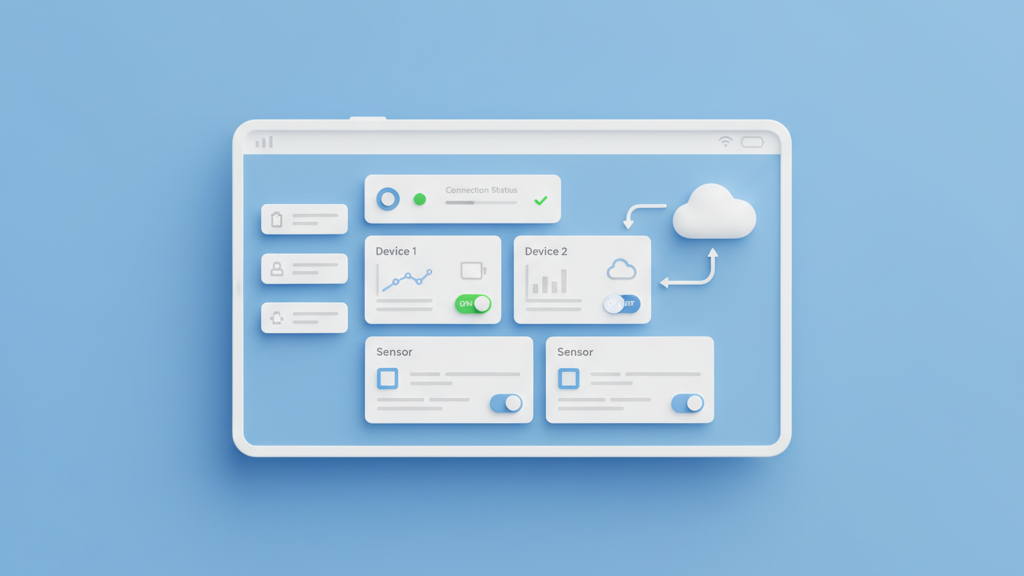
This post explains how FlutterFlow IoT app MVP development and integration service for startups can speed product validation and reduce engineering risk. I focus on realistic trade offs, common pitfalls, and integration patterns that matter when you connect devices to mobile apps. Many founders think a prototype is enough, but connectivity and security expose gaps fast. The advice here covers architecture choices, testing strategies, and how to keep a small team focused. You will get pragmatic steps that work in the US market and tips for working with contract engineers and hardware suppliers.
Why Startups Should Use FlutterFlow For An IoT MVP
FlutterFlow lets startups build native looking mobile apps fast while keeping iteration costs low. For IoT teams this is useful when timelines are tight and hardware may change. You can prototype dashboards, control flows, and onboarding screens without a large frontend team. The low code approach reduces UI friction, so product managers can test hypotheses about user flows and telemetry display. Many startups miss this chance and waste time building custom UI that is not validated. However a no code build does not solve integration complexity. You still need reliable device pairing, cloud ingest, and secure authentication. Plan for those as early tasks and allocate engineering time to glue code that sits between devices and the FlutterFlow front end.
- Validate UI and flows before hardware finalization
- Use FlutterFlow to reduce frontend build time
- Allocate engineers to integration and security
- Test on real devices early
- Avoid over designing the initial interface
Essential Architecture Patterns For Device Integration
A simple and reliable architecture keeps the mobile app decoupled from device protocols. Start with devices talking to a cloud broker or gateway that normalizes messages. Use MQTT or HTTPS from gateways to the cloud, and expose REST or Websocket endpoints for the FlutterFlow app. This approach isolates firmware changes and reduces app churn. For push style updates use a message queue and a notification service. For command and control, ensure a two way path with acknowledgements. Many founders forget to design for intermittent connectivity so include caching and retry logic. Also think through identity for devices and users. A central identity layer simplifies access rules and audit logs. Build the smallest end to end flow you can and test error modes before polishing the UI.
- Use a cloud gateway to normalize device messages
- Expose REST or Websocket APIs to the app
- Design for offline and retry scenarios
- Implement device and user identity
- Keep the first end to end path minimal
Practical Steps For Integration And Security
Integration and security are the parts that make or break an IoT MVP. Start by defining authentication for both users and devices. Use token based auth and short lived credentials for device actions. Secure the transport layer with TLS and verify certificates on the gateway. Log telemetry and events in a way that supports debugging without overwhelming storage. A common pattern is to capture raw device telemetry in a cold store and stream processed events to a database for the app. Many startups treat security as an afterthought and pay the price during pilots. Allocate a short security sprint early to lock down endpoints, set rate limits, and plan incident response. These steps are not glamorous, but they keep pilots from failing in the field.
- Use token based authentication for users and devices
- Encrypt transport with TLS
- Log both raw telemetry and processed events
- Set rate limits and monitoring early
- Run a short security sprint before pilot
Development Workflow For A Lean IoT Team
A lean workflow keeps iterations short and feedback tight. Start with a product spec that focuses on one core user scenario and the minimal data points needed to test it. Wireframe the app in FlutterFlow and validate screens with user interviews. Parallelize work by decoupling firmware and cloud APIs from the app UI. Use CI for firmware and automated tests for cloud endpoints. Create a simple staging environment that mirrors production connectivity. For testing, include a device simulator so the app team can validate flows without hardware on hand. Many startups underestimate the time needed for end to end tests. Reserve time for manual field tests and plan weekly demos so stakeholders see progress and can prioritize changes.
- Focus on one core user scenario first
- Parallelize firmware, cloud, and UI work
- Use device simulators for early testing
- Keep a staging environment similar to production
- Schedule regular demos to stay aligned
Cost And Timeline Advice For Founders
Budgeting for an IoT MVP requires realistic line items for hardware, cloud, and integration. Hardware prototypes cost more than people expect and lead times can delay timelines. For the app work use FlutterFlow to cut UI costs while reserving senior engineer time for cloud and device glue code. Expect 8 to 12 weeks to reach a usable field pilot with a small offline capable feature set. Many founders aim for faster but cut necessary testing. Plan a buffer for device certification and firmware fixes. Use cloud services with predictable pricing and monitor telemetry to avoid surprise bills. Finally, factor in support for the pilot period. A smooth pilot tells you what to build next and reduces risk for future investment.
- Account for hardware lead times and costs
- Reserve senior time for integration work
- Plan for an 8 to 12 week pilot timeline
- Monitor cloud usage to control costs
- Include pilot support in the budget