
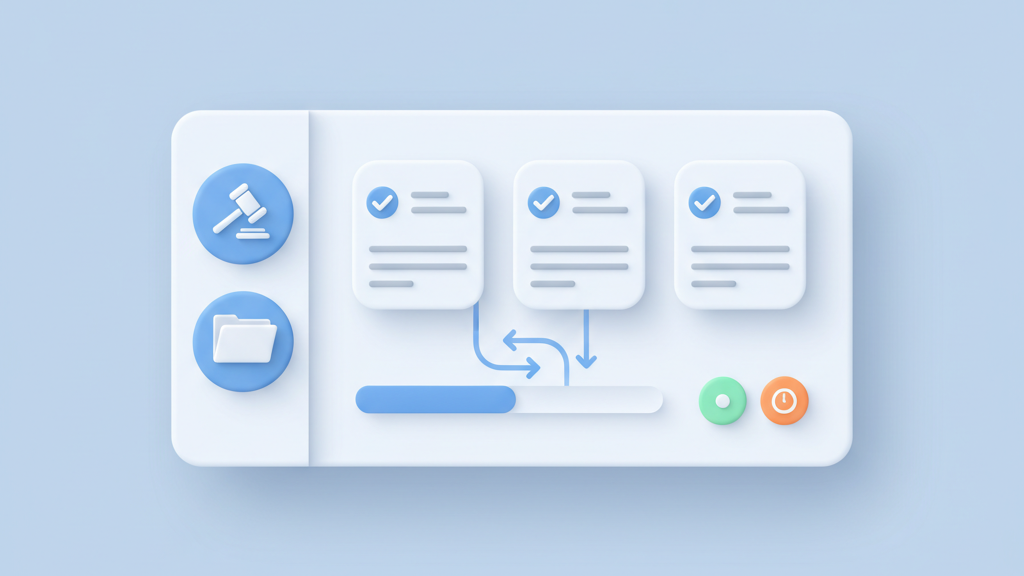
The legal industry is currently undergoing a massive digital transformation. Modern law firms and legal departments are looking for better ways to manage documents, track billable hours, and communicate with clients. For a startup founder, entering this space requires a balance between rapid development and strict adherence to regulations. This is where a FlutterFlow legaltech app MVP development and compliance review service becomes an essential part of the strategy. Using low-code tools like FlutterFlow allows for much faster iterations compared to traditional coding methods. You can build a functional prototype in weeks instead of months. However, the legal space does not tolerate mistakes in data handling or privacy. A focused approach helps you validate your idea with real users while keeping the platform secure from the start. This guide explores how to build a robust legal product that stands up to professional scrutiny.
The Power of Low Code in Legal Technology
Many founders think that high quality software must take a long time to build. In the past, this was often true because every single line of code had to be written by hand. Today, platforms like FlutterFlow change the game for legaltech startups. Using a FlutterFlow legaltech app MVP development and compliance review service allows you to focus on the business logic instead of the infrastructure. You can drag and drop complex interface elements while still having the ability to add custom code when needed. This flexibility is vital for legal apps that need specific features like document parsing or secure client portals. Many startups miss this and waste their entire seed round on a custom build that takes a year to launch. By the time they hit the market, the needs of their users have changed. Starting with a low code foundation lets you pivot quickly based on real feedback. It also makes it easier to show progress to potential investors. A working app is always more convincing than a slide deck. When you use the right tools, you can build a product that looks and feels like a million dollar software on a much smaller budget.
Essential Features for a Legal MVP
A successful legal application must address the specific pain points of legal professionals. It is not enough to just make a pretty interface. The software must handle documents safely and ensure that users can find what they need quickly. We recommend focusing on a small set of core features that provide the most value. This keeps the development process lean and reduces the number of things that can go wrong. Many law firms still rely on email for everything, which is often insecure. Your MVP can provide a safer alternative by centralizing communication. It is also important to consider how users will interact with the app on different devices. FlutterFlow is great for this because it allows for easy deployment to both web and mobile platforms. This ensures that a lawyer can check a case file on their phone while at court or on their laptop at the office. You should prioritize features that make daily tasks easier for your target audience. This approach creates immediate value and builds trust with your early adopters.
- Secure user authentication with multi factor options
- Encrypted document storage and retrieval systems
- Role based access control for different staff levels
- Audit logs to track who viewed or edited a file
- Integration with popular electronic signature tools
- Simple billing and time tracking modules
Managing Regulatory Compliance from Day One
Legal software is held to a higher standard than most other types of applications. You are often dealing with sensitive client data that is protected by law. This means you cannot treat security as an afterthought. Many startups make the mistake of building their entire app and then trying to add security at the very end. This is usually much more expensive and difficult than doing it right from the beginning. A professional compliance review ensures that your database architecture and data flow meet industry standards. In the USA, you must be aware of regulations like the CCPA or even HIPAA if you are handling medical legal cases. Even if you are just starting, having a clear compliance roadmap makes you look much more professional to potential clients. Lawyers are risk averse by nature. They will not use a tool that puts their client confidentiality at risk. By showing that you have taken these steps, you remove a major barrier to adoption. It is worth investing in expert advice to make sure your data encryption and storage methods are up to par. This proactive stance saves you from major headaches and potential lawsuits in the future.
Why UX Design Matters for Lawyers
Lawyers often deal with high levels of stress and massive amounts of information. A cluttered or confusing interface will only add to their frustration. Good design in legaltech is about clarity and efficiency. You want to minimize the number of clicks required to complete a task. Simple things like a powerful search bar or a well organized folder structure can make a huge difference. Avoid using bright or distracting colors that look unprofessional. Instead, opt for a clean and corporate aesthetic that reflects the seriousness of the work. Many developers focus too much on fancy animations that actually slow the user down. In the legal world, speed and reliability are king. Your app should feel fast and responsive even when it is handling large PDF files. User testing is a great way to find out where people are getting stuck. Watch a lawyer use your app for five minutes and you will learn more than you would from a month of planning. It is better to have three features that work perfectly than ten features that are hard to use. Keep your interface intuitive so that new users do not need a manual to get started.
Building a Scalable Architecture
Even though you are starting with an MVP, you should plan for future growth. A successful app will eventually have to handle thousands of users and millions of documents. If your underlying structure is weak, the whole thing will come crashing down as you scale. FlutterFlow works well with Firebase and other cloud backends which provide great scalability. You can start small and only pay for what you use. As your user base grows, you can easily upgrade your resources. This is much better than buying expensive servers before you even have your first customer. It is also important to think about how your app will talk to other tools. Most law firms already use a variety of software for accounting or research. Building your MVP with open APIs makes it easier to integrate with these existing systems later on. This connectivity makes your product more valuable because it fits into the existing workflow of the user. A scalable architecture also makes it easier to add new features without breaking the old ones. This keeps your development costs predictable as you move beyond the initial launch phase.
- Use a robust cloud database like Firestore
- Implement serverless functions for complex logic
- Set up automated backups for all user data
- Create a clear documentation strategy for your code
- Monitor app performance with real time analytics
- Plan for regional data residency requirements
The Importance of Fast Iteration
The biggest advantage of using low code tools is the ability to learn and adapt quickly. The first version of your product will probably not be perfect. You will find that users use the app in ways you did not expect. Some features will be ignored while others will be requested constantly. Because you used FlutterFlow, you can make changes and push updates in a matter of hours. Traditional development teams might take weeks to make the same changes. This speed is a competitive advantage in the fast moving world of legal technology. You can test different pricing models or user flows to see what works best. Many startups fail because they spend too much time building something that nobody wants. By launching a lean MVP, you can get the data you need to make smart decisions. Do not be afraid to remove features that are not being used. A simple and focused app is often more successful than one that tries to do everything at once. Keep your development cycles short and always stay focused on the needs of your users. This iterative process is the most reliable path to building a product that people actually love to use.
Moving from MVP to Full Scale Product
Once you have a core group of happy users, it is time to think about the long term. Your MVP has served its purpose by proving that there is a market for your idea. Now you need to harden the system and prepare for more intense usage. This often involves a deeper look at your security protocols and a more thorough audit of your code. You might also want to expand into new markets or add more complex integrations. The transition from a prototype to a professional enterprise tool requires a shift in mindset. You need to focus more on stability and long term maintenance. It is also a good time to revisit your compliance strategy to ensure it still meets the needs of your growing business. Many successful legaltech companies started exactly this way. They identified a small problem, built a simple solution, and then grew it over time. The lessons you learn during the MVP stage will be the foundation of your success. By following a structured approach and using the right tools, you can build a sustainable business that makes a real impact on the legal profession. Stay curious and keep listening to your customers as you grow.