
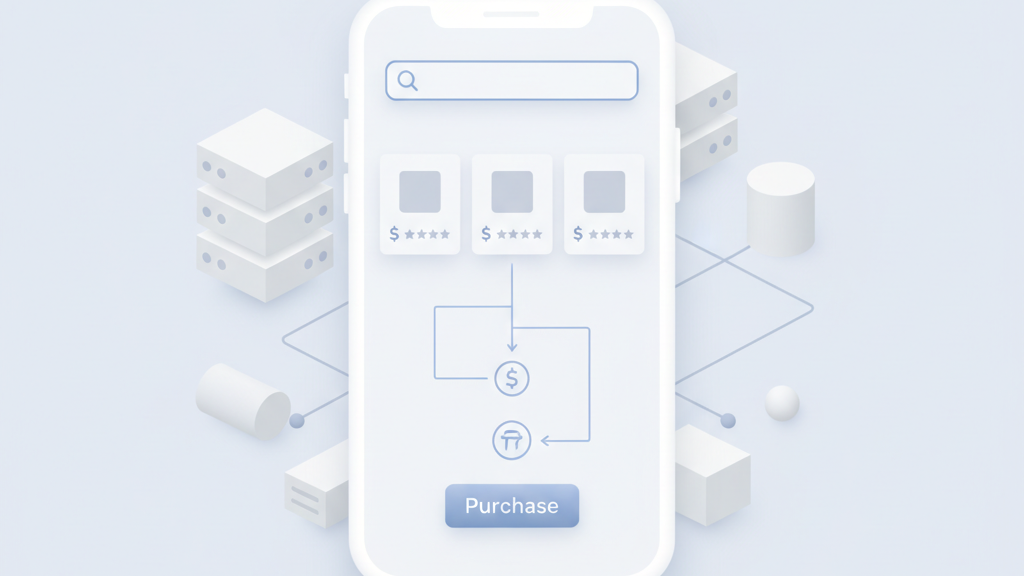
Marketplace businesses are notoriously difficult to launch because you have to attract two different groups of users at the same time. This is why many founders look for a FlutterFlow marketplace mobile app MVP testing and validation service for startups. Using a low code approach allows you to build a functional platform without the high costs of traditional development. You can test your core business assumptions quickly and adjust your strategy based on real user behavior. This guide explains how to use rapid prototyping to build a successful marketplace.
The Importance of Market Validation
The biggest mistake marketplace founders make is spending too much time on features that nobody wants. They build complex bidding systems or advanced recommendation engines before they even have their first ten users. This approach is risky because it burns through cash while providing no market feedback. Our FlutterFlow marketplace mobile app MVP testing and validation service for startups focuses on the most critical parts of your business. We help you identify the primary transaction that needs to occur for your business to succeed. For a service marketplace, this might be the booking flow. For a goods marketplace, it might be the listing and payment process. By stripping away the secondary features, you can launch a product that people actually use. Many startups miss this and try to compete with established giants from day one. It is better to have a simple app that works perfectly for a small group of people than a complex app that is full of bugs. You should focus on the quality of your listings and the ease of the checkout process. If users cannot figure out how to buy something in thirty seconds, they will leave and never come back. This initial testing phase is about survival and learning rather than pure growth. You need to prove that there is a demand for what you are building. Once you have that proof, you can start thinking about more advanced features and scaling your user base.
Technical Advantages of Low Code Tools
Using a low code platform does not mean you are limited in what you can build. FlutterFlow is powerful because it allows for custom code while handling the repetitive tasks of UI development. This makes it the ideal tool for building a marketplace MVP because you can iterate so quickly. You can change the layout of your product cards or the flow of your onboarding in minutes. This speed is essential when you are trying to find product market fit. You can test different pricing models or search filters to see what drives the most conversions. Most marketplace platforms require a few essential components to function. These include user profiles, a searchable database of listings, and a secure way to handle money. We make sure these core elements are rock solid before adding any extra features. The ability to connect to external APIs means your marketplace can grow into a complex ecosystem over time. You can integrate with shipping providers or verification services to add more value for your users. These integrations are much easier to implement in a low code environment because the visual interface simplifies the mapping of data fields. This allows you to focus on the business logic rather than the syntax of the code. We have seen founders go from an idea on a napkin to a live app in the App Store in less than a month. That kind of speed is a game changer in a market where timing is everything.
- Integration with Stripe Connect for multi party payments
- Firebase for real time chat and notifications
- Geolocation for local marketplace discovery
- Custom API connections for third party logistics
- User role management for buyers and sellers
Gathering Meaningful User Feedback
Validation is a continuous process that continues even after you launch your MVP. You need to talk to your users and watch how they use the app in the real world. By using our FlutterFlow marketplace mobile app MVP testing and validation service for startups, you are investing in a learning process. We look at data points like the time it takes for a seller to list a product and the rate at which buyers complete a purchase. These numbers tell a story that goes beyond what users say in interviews. Sometimes a user will tell you they love a feature but they never actually use it. This is why behavioral data is so important. You should be prepared to remove features that are not being used. It can be painful to delete code you worked hard on but it is necessary for a clean user experience. A cluttered app confuses new users and makes it harder to achieve your core business goals. Keep your focus on the transactions that generate revenue. If your app is a marketplace for freelance designers, focus on the project submission and payment process. Everything else is secondary until you have a steady stream of successful transactions. High retention is a better indicator of success than high download numbers in the early stages. You want a small group of users who love your app and use it every day. If you want a related deep dive, read How To Validate Market Fit FlutterFlow travel booking app MVP product strategy and validation service.
Avoiding Common Pitfalls in Development
Technical debt is a common concern for startups using low code tools. However, the goal of an MVP is not to build a platform that lasts forever. The goal is to reach the next stage of funding or profitability. FlutterFlow generates clean code that can be exported and customized by developers later on. This means you are not locked into a single platform as you grow. You can start with a low code base and slowly add custom microservices as your needs become more complex. This hybrid approach gives you the best of both worlds. You get the speed of a startup and the stability of a mature company. It is important to avoid over engineering your backend in the beginning. Many startups miss this and spend months building a custom server when a simple cloud database would suffice. You should prioritize features that directly impact the user experience. Focus on making the app fast and reliable. Users are very unforgiving of slow load times or broken links. If your marketplace feels unprofessional, people will not trust it with their credit card information. Security and performance should be your top priorities during the development process. You should also consider the administrative side of your marketplace. You will need a way to manage users and moderate content without having to go into the database manually. We help you build a simple admin dashboard within the app so you can stay in control of your platform. This is a practical warning that many founders overlook. For a practical follow-up, see How to Manage Engineering Tradeoffs: A Process to Prioritize Technical Debt in Early Stages.
- Overcomplicating the search filters too early
- Ignoring the mobile onboarding experience for sellers
- Building a desktop version before the mobile app
- Failing to track the customer acquisition cost
- Adding social features that do not drive transactions
Scaling Your Marketplace Success
Scaling a marketplace requires a different set of tools than building one. Once you have validated your core idea, you need to focus on growth and operations. This might mean automating your seller onboarding or improving your customer support systems. You will also need to spend more time on marketing and user acquisition. The lessons you learned during the MVP phase will be your most valuable assets. You will know exactly who your target audience is and what they care about. This allows you to spend your marketing budget more effectively. Many founders make the mistake of scaling too early before they have truly validated their idea. This leads to high churn and a lot of wasted effort. It is much better to grow slowly and steadily than to experience a huge spike followed by a crash. Your tech stack should be able to grow with you. Because you started with a flexible foundation, you can adapt to new market trends without starting from scratch. Success in the marketplace world is about persistence and continuous improvement. Keep listening to your users and keep refining your product. The journey from a simple MVP to a market leader is long, but it starts with a single successful transaction. You should always be looking for ways to reduce friction for your users. A smoother experience leads to more transactions and a stronger platform. A related guide worth reviewing is How to Choose the Right Tech Stack for Your MVP Development.