
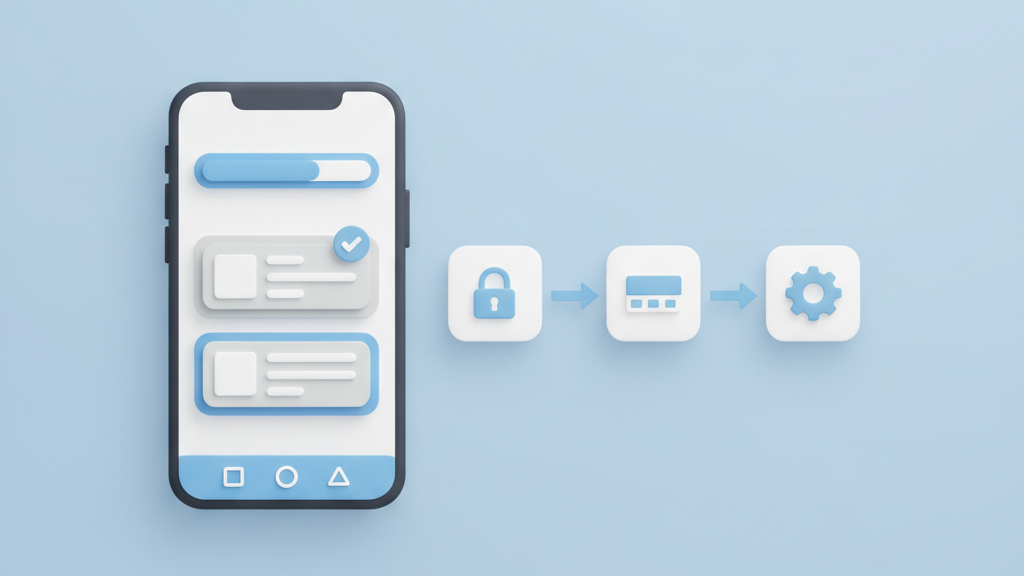
Most productivity apps fail because they solve problems that do not exist. Founders often fall in love with a specific feature without asking if it helps a user finish their work. This is where FlutterFlow productivity app MVP development and user research for founders becomes a critical strategy for success. You need a way to test your ideas quickly and cheaply. If you spend six months building a complex dashboard that no one uses, you have wasted your precious runway. This guide shows you how to use FlutterFlow to get a functional product into the hands of real users in weeks rather than months. Many startups miss this and start building before they even understand their target audience.
Understanding the Problem Before Building
Before you open any development tool, you must talk to your potential customers. Many startups miss this step and start building based on purely internal assumptions. Research helps you find the specific pain points that current productivity tools do not address. Maybe the market has too many complex project management tools but lacks a simple way to track deep work sessions. You should interview at least ten people who fit your target profile. Ask them about their current daily workflows in detail. Do not ask them if they like your idea. Instead, ask them what they hate about the tools they use now. This raw data tells you exactly what to build first. Most founders skip this because they want to see progress in the code immediately. Real progress is understanding the problem before you write a single line of application logic. Use these insights to map out a user journey that feels natural and solves a real frustration. This early investment in human research prevents expensive pivots later in the development cycle. You want to be sure that your solution fits into a real person’s day. If the tool is not intuitive, it will be ignored regardless of how many features you add.
Defining the Core MVP Feature Set
Once you understand the problem, you need to define the minimum set of features. A common mistake is trying to build a clone of massive platforms like Notion on day one. You do not have the resources or the user data for that. Focus on one core action that provides immediate value to your user base. For a productivity app, this might be a unique way to prioritize tasks or a specific notification system. FlutterFlow makes it easy to drag and drop these basic elements into place. You can connect a reliable backend like Firebase to handle user data without needing a full engineering team. Keep the interface clean and avoid any unnecessary clutter. Every button you add is another thing that could break or confuse a new user. Your goal is to prove that your unique solution works. If users find value in the core feature, they will tell you what else they need. This keeps your development costs low and your strategic focus high. Focus on these primary elements for your first release:
- Define the primary user action that solves the main problem
- Select a simple backend like Firebase for quick data handling
- Eliminate any feature that does not directly assist the core workflow
- Design a basic onboarding flow to guide new users through the app
- Set up basic analytics to track how users interact with the main screens
Why FlutterFlow is Ideal for Rapid Iteration
Choosing the right stack for your MVP is about speed and flexibility. FlutterFlow productivity app MVP development and user research for founders often leads to the conclusion that low code is the best starting point. This tool allows founders to build high performance applications that feel native on both iOS and Android. It uses the Flutter framework, which means your app will be fast and responsive. This is vital for productivity tools where lag can ruin the user experience and frustrate the user. You can create custom widgets if the standard ones do not fit your specific vision. The visual builder helps you see exactly what your users will see as you build. This reduces the gap between design and actual development. You can export the code at any time if you decide to move to a fully custom environment later. This flexibility gives you peace of mind because you are not locked into a platform that might limit your growth. It is the perfect middle ground for a startup that needs to move fast but wants a professional look and feel. You can build complex features without the heavy overhead of traditional development cycles.
Gathering Feedback and Iterating Fast
Launching the MVP is just the beginning of the growth journey. You must watch how people use the app in the real world. Sometimes users will find a way to use your tool that you never imagined. This is the gold mine for future product development. Use feedback loops to guide your next set of features. If people complain about a specific screen, change it immediately. FlutterFlow allows for rapid updates so you can push fixes in hours. Do not wait for a perfect product to ask for feedback from your core users. A rough tool that solves a real problem is better than a polished tool that does nothing useful. Many founders wait too long to launch and miss their market window. Get the product out, listen to the complaints, and iterate constantly. This cycle of building and learning is what builds successful software companies. Use these methods to gather useful data:
- Monitor session recordings to see where users get stuck in the flow
- Send short surveys to users after they complete their first task
- Schedule follow up interviews with your most active power users
- Prioritize critical bug fixes over new feature requests in the first month
- Use AB testing for small UI changes to improve user conversion
Scaling the Foundation for the Future
As your user base grows, you will need to think about the long term architecture. Your MVP is a learning tool, but it also forms the foundation of your company. FlutterFlow productivity app MVP development and user research for founders provides the data you need to make smart technical decisions. You might find that you need to integrate with other third party services like Google Calendar or Slack. Because FlutterFlow supports custom API calls, you can connect to almost any external service. This allows your app to grow from a simple task list into a central hub for professional productivity. Always keep your eye on the original problem you set out to solve. It is easy to get distracted by shiny new technology or irrelevant feature requests. Stick to what your users love about your product. If you maintain that focus, you will build a tool that people cannot live without. Scaling is about doing more of what works and removing everything that gets in the way of user progress. Keep your roadmap flexible and your eyes on the data.