
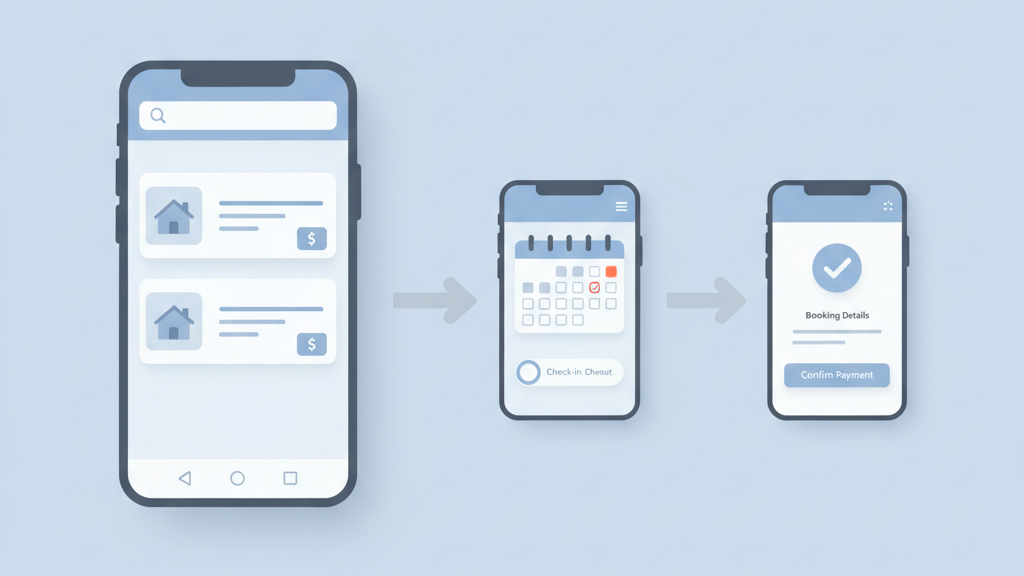
Starting a new business requires a balance of speed and quality. This is especially true in the competitive American tech landscape. Founders often struggle to find the right balance between custom code and speed to market. This is why FlutterFlow rental marketplace app MVP development for US startups is becoming the standard for modern entrepreneurs. By using a visual builder that generates clean code, teams can build complex platforms that used to take months in just a few weeks. This approach allows you to test your rental concept with real users without spending your entire budget on a single release. Many startups miss this opportunity by over-engineering their initial product. They focus on features that users might not even want. A better strategy is to use low-code tools to create a functional and high-quality experience that fits the needs of your local market. In this guide, we will look at how to build a robust rental platform that scales using the latest technology.
The Strategic Edge of Low Code for Rental Platforms
When you consider FlutterFlow rental marketplace app MVP development for US startups, you are looking at a system that connects supply and demand instantly. The US market is unique because users expect high performance and polished interfaces from day one. You cannot launch a slow or buggy app and expect to survive the competition. FlutterFlow provides a visual development environment that exports high quality Flutter code. This means your app runs natively on both iOS and Android. It gives you the power of a custom app with the speed of a builder. I have seen many founders waste hundreds of thousands of dollars on custom agencies only to end up with a product that is hard to update. With a low-code foundation, your team can make changes in hours instead of weeks. This agility is your biggest advantage. You can pivot based on user feedback or change your pricing model without a major rewrite of the backend. It also simplifies the process of finding developers since the barrier to entry for the visual tool is lower than for raw machine code. It is about working smarter rather than just working harder to build your platform.
Essential Features for Your First Launch
Every rental platform needs a core set of features to function. You must ensure that the user journey is logical and fast. Startups often try to build every possible feature in the first version. I believe this is a mistake. You should focus on the path from discovery to payment. In the United States, users are very protective of their data and their time. Your app must feel secure and look professional. This includes clear photos, verified user profiles, and transparent pricing. You also need to handle local taxes and service fees correctly. Integrating a payment gateway like Stripe is non-negotiable for a professional look. FlutterFlow makes these integrations simple through pre-built components and easy API connections. You can also build custom logic to handle security deposits or late fees. Think about the specific niche you are targeting. A car rental app will need different data fields than a tool rental platform. Keep your data structure clean from the beginning to avoid headaches later. Focus on these essential items for your first version:
- User authentication and profile management for both renters and owners.
- Dynamic search with filters for location, price, and category.
- Interactive booking calendar with real-time availability updates.
- Integrated payment processing using secure gateways like Stripe.
- In-app messaging system for users to discuss rental details.
- Push notifications for booking confirmations and reminders.
Building a Scalable Backend Infrastructure
The backend is the engine of your rental marketplace. While the frontend is what users see, the database handles the heavy lifting. For American startups, scalability is a major concern. You might start with ten users, but you need to be ready for ten thousand. I recommend using Firebase or Supabase as your primary backend for this type of project. These platforms integrate seamlessly with low-code tools. They allow you to store user data, images, and transaction records securely. Many startups miss this and try to build a custom server too early. That often leads to maintenance nightmares. By using a managed backend, you get features like automated backups and easy scaling out of the box. You can also implement cloud functions to handle complex logic like calculating rental periods or sending automated emails. This keeps your mobile app light and fast. It also ensures that your data remains consistent across different devices. Security is another major factor. You must set up proper rules to ensure that users can only access their own data. A well-designed backend will grow with your business and allow you to add advanced features like AI-based pricing or fraud detection in the future.
Designing for the American User Experience
US consumers have very high expectations for mobile design. They prefer clean layouts with plenty of white space. Navigation should be intuitive and require very few clicks. In a rental marketplace, the goal is to get the user to the checkout as quickly as possible. This requires a strong visual hierarchy. Use high-quality images to build trust. If your app looks dated, users will assume it is not safe to enter their credit card information. FlutterFlow allows you to use customized design systems that match your brand perfectly. You should also consider accessibility standards. This is not just a good practice but often a legal requirement for US businesses. Make sure your text is readable and your buttons are large enough for touch. Performance is also part of the design. Users will abandon an app if a screen takes more than a few seconds to load. Optimize your images and limit the number of database calls on each page. A smooth experience will lead to better reviews and higher retention rates. Focus on these design principles for the best results:
- Use a consistent color palette and typography across all screens.
- Implement clear call-to-action buttons for booking and listing.
- Ensure the app works perfectly on various screen sizes and orientations.
- Create a simple and fast onboarding process to reduce churn.
- Provide visual feedback for user actions like button taps and loading states.
- Design a clear and helpful error handling system for users.
Launching and Gathering User Feedback
The launch of your MVP is not the end of the journey. It is actually the beginning of your learning phase. Many founders think that once the app is in the store, the work is done. In reality, you need to watch how users interact with your tool. Use analytics to see where people get stuck. Maybe your checkout process is too long. Perhaps users are searching for items that you do not have yet. This data is gold. It tells you exactly what to build next. In the US market, feedback loops are fast. You should be prepared to release updates every week or two. This is where the speed of low-code development really shines. You can fix a bug or add a small feature in the morning and have it live by the afternoon. Do not be afraid of negative feedback. It is better to know what is wrong early so you can fix it. Reach out to your first few users and ask them about their experience. Personal connections can help you build a loyal community. This stage is about finding product-market fit. Once you see consistent growth and high engagement, you can start thinking about bigger marketing campaigns and more advanced features.
Avoiding Common Development Mistakes
Building a marketplace is complex because you have two different types of users to satisfy. You must provide a great experience for both the person listing the item and the person renting it. A common mistake is focusing too much on one side while neglecting the other. If you have no renters, the owners will leave. If you have no items for rent, the renters will never come back. You need a balanced growth strategy. Another technical mistake is neglecting documentation. Even if you are using a visual tool, you should keep track of how your logic works. This is vital when you bring on more developers. Also, be careful with third-party plugins. Too many of them can slow down your app or create security holes. Always test your app on real devices rather than just in a browser preview. Things like camera access and location services can behave differently on actual hardware. Keep these warnings in mind as you move forward:
- Do not try to build a social network inside your rental app yet.
- Avoid using low-resolution images that make the app look unprofessional.
- Never skip the testing phase for payment and checkout flows.
- Stay away from overly complex animations that drain phone batteries.
- Do not ignore the legal requirements for terms of service and privacy policies.