
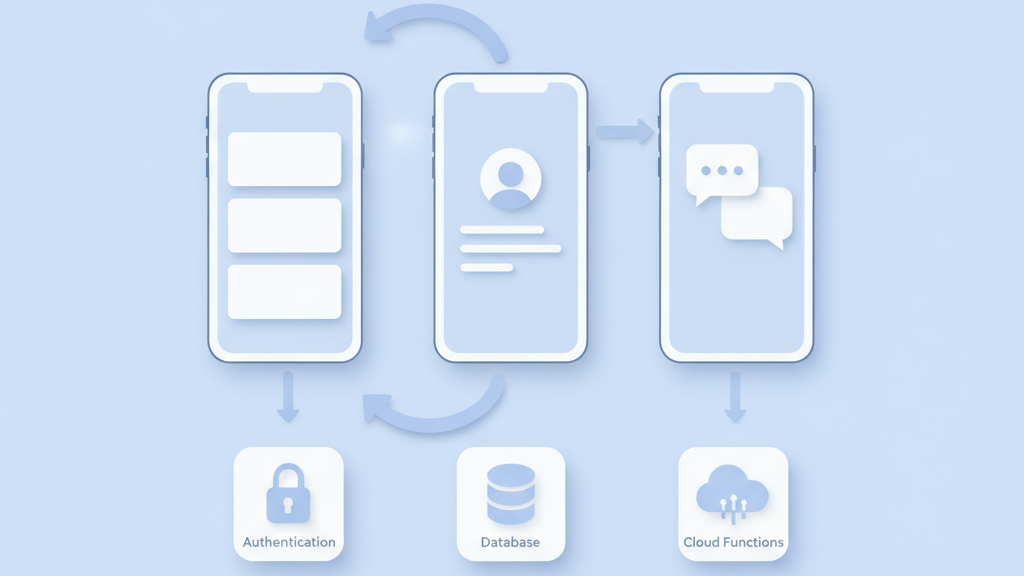
This guide explains FlutterFlow social media app MVP development for US startups in plain terms. It is aimed at founders and product managers who need to move fast and avoid common traps. You will get a clear roadmap, cost and timeline benchmarks, and advice on testing and scaling. Many startups miss proper user flows and end up rebuilding core features. This guide takes a pragmatic view and favors speed with quality. Expect honest trade offs and concrete steps you can assign to your team or an agency.
Define Core Features And Scope
Start by writing a simple feature list and tie each item to a user need. Limit the initial scope to feed, profiles, authentication, and basic messaging. Avoid fancy extras like complex recommendation engines or AR filters in the first release. Prioritize features that prove retention and invite daily use. Create user stories that are testable in two weeks or less. Map each story to a metric you can measure. Many founders overreach on day one. A tight scope lowers cost and speeds up feedback. Use this phase to decide which integrations are essential and which can be deferred. Expect to iterate twice after launch based on real user behavior. If you need implementation support, explore Backend API development.
- List must have three to five core features
- Map each feature to a measurable goal
- Keep stories that fit two week sprints
- Defer non critical integrations
- Treat scope cuts as proof oriented decisions
Design Rapid UI With Reusable Components
Design for reuse from the start to save development time. Build a small component library with cards, buttons, and input fields that match your brand. Use consistent spacing and simple typography. Create wireframes for the main flows and test them with five to ten users before building. Focus on interaction clarity and accessibility. A predictable UI reduces support overhead and speeds up onboarding. Also plan for dark mode and responsive layouts if you expect varied device usage. Designers often overlook edge states which cause friction. Prototype the most common error states and empty lists to avoid awkward behavior in the real product.
- Create a component library first
- Prototype key flows with real users
- Design common error and empty states
- Keep styles consistent for speed
- Prepare basic responsive rules
Choose Data Model And Backend Patterns
Pick a data model that matches how users will interact with content. For feeds choose denormalized structures for faster reads. Implement basic access rules for privacy and content control. Plan storage for media and think about CDN usage early. Use cloud functions for server side logic that must be secure. Keep authentication flows simple with email and social providers. Plan for soft deletes and moderation workflows. Many teams skip moderation until they hit scale and then face costly rewrites. Establish schema versioning practices so you can migrate without breaking live users. A clear backend pattern prevents technical debt and helps integration with analytics. If you want a related deep dive, read How Startups Can Use Data Analytics to Stay Competitive.
- Design for read optimized feed access
- Use cloud functions for secure logic
- Include media storage and CDN plans
- Add basic moderation and soft delete
- Version schemas for safe migrations
Estimate Time And Budget Realistically
Set realistic timeboxes for design, development, and testing. A lean social MVP typically takes eight to twelve weeks with a focused team. Budget for designer, developer, QA, and cloud costs. Add a buffer for unexpected integration work and app store review cycles. Beware of optimistic estimates that assume zero back and forth. Many startups under budget their QA and user testing. Plan for at least two rounds of fixes after the first public release. Transparent cost tracking helps founders decide when to cut features or extend the runway. Present estimates as ranges and attach acceptance criteria to scope items. For a practical follow-up, see Social Networking App MVP Focused on User Retention A Founder Guide.
- Plan eight to twelve week sprints
- Include designer developer and QA costs
- Add contingency for store reviews
- Track costs transparently
- Base estimates on acceptance criteria
Build With FlutterFlow Best Practices
Use platform patterns that speed up iteration and maintainability. Structure pages with clear naming and reuse widgets aggressively. Keep business logic in modular functions that can be swapped out for custom code later. Test integrations like push notifications and analytics early to avoid late surprises. Use environment configurations for staging and production to prevent data leaks. Regularly export .json or code backups so you do not lose work. While no code tools cut development time, they can obscure complex bugs, so plan for periodic code reviews and stress tests. Have a plan to migrate to custom code if performance limits are hit.
- Name pages and widgets clearly
- Keep logic modular for later swap out
- Test notifications and analytics early
- Use staging and production environments
- Export backups regularly
Test With Real Users And Iterate
Recruit a small cohort of target users and observe how they use the app. Focus tests on onboarding retention and content discovery. Collect qualitative feedback and pair it with analytics to find friction points. Run simple A B tests on onboarding flows and feed ranking rules. Prioritize fixes that improve first session retention. Many teams ignore early user behavior and assume feedback from friends is enough. That is rarely true. Use test results to refine copy and micro interactions. Set a cadence for release cycles that lets you deploy fixes weekly. Early iterations are cheap and often reveal product market fit signals. A related guide worth reviewing is Uncovering the Untold Tactics: Navigating MVP Iteration for Product-Market Fit.
- Recruit target users for testing
- Combine qualitative feedback with analytics
- A B test onboarding and feed rules
- Prioritize fixes that raise retention
- Ship weekly where possible
Plan For Moderation And Trust Safety
Moderation is not optional for public social products in the US market. Build reporting tools and basic automated filters from day one. Define escalation rules and response SLAs so users know what to expect. Keep logs and audit trails for disputed cases. Plan for human review capacity as you grow and consider third party moderation services when volume rises. Many founders treat moderation as a compliance afterthought and then face reputational risk. Make safety part of your roadmap and budget. Clear policies help community growth and protect advertisers if you plan to monetize.
- Add reporting and automated filters early
- Define escalation and SLA rules
- Keep audit trails for reviews
- Budget for human moderation
- Consider third party moderation at scale
Launch Metrics And Post Launch Roadmap
Define a small set of launch metrics and focus on improving them in the first three months. Track activation, day seven retention, engagement per active user, and referral rate. Use these signals to decide whether to expand features or double down on growth channels. Plan a post launch roadmap that balances stability work and new features that increase retention. Be cautious with growth hacks that add low quality users. Early quality users provide better feedback. Set quarterly goals and tie investments to metric improvements. This approach keeps the product aligned with business outcomes and reduces wasteful spending. Teams moving from strategy to execution can review Mobile app development.
- Track activation and day seven retention
- Measure engagement per active user
- Use metrics to prioritize roadmap
- Avoid low quality growth hacks
- Tie investment to metric improvement