
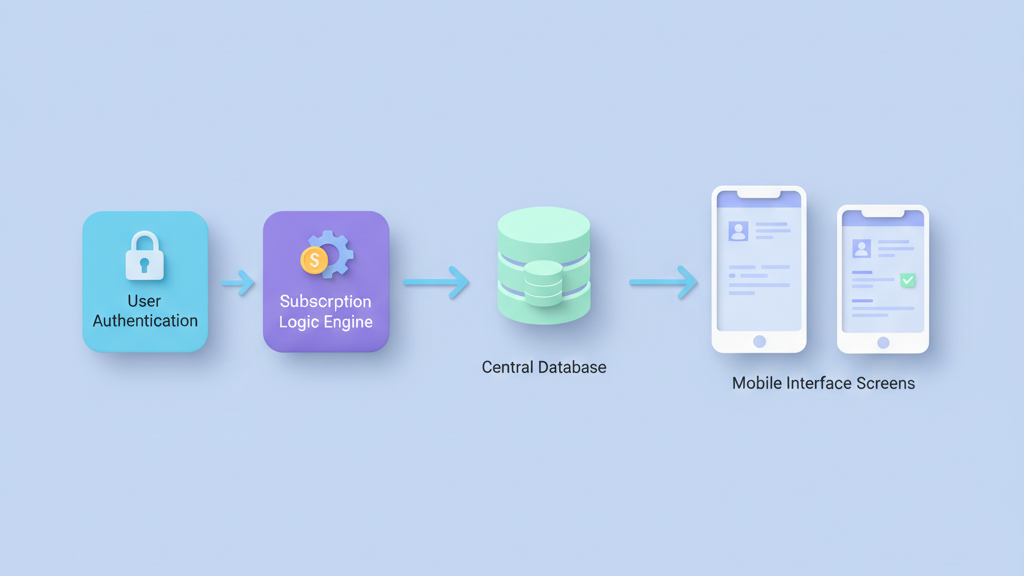
Building a startup in the US market requires speed and precision. A solid FlutterFlow subscription SaaS app MVP product strategy for USA founders is the key to launching quickly without sacrificing scalability. By using low-code tools effectively, you can validate your business model and start generating recurring revenue. This guide covers how to navigate the technical and business hurdles of early stage development.
Understanding the Competitive US Software Market
The US market moves faster than almost any other region in the world. Founders need to validate their ideas quickly before they burn through their initial capital. Choosing the right development stack is the first big hurdle you will face. A FlutterFlow subscription SaaS app MVP product strategy for USA founders focuses on reducing time to market without sacrificing the quality users expect. Many startups miss this and spend months on custom code that nobody actually wants. FlutterFlow allows small teams to build functional prototypes that look and feel like high end native apps. It handles complex logic and user interfaces while keeping the underlying code accessible. For a subscription model, you need a system that supports recurring revenue from the very first day. This requires a solid plan for data handling and user authentication. You should prioritize a clean user experience over fancy animations that do not add value. US users expect apps to work perfectly on both iOS and Android. If the initial setup is too complex or slow, your users will churn immediately. Focus on solving one core problem better than anyone else. Everything else is just noise. High quality documentation and clear communication are also vital if you plan to seek investment later. Investors want to see that your product can scale without needing a total rewrite. Using a structured approach to development shows that you understand both the technology and the business goals. It is about building a foundation that can support thousands of users without crashing. Speed is important but stability is what keeps your subscribers paying month after month.
Technical Architecture and Payment Integration
The technical setup of your application is the backbone of your entire business. You need to connect your frontend to a reliable backend that can handle growth. Firebase is the most common choice for US startups because it scales well and integrates directly with many cloud services. It handles user data and real-time updates without requiring a massive DevOps team. You must also integrate a payment gateway like Stripe to manage your recurring subscriptions. Stripe is the industry standard for US businesses because it handles complex issues like sales tax and financial compliance. Setting up the API calls between your app and the payment provider is a critical step. Many founders forget to plan for edge cases such as failed payments or expired credit cards. These small details define the overall user experience and your bottom line. You also need to consider how you will manage different user roles within the app. Some users might be account admins while others are basic members with limited access. Defining these structures early on will save you hundreds of hours of rework later. FlutterFlow makes this easier with its built-in logic components and visual action builders. You can build these complex workflows without writing thousands of lines of manual code. This allows you to focus on the features that actually make your product unique. Always test your payment flow in a sandbox environment multiple times before you go live. A broken checkout is the fastest way to lose a potential customer.
- Connect to Firebase for real time data storage
- Implement Stripe for secure US payment processing
- Set up automated email receipts via SendGrid
- Create distinct user roles for team management
- Plan for offline access to key app features
- Use custom actions for complex subscription logic
Prioritizing Features for Rapid Validation
A successful FlutterFlow subscription SaaS app MVP product strategy for USA founders must account for long term scalability. You are not just building for ten users. You are building for ten thousand or more. This means your data structure needs to be extremely efficient. Avoid deeply nested data in your database because it slows down performance as your user base grows. Use a flat data structure where possible to keep things fast. Performance is not just a technical metric. It is a core feature of your product. If your app is slow or unresponsive, your subscription numbers will drop. You should also consider the regulatory landscape in the United States. Data privacy laws vary by state but staying compliant is mandatory for any serious business. Use secure authentication methods like Google Sign In or Apple ID. These methods are familiar to US users and significantly increase trust. Most founders focus too much on the marketing landing page and not enough on the actual user dashboard. The dashboard is where the value lives for a subscription customer. It should be clean and intuitive. If a user cannot find what they need in three clicks, they are likely to stop using the app. Simplicity is often the hardest thing to achieve but it is what separates winning apps from the rest. Spend time talking to your early users to find out which features they actually use. You might find that the feature you thought was most important is actually the one they care about the least.
Monitoring Growth and User Retention
Launch day is just the beginning of your journey as a founder. You need a clear way to track how users interact with your MVP. Tools like PostHog or Mixpanel can be integrated directly into your application to provide deep insights. This data tells you which features are popular and which are being ignored by your audience. Many founders make the mistake of guessing what their users want. Data removes the guesswork and allows you to make informed decisions. You should also set up a direct feedback loop within the app. Give your users an easy way to report bugs or request new features. This builds a sense of community and keeps your early adopters loyal to your brand. A solid product plan should include a detailed roadmap for the first three months after launch. This keeps your development team focused on high impact updates rather than minor tweaks. Do not try to fix every small bug at once. Focus on the issues that prevent users from getting value or paying their subscription fee. High churn rates are the silent killer of every SaaS business. Keep your communication clear and your updates frequent so users know the product is evolving. Showing active development is a great way to justify a monthly subscription cost. If the app feels stagnant, users will look for an alternative. Constant improvement is the only way to stay relevant in a crowded market.
- Integrate analytics to track user behavior
- Set up a simple in app feedback form
- Monitor app performance using Google Analytics
- Prioritize updates based on actual usage data
- Keep a public roadmap to engage early adopters
- Test new features with a small group first
Managing Costs and Scaling the Business
Cost management is another area where many new founders struggle. Running a SaaS business incurs ongoing expenses that can add up quickly. You have hosting fees and database costs along with various API charges. You also have to budget for marketing and customer support. FlutterFlow helps keep your initial development costs low compared to traditional coding. However, you must still plan for the long term financial health of the company. Many startups fail because they run out of money before they reach true product market fit. Be realistic about your burn rate and your revenue goals. Start with a lean team and avoid overhiring too early. You do not need twenty developers to manage an MVP. One or two skilled developers can often do the work of a much larger team when using modern tools. This allows you to pivot quickly if the market demands a change in direction. Flexibility is your biggest advantage as a small startup. If a certain feature is not working, be prepared to cut it or change it immediately. It is much better to have a small app that works perfectly than a large app that is full of bugs. US investors look for efficiency and growth potential above all else. Show them that you can build a high quality product with minimal waste. Once you have a steady stream of paying users, you can then look at raising more capital to scale your operations and reach a wider audience.