
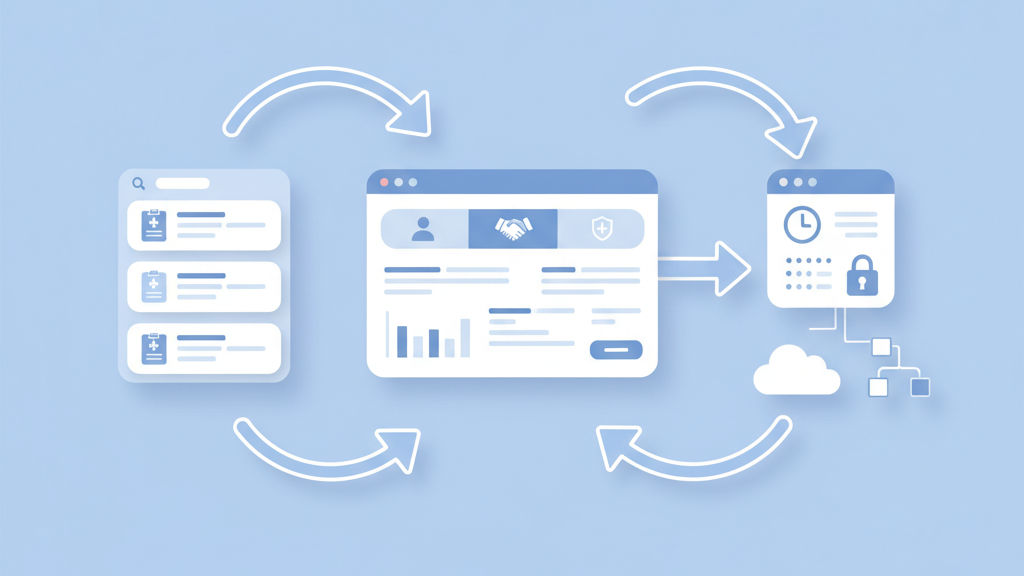
Startups building clinical tools face a tough trade off between speed and safety. The phrase healthcare software MVP patient data workflows and security captures that tension and helps teams focus. This guide explains pragmatic steps to map minimal records, design user flows that respect consent, and layer security without slowing development. Many startups miss basic audit trails and regret it later. I will offer clear choices and warn about common pitfalls. The goal is to help product leaders and founders ship a responsible first version that investors will not reject and regulators will not be surprised by.
Why Patient Data Workflows Matter For An MVP
MVPs must prove value while keeping patient data safe. Investors care about traction but clinical users care about trust. Designing workflows is not just about screens. It is about who touches data, when consent is collected, and how records move between systems. A poor flow creates friction that kills adoption. A robust flow reduces support load and shrinks compliance risk. Many teams build a quick form and then discover that missing fields break downstream integrations. Start small with clear handoffs and observable events. That approach makes it easier to iterate without creating hidden liabilities. In my view a simple, auditable workflow beats a complex, fragile one every time.
- Map end to end data paths
- Define clear user roles
- Log every access event
- Collect consent early
- Keep flows as simple as possible
Designing The Minimal Patient Record
Deciding what belongs in the first patient record is a practical exercise. Minimal means only what you need to prove your core hypothesis. For a scheduling or triage MVP this might be name, contact, primary complaint, and a timestamp. For monitoring tools you may need vitals and device IDs. Avoid dumping everything into the first model. Each extra field increases validation work and surface area for errors. Define versions so you can add fields later without breaking older records. Many founders overcollect data because they fear future needs. That is a mistake. A lean record helps speed up testing and keeps the security scope narrower. If you want a related deep dive, read Micro SaaS Software MVP For Niche Productivity Tools That Work.
- List essential fields only
- Use versioned record schemas
- Validate at intake
- Avoid legacy field bloat
- Plan for controlled extensions
Practical Workflow Mapping And Consent
Workflow mapping turns product intent into operational reality. Start with actor based flows for patients, clinicians, and admins. Show where data is created, modified, shared, and deleted. Make consent a visible step not a hidden checkbox. If data leaves your app to an integration, document the purpose and the retention policy. Use simple diagrams that developers and clinicians can both read. Many startups forget to account for offline steps like phone intake or fax. Those steps often create shadow records. Capturing them early prevents audit failures and user confusion. A clear map also makes it obvious where to add guards such as approval gates or redaction rules. If you need implementation support, explore FlutterFlow development.
- Create actor based flow diagrams
- Treat consent as an action
- Document external data exchanges
- Include offline touch points
- Identify gates for sensitive actions
Security And Compliance Basics For Early Builds
Security is not optional for health products. Early choices shape costs later. Start with strong authentication and data encryption in transit and at rest. Implement role based access controls and principle of least privilege. Keep an audit trail of reads as well as writes. Familiarize yourself with HIPAA basics if you operate in the USA. You do not need a huge security budget for version one but you do need controls that show you can protect patient data. Many founders assume compliance is a checklist. It is not. Compliance is about demonstrable processes and evidence. Build those habits early and you will avoid expensive rework.
- Encrypt data in transit and at rest
- Implement role based access
- Log reads and writes
- Use multi factor authentication
- Document security processes
Architecture Choices That Reduce Risk
A clear architecture reduces surprises. Decide early whether you will store protected health data or just tokenize it. Tokenization and pointers to external vaults often reduce your compliance scope. Use service oriented design so that a breach in one module does not expose everything. Adopt API contracts and strict validation layers at boundaries. Prefer immutable event logs for auditing and use queuing for async tasks to avoid data loss. Many startups adopt third party integrations without mapping what data is shared. That creates hidden risk. Be intentional about each integration and record its legal and technical constraints. For a practical follow-up, see Building a Marketplace MVP: Why Startups Use FlutterFlow for Validation.
- Consider tokenization for PHI
- Keep services small and isolated
- Define strict API contracts
- Use immutable audit logs
- Review third party data sharing
Testing, Validation, And Security Reviews
Rigorous testing helps you discover failures before users do. Automate unit tests for validation rules and integration tests for the most common flows. Run threat modeling sessions with engineers and a clinician to find weak points. Schedule penetration tests or vulnerability scans before any public launch. Include privacy checks in QA so that mock data cannot leak to logs or analytics. Many teams skip threat modeling because it feels academic. It is practical and it surfaces simple fixes that reduce risk. Make a small checklist for launch readiness that includes test coverage targets, audit logs verification, and a remediation plan for discovered issues. Teams moving from strategy to execution can review MVP development for startups.
- Automate validation and integration tests
- Run threat modeling workshops
- Schedule vulnerability scans
- Review analytics for PHI leaks
- Maintain a launch readiness checklist
Launch, Monitoring, And Incident Response
Launch is not the end of work. Monitor usage, errors, and access patterns from day one. Build alerts for unusual export or access volumes. Prepare a simple incident response plan that names roles and communication channels. Practice the plan with a tabletop exercise. Have a remediation path for data exposure that includes notification timelines. Many startups think they can improvise during a crisis. That is usually a bad idea. Simple, practiced processes reduce panic and protect reputation. As you scale, use metrics from monitoring to tighten workflows and improve the product incrementally. A related guide worth reviewing is How To Set Product Metrics And KPIs For Startups That Scale.
- Implement real time monitoring
- Alert on anomalous access
- Create an incident response plan
- Run tabletop exercises
- Use metrics to iterate post launch