
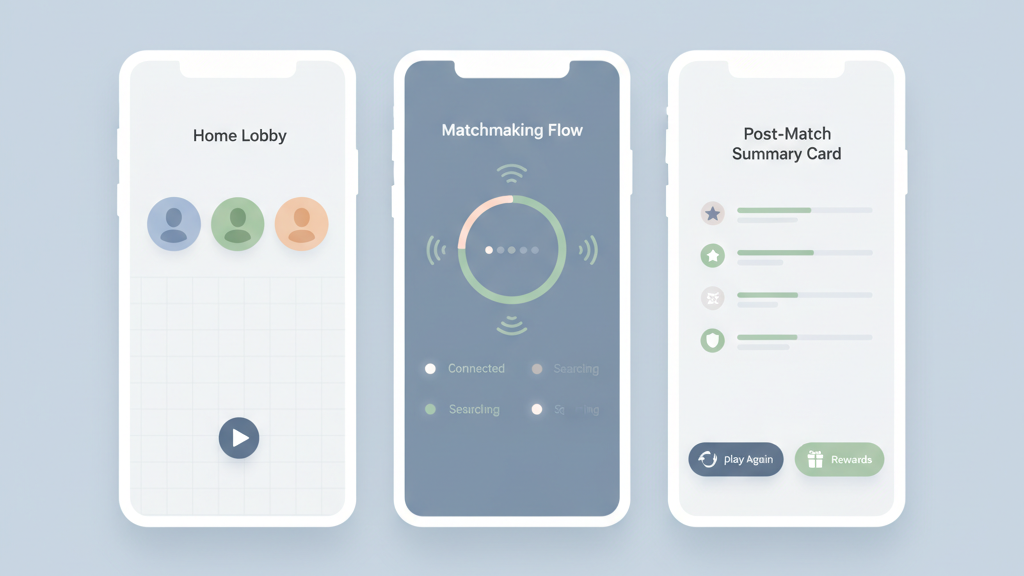
Building a multiplayer mobile game app MVP matchmaking and retention plan is a different kind of product challenge. You must balance simple tech with a player first experience. This guide walks founders and product managers through focused decisions that matter in the first release. Many startups miss basic matchmaking choices and ruin early retention. Expect trade offs, test fast, and pick metrics that tell the truth. If you want a related deep dive, read Building a Mobile Gaming App MVP for Multiplayer Matchmaking Mechanics.
Define A Clear MVP Scope
An MVP has to answer a small set of questions about the core loop, and the scope must protect time to learn. Start with a single mode, a limited ruleset, and a minimal social surface. Decide if you want skill based pairing or casual quick matches. Keep progression simple to avoid long backend work. The goal is to validate whether players will return for short sessions. Many founders overbuild features that do not impact retention. Set clear acceptance criteria for launch and a list of optional features to add later. A tight scope lets you iterate on matchmaking and retention without sinking months into less important polish.
- Limit modes to one
- Choose simple progression
- Set clear launch criteria
- Defer social features
- Focus on short sessions
Design Matchmaking For Speed And Fairness
Matchmaking is a product problem as much as a technical one. Fast matches reduce drop rates and make first impressions better. Start with a basic matching rule set that considers latency and a simple skill proxy. Avoid perfect balancing at launch because waiting costs retention. Use soft constraints to widen pools when population is low. Show transparent feedback during search and allow cancel actions to lower frustration. Playtests will reveal whether rank or region matters more to your players. In my experience simpler matching with quick fill beats slow precise matches for early growth. Plan to evolve the algorithm after you have real session data. For a practical follow-up, see Build A Lean Booking Product For Fast Launch.
- Prioritize low wait time
- Use a simple skill proxy
- Employ soft constraints
- Show search feedback
- Allow canceling matches
Create On Ramps That Improve Retention
First sessions determine retention more than anything else. Craft on ramps that teach mechanics fast and reward the player for returning. Use short tutorials embedded into early matches and provide immediate clear rewards. Offer a small streak or daily reward to nudge a second session. Personalize the first day experience with matchmaking that pairs new players together to avoid harsh defeats. Avoid heavy gating or long grinds early on. Many teams forget that a gentle early curve beats complex mastery systems when seeking product market fit. Track the second and seventh day retention to see if your on ramps are working and iterate accordingly. A related guide worth reviewing is Uncovering the Untold Tactics: Navigating MVP Iteration for Product-Market Fit.
- Embed short tutorials
- Reward first returns
- Pair newcomers together
- Avoid heavy early grind
- Track day two and day seven
Instrument The Right Metrics
Data drives decisions, but bad metrics mislead. Focus on active match rate, session length distribution, match abandonment, and retention cohorts. Define events for match search start, match found, match accepted, and match completed. Measure latency and dropouts during search separately. Use cohort analysis for players who saw tutorial versus those who skipped it. Track monetization events as secondary signals rather than early goals. Many startups optimize for vanity metrics and miss churn drivers. Keep your analytics stack lightweight at first and export raw logs for deeper analysis when you need to test hypotheses.
- Track match lifecycle events
- Measure session length distribution
- Use retention cohorts
- Separate latency from abandonment
- Keep analytics lightweight
Choose A Scalable But Pragmatic Architecture
Architecture choices shape speed of iteration and cost. Use managed services for presence and matchmaking if you want to move fast. The minimum viable stack often pairs a simple stateless matcher with a persistent game server pool. Design for horizontal scaling and graceful degradation when load spikes. Keep player state small and store durable progression outside the live match path. Use regional routing to lower latency for real time play. Many teams prematurely optimize performance when they should be validating product fit. Start with a cost effective cloud setup and instrument clear limits so you can refine infrastructure after you validate engagement. If you need implementation support, explore Backend API development.
- Use managed services wisely
- Keep matcher stateless
- Store durable state separately
- Plan regional routing
- Avoid early hardware optimizations
Iterate Matchmaking With Player Segments
Not all players want the same thing from matchmaking. Segment by play frequency, skill, and social preferences. Run A B tests that vary pool sizes and match criteria for different cohorts. Offer experimental flows to small groups and measure lift in session completion and return. Use dynamic adjustments to widen search windows when a player is close to quitting. Be cautious when changing match quality because perceived fairness affects retention more than raw win rates. A small improvement in perceived fairness can increase engagement. Keep experiments short and clear so you can act on results quickly.
- Segment by behavior
- Run targeted A B tests
- Vary pool sizes
- Use dynamic search windows
- Measure perceived fairness
Design Retention Loops Beyond Rewards
Retention is not just rewards and currency. Social hooks, consistent pacing, and meaningful progression work better together. Add lightweight social features like friend invites, rematch offers, and shared goals. Craft daily and weekly challenges that are achievable in short sessions. Use push notifications sparingly and make them context aware. Offer quick reasons to return after a loss, such as targeted matchmaking or new short term events. My opinion is that sensible social and event design beats aggressive monetization early on. Track which loops actually boost retention and cut what does not.
- Include friend invites
- Offer rematch options
- Create short challenges
- Use context aware notifications
- Prioritize social hooks
Launch Strategy And Post Launch Ops
A staged launch gives you breathing room to tune matchmaking and retention before a wide release. Start with a closed beta that matches similar players and capture early feedback. Use telemetry to find friction points and ship quick fixes. Plan live operations to run events that test retention ideas. On day one after public launch monitor search times, match fills, and retention curves closely. Be ready to roll back changes that harm core metrics. Many teams underestimate the need for rapid post launch support. Keep a short feedback loop between ops, product, and engineering so you can iterate on matchmaking and retention fast. Teams moving from strategy to execution can review Software maintenance and scaling.
- Start with closed beta
- Monitor key telemetries
- Run short live events
- Prepare rapid fixes
- Align ops with product