
Outsourcing vs in house development for startups is one of the first hard choices founders face when they build a product. This article breaks the tradeoffs into clear sections you can use right away. Many startups miss the long term costs of a wrong hire or a rushed vendor choice. I think founders should favor clarity over fast promises. Use these guidelines to avoid common traps and pick a path that matches your timeline, budget, and product risk. If you need implementation support, explore Mobile app development.
Why The Choice Changes Everything
The decision between hiring an internal team or working with an external partner affects more than engineering speed. It changes company culture, intellectual property control, recruiting priorities, and future runway. Founders who pick based only on price often pay more later in rework and team churn. Startups that need tight feedback loops and frequent product pivots usually benefit from direct reporting lines. On the other hand, projects with well defined scope and clear success metrics can get faster results from a vendor with domain expertise. Many startups underestimate the management bandwidth that comes with a growing internal team. Keep in mind that growth phase, fundraising plans, and regulatory needs all change which model will be cheaper and faster over time.
- Map company goals to team structure
- Estimate management time for each option
- Check long term ownership needs
- Consider regulatory and IP risks
When Outsourcing Is The Better Bet
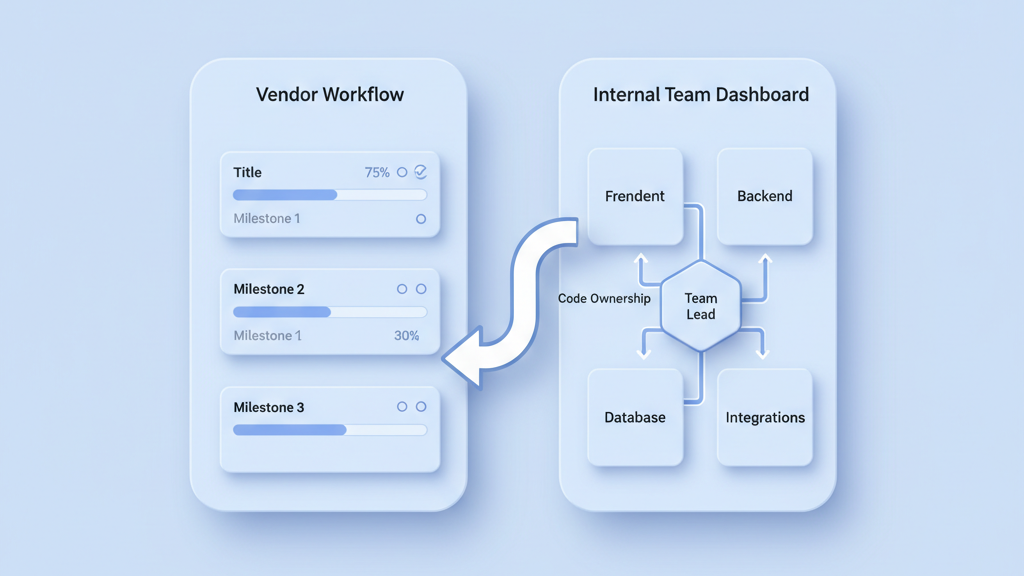
Outsourcing fits when you need speed without a long hiring cycle or when the work is a well bounded project. If you need a prototype, a landing page with conversions, or a single feature, a vendor can deliver fast and with less fixed cost. Good vendors bring processes, templates, and cross project experience that reduce common pitfalls. That said startups must write clear scopes and milestones. Many founders hand off vague requests and get surprises in timelines and quality. I recommend short contracts with clear acceptance criteria and a plan for knowledge transfer. Treat the vendor as a supplier not a magic solution. If you plan to scale the product deeply into your core business, plan a path to transition code ownership later. If you want a related deep dive, read How To Set Product Metrics And KPIs For Startups That Scale.
- Use vendors for short focused projects
- Define clear deliverables and acceptance tests
- Plan knowledge transfer from day one
- Avoid long term reliance without ownership plan
When Building An Internal Team Pays Off
Invest in an in house team when the product is core to your business model and needs constant product discovery. In house teams offer deeper institutional knowledge and faster feedback loops. They are better at absorbing domain context and evolving features with customer insights. Hiring helps build a culture of product ownership which matters when you must iterate quickly on user experience and architecture. The tradeoffs are higher upfront costs and hiring risk. Many startups fail to budget for recruiting, benefits, and onboarding time. If your roadmap spans many unknowns and requires cross functional collaboration, internal teams usually win. I advise founders to hire slowly and keep early roles broad and focused on outcomes rather than rigid specializations. For a practical follow-up, see A Practical Guide to Customer Discovery for First Time Founders.
- Hire in house for long term product control
- Prioritize cross functional hires early
- Budget for recruiting and onboarding
- Build ownership and feedback loops
Comparing Cost And Time Realistically
Cost and time comparisons are never only hourly rates. Vendors can look cheaper at first because they shift fixed costs to variable fees. Internal teams have salaries and overheads that add up but can reduce per unit cost as product value grows. Time to market matters for early validation and fundraising. Outsourcing can compress that timeline which is valuable when you need market feedback quickly. Many startups miss hidden costs like vendor management, integration work, and future refactors. I suggest building a two year model with scenarios for growth, rework, and hiring. Use that model to compare total cost of ownership and not just the initial invoice. Small decisions now can multiply costs later if you pick the wrong path. Teams moving from strategy to execution can review MVP development for startups.
- Model two year total costs
- Include integration and refactor fees
- Compare time to market impacts
- Factor hiring and overhead costs
A Practical Framework To Decide
Start with three simple questions to choose a path. First ask if the work is core to your long term business or if it is a temporary need. Second ask how uncertain the product requirements are and how often they will change. Third ask how much management bandwidth you have to hire and lead a team. If the work is non core and requirements are clear choose outsourcing for speed. If the work is core and you face high uncertainty build in house. Many founders benefit from a hybrid approach that begins with a focused vendor and moves key developers in house after validation. This hybrid path reduces early risk while preserving long term control. I recommend documenting a handover plan anytime you hire a vendor. A related guide worth reviewing is How to Choose the Right MVP Development Company for Your Startup’s Unique Needs.
- Ask three decision questions first
- Prefer hybrid for staged risk
- Document handover and ownership
- Review the plan every quarter