
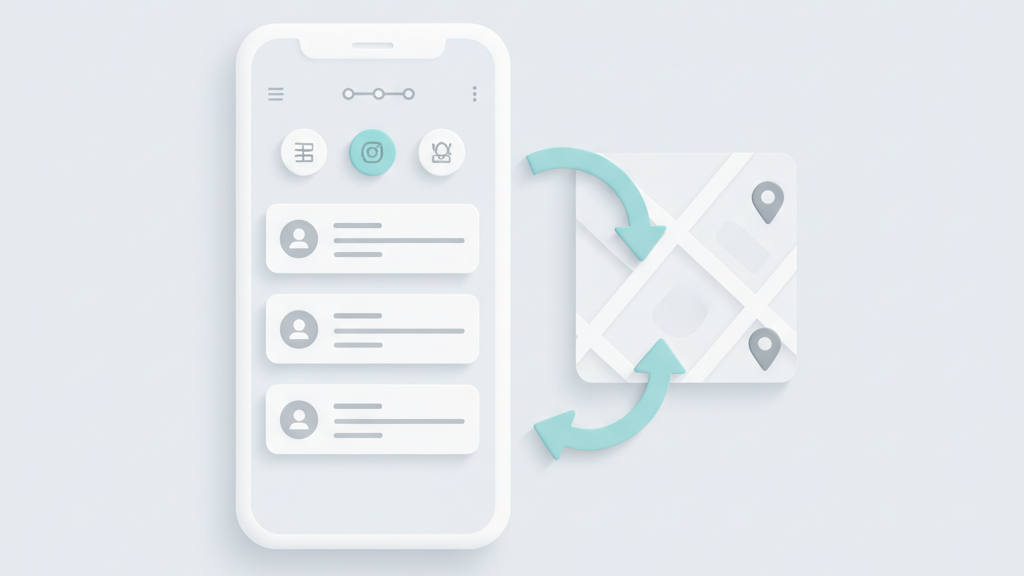
This guide walks founders through restaurant discovery startup app MVP local user acquisition with clear steps and realistic trade offs. It focuses on quick experiments that prove demand, low cost channels that scale, and product features that matter on day one. Many startups miss this and overbuild before product market fit. Read it to pick a sensible launch plan and avoid common traps. If you want a related deep dive, read How To Validate Market Fit FlutterFlow travel booking app MVP product strategy and validation service.
Define The Core MVP
Start by naming one core action you want a local user to take. That could be discover a nearby place, save it, or get a booking link. Focus on a single compelling loop and drop features that do not support it. Keep the first release tight and measurable. Build with off the shelf components and use manual data entry where possible to speed launch. Define success metrics that match your business model and local acquisition plan. Many founders design long feature lists and fail to test the highest risk assumptions. Prioritize speed and learning over polish so you can iterate from real user behavior. If you need implementation support, explore Mobile app development.
- Pick one core user action
- Use simple UI patterns
- Mock data for rare cases
- Measure one north star metric
- Ship in weeks not months
Choose Low Cost Local Growth Channels
Local acquisition favors channels that scale with presence not ad spend. Try partnerships with neighborhood blogs, community Facebook groups, and local influencers who already recommend places. Use listings and local SEO to appear in searches near launch neighborhoods. Run small referral tests with early users and offer rewards that matter locally. Micro events and popup partnerships can drive concentrated installs and feedback. Track cost per acquired active user and compare channels by quality not just volume. Many startups spend on broad paid ads and miss the network effect that local channels provide. Be ready to shift spend quickly to channels that return engaged users.
- Partner with local blogs
- Use neighborhood social groups
- Optimize local listings
- Run referral tests
- Host micro events
Design For Quick Retention
Retention beats raw installs for early survival. Design the onboarding to show immediate value and reduce time to first meaningful action. Use a light personalization step to surface relevant places near the user. Add a simple save or share feature that creates a reason to return. Push a single timely notification tied to a clear benefit and measure its lift. Test a short checklist that guides users toward success in the first session. Many founders confuse feature depth with stickiness. Small, repeatable loops that fit into daily life create better local retention than complex discovery tools that take time to learn. For a practical follow-up, see A Practical Guide For Onboarding Your First Ten Paying Users.
- Show value in the first minute
- Personalize by neighborhood
- Add one repeatable loop
- Use targeted notifications
- Measure day seven retention
Leverage Partnerships And Local Listings
Integration with existing local infrastructure speeds trust and reach. Onboard restaurants with simple CSV imports and offer proprietors a free profile to claim. Work with reservation platforms and ordering services to provide immediate utility. Create a lightweight partner page that highlights how the app drives foot traffic. List your app on local directories and community calendars. Use partner networks to seed content and reviews so new users see populated screens. Many founders try to build everything alone, and miss distribution that partners can provide. A good partner can supply both content and a distribution channel that accelerates local adoption. Teams moving from strategy to execution can review Software maintenance and scaling.
- Offer easy profile claiming
- Import listings quickly
- Integrate with reservation tools
- Use partner content to seed screens
- List on local directories
Measure Fast And Iterate
Set up a small analytics stack and instrument the core user flow before launch. Track activation, retention, and referral rates. Run short experiments that test acquisition messages, onboarding copy, and local promotions. Use cohort analysis to spot where users drop off by neighborhood and channel. Translate metrics into clear hypotheses and run one test at a time. Keep experiment cycles tight and document learnings so the team does not repeat mistakes. Many startups delay analytics and then guess what worked. Start with the basics and improve metrics incrementally with disciplined testing.
- Instrument the core funnel
- Track cohorts by channel
- Run weekly experiments
- Convert results into hypotheses
- Document every test
Plan Budget And Resources
Allocate runway to both product and local go to market activities. Expect manual work early and budget for outreach, events, and a small supply team to keep listings accurate. Prioritize flexible contractors for data and marketing tasks so you can scale down if a channel fails. Set conservative user growth assumptions and model cost per retained user. Include a buffer for partner incentives and small grants to local promoters. Many founders underestimate the human work required to seed a local marketplace. Planning realistic costs helps maintain momentum without burning runway on vanity metrics. A related guide worth reviewing is How To Set Product Metrics And KPIs For Startups That Scale.
- Budget for manual seeding
- Hire flexible contractors
- Model cost per retained user
- Reserve partner incentives
- Keep a runway buffer
Avoid Common Pitfalls And Capture Quick Wins
Avoid building features before you have real local users to validate them. Resist the urge to clone large apps and instead focus on the smallest version of the idea that proves value. Capture quick wins by optimizing onboarding, seeding high quality listings, and running a targeted referral push with early adopters. Test pricing or monetization only after you show consistent retention. Watch out for chasing broad metrics that hide local problems. Many startups scale into new neighborhoods without fixing the core experience. Fix the local experience first then expand strategically to preserve unit economics.
- Test before you build
- Optimize onboarding first
- Seed high quality listings
- Delay monetization tests
- Improve before expanding