
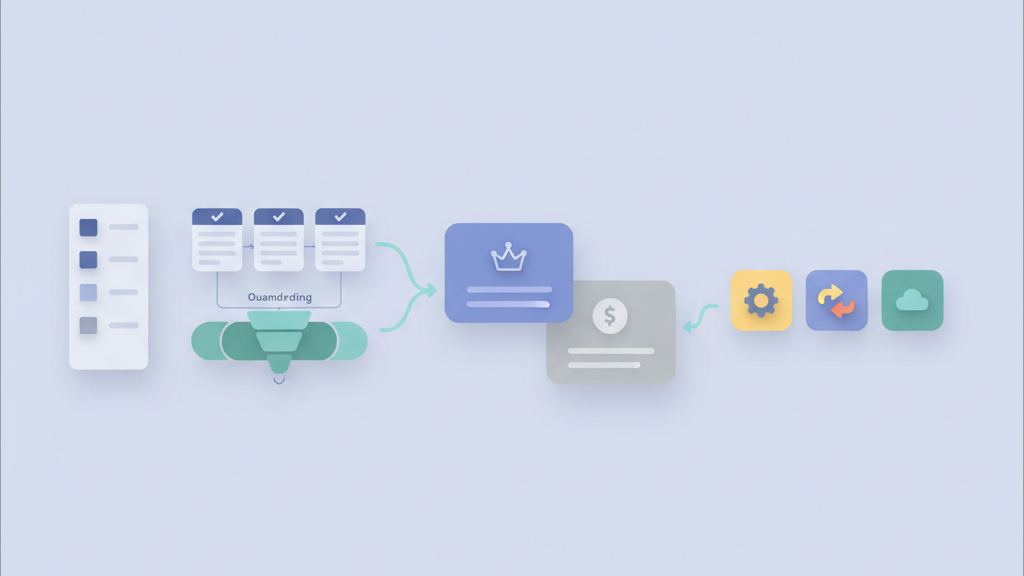
This guide walks founders and product managers through building a subscription based SaaS app MVP for B2B onboarding, with pragmatic steps for scope, tech choices, and launch metrics. Expect clear trade offs, real world warnings, and a focus on customer activation and revenue signals. If you want a related deep dive, read A Guide for USA Founders: Building a FlutterFlow Subscription SaaS App MVP.
Why Start With an MVP
An MVP lets you test core assumptions about customer value and willingness to pay without overspending on features. Startups often build too many bells and whistles before validating the core flow. Focus on the smallest set of screens that prove activation and retention. In B2B contexts you must also validate procurement and deployment preferences. That usually means building a clear signup, a basic admin, and the first onboarding success path. Many startups miss this and assume usage will follow feature parity. In my view it is better to be narrow and useful than broad and confusing. Expect to iterate after early customer interviews and pilot contracts.
- Define one core user success metric
- Map the minimal onboarding path
- Build just enough admin controls
- Pilot with one or two customers
- Measure activation and churn
Define The B2B Onboarding Flow
Design onboarding around the customer outcome rather than product features. For B2B you will meet multiple stakeholders, so create paths for admins, end users, and integrators. Sketch the flow from contact to first meaningful action and remove friction at each step. Include trial or pilot gate decisions and a clear handoff to customer success. Use simple progress indicators so teams know where they are in setup. Test the flow with a real user in a sales meeting rather than assuming it works. A focused onboarding checklist reduces support load and helps sales close pilots more often.
- Map stakeholder journeys
- Prioritize the first meaningful action
- Add clear setup checkpoints
- Include a pilot handoff
- Test with live customers
Pick a Subscription Model Early
Choose a pricing model that matches how customers capture value. Usage based pricing feels fair for variable value, while seat or tiered plans are easier for sales to explain. For an MVP keep plans simple and instrument usage so you can change pricing later based on data. Avoid complex discounts or long term contracts in the first release unless customers demand them. Pricing also affects onboarding, because trials and feature gating influence activation. My advice is to start with two clear plans, a trial option, and a straightforward upgrade path. This reduces negotiation and speeds up pilots. For a practical follow-up, see How to Choose the Right Tech Stack for Your MVP Development.
- Start with two plans
- Offer a clear trial
- Instrument usage from day one
- Avoid complex discounts
- Keep upgrade paths simple
Essential Onboarding Features To Build
For a B2B MVP focus on features that unblock value fast. Include user roles and permissions, a simple admin console, onboarding checklists, integration points for identity and data, and an easy support channel. Automate setup steps where possible with templates or sample data. A quick win is to surface a single success metric on the dashboard so customers see immediate value. Avoid building long term analytics or customization features until customers ask. Practical warning, many teams spend weeks on edge cases that never matter for pilots, so keep the scope tight and measurable. A related guide worth reviewing is Building an Analytics Dashboard Software MVP for Product Managers: A Practical Guide.
- Roles and permissions
- Admin console and checklists
- Key integration hooks
- Sample data for quick wins
- In app support channel
Technical Architecture And Integrations
Design an architecture that balances speed and future scalability. Use modular services so you can swap components without redoing the whole stack. For B2B onboarding include identity providers, SSO, billing integration, and webhooks for downstream systems. Choose managed services for non core needs to speed development and reduce maintenance. Keep data models simple and avoid premature optimization. Document APIs and provide a clear integration guide for pilot partners. In my opinion, it is worth paying for stability on billing and auth early because issues there kill trust quickly. If you need implementation support, explore Backend API development.
- Modular service design
- Use managed services where possible
- Prioritize auth and billing
- Provide clear API docs
- Add webhook support
Measure The Right Metrics
Track metrics that reflect customer value and revenue signals. For onboarding focus on activation rate, time to first value, trial conversion, and pilot renewal rate. Instrument each step of the signup and setup flow so you can see where users drop off. Use a mix of qualitative feedback from sales calls and quantitative telemetry from the product. Avoid vanity metrics that look good but do not predict growth. Many startups track signups and stop there, which misses activation failures. Set measurable targets for each metric and tie them to experiments.
- Activation rate
- Time to first value
- Trial conversion
- Pilot renewal
- Instrument drop off points
Security, Compliance, And Trust
B2B buyers often require clear security and compliance practices before they will pilot a product. For an MVP implement basic security hygiene, secure data at rest and in transit, and offer standard compliance statements. Prepare simple documentation on backups, access controls, and data handling. If customers need specific certifications focus on the few that matter most for your target segment. Building trust early reduces procurement friction and speeds pilots. A practical warning, neglecting basic security is a false economy because remediation after adoption is costly and erodes customer confidence. Teams moving from strategy to execution can review MVP development for startups.
- Basic security hygiene
- Document data handling
- Offer access controls
- Prioritize key certifications
- Prepare backup and recovery plans
Launch, Learn, And Iterate
Launch with a small group of pilot customers and treat every interaction as a learning opportunity. Run structured experiments on onboarding copy, pricing, and feature exposure. Use feedback loops with sales and support to refine the product and the onboarding playbook. Plan short development sprints that deliver measurable improvements to activation or retention. Be ready to sunburst low value features and reallocate effort to what drives revenue. In my opinion rapid iteration beats perfect design at the start, but keep a clear roadmap so pilots see progress and feel heard.
- Pilot with a few customers
- Run onboarding experiments
- Align sales and product feedback
- Iterate in short sprints
- Reprioritize based on revenue impact