
This post explains enterprise app MVP pricing for small businesses USA in plain terms for startup founders and product managers in the USA. You will find realistic cost ranges, where costs stack up, and how to choose a scope that fits a tight runway. Many startups miss hidden integration costs and compliance needs, so expect a few practical warnings. I share a framework to estimate build, test, and launch expenses. Use this as a starting budget guide, not a fixed quote. The aim is to help you plan funding, pick the right team, and avoid common scope creep traps. Read on to learn how to translate features into cost buckets, and to make confident decisions when a potential investor asks about timeline and spend. If you want a related deep dive, read How to Plan Your MVP: Cost, Timeline, and Budgeting in the USA.
Understanding The Main Cost Drivers
Pricing an enterprise grade MVP depends on predictable parts. The largest drivers are feature complexity, number of platforms, integrations, and compliance needs. Features that require real time sync, offline support, or complex business logic will quickly raise costs. Integrations with legacy systems or third party APIs often require custom adapters and additional testing. Security and regulatory needs add overhead through audits and specialized development time. Design quality and user flows affect time to market because poorly defined UX creates rework. Many founders underestimate QA and bug fixing time, which pushes budgets. Team location and experience also matter because senior engineers cost more but they reduce iterations. Think of cost drivers as levers you can adjust when you trim scope or extend timeline, and document trade offs early to avoid surprises later. If you need implementation support, explore Backend API development.
- List core features and rank by impact
- Identify required integrations early
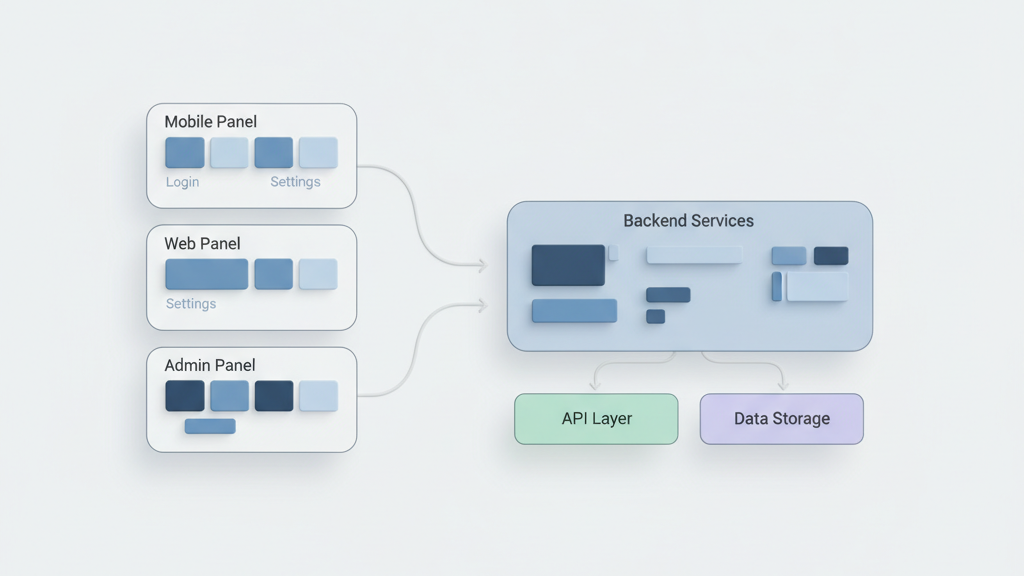
- Estimate platform count mobile web admin
- Assess security and compliance needs
- Factor in QA and buffer time
Define A Lean But Useful MVP Scope
A good MVP delivers core value while leaving bells and whistles for later. Start by mapping the primary user journey and include only steps that prove the business hypothesis. Drop secondary features until after validation. Use role based access and minimal admin panels at first. Many startups waste resources building full reporting or advanced settings before product market fit. Aim for one primary platform at launch unless multi platform is essential for testing your hypothesis. Keep the design consistent but simple to speed development. Use feature toggles to hide unfinished parts without refactoring. A lean scope reduces both initial spend and maintenance burden, and it helps you learn faster. Be pragmatic about future needs and document where you will extend once the core metrics validate. For a practical follow-up, see Uncovering the Untold Tactics: Navigating MVP Iteration for Product-Market Fit.
- Map the single critical user flow
- Restrict features to hypothesis testing
- Choose one launch platform if possible
- Use feature toggles for later expansion
- Document extension points for future sprints
Choose The Right Development Team Mix
Team composition changes both cost and delivery predictability. Small dedicated teams with a product manager, a designer, two to three engineers, and a QA resource often hit the best balance. Freelancers can lower hourly cost but add coordination overhead. Agencies bring process and reliability but charge higher day rates. Offshore teams can be cost effective but require strong product management. Many founders have a false economy by hiring only juniors which increases rework. Consider contract length and staff augmentation for spikes in work. If you need integrations or specialized compliance work, budget for consultants. Build a hiring plan that matches your timeline and complexity, and prefer teams with prior enterprise or startup MVP experience. That reduces surprises during implementation.
- Match team size to scope and timeline
- Prefer a dedicated cross functional squad
- Use agencies for tight deadlines and process
- Avoid all junior teams for complex builds
- Plan for spikes with contractors
Estimate Infrastructure And Third Party Costs
Infrastructure and third party services are ongoing costs that many teams overlook at budgeting time. Cloud hosting, databases, CDNs, and observability tools add monthly bills. Authentication, payment processors, and analytics services often charge per user or by throughput. Enterprise needs like single sign on and advanced logging bring extra licenses. Plan for staging and production environments to avoid disruptions. Include backups, monitoring, and incident response costs. Some services offer startup credits but do not count on indefinite discounts. Many startups underbudget for data transfer and storage when usage scales. Forecast both fixed and variable monthly costs for the first year and run a simple growth scenario to see how bills change. This helps you choose trade offs between managed services and self hosted options. Teams moving from strategy to execution can review Software maintenance and scaling.
- List managed services and their pricing tiers
- Budget for staging and production separately
- Include monitoring backups and incident response
- Forecast variable costs under growth scenarios
- Check vendor contracts and minimum commitments
Plan A Realistic Timeline And Release Phases
A compressed timeline raises hourly burn and increases risk of quality problems. Break the MVP into phases that produce working milestones. Phase one should deliver the core user flow with end to end testing. Phase two can add integrations and performance tuning. Plan time for user testing and early feedback cycles. Many founders aim to launch too fast and then spend months fixing UX and bugs. Allow time for compliance checks and security reviews if you target regulated customers. Use milestones to gate spending from investors or internal budgets. Communicate schedule risks clearly and keep contingency weeks. A phased approach lowers the chance of large rework and helps you get measurable results early.
- Define launch milestones and acceptance criteria
- Reserve time for usability testing and fixes
- Schedule compliance and security reviews early
- Use phased delivery to control spend
- Add contingency weeks to the timeline
Cost Reduction Strategies That Still Validate Learning
You can lower initial costs while keeping learning goals intact. Use no code or low code components for internal tools and admin interfaces. Swap fully custom UI for templated components in the early stages. Outsource non core work like design systems or analytics setup to specialists. Negotiate vendor contracts and use trial tiers during testing. Many startups forget to measure what matters and build unnecessary features. Focus spend on things that impact retention or revenue. Consider revenue sharing with early customers to offset development costs. Use progressive rollouts to limit scaling costs until you know demand. These tactics reduce upfront cash needs while protecting the ability to iterate based on real user data. A related guide worth reviewing is The Impact of Low-Code Development on Custom IT Solutions What You Need to Know.
- Leverage no code for admin or internal flows
- Use UI templates for faster delivery
- Outsource peripheral tasks to specialists
- Negotiate vendor terms and trial tiers
- Tie spend to validated metrics
Build A Budget Model For Investors And Stakeholders
Create a simple budget model that ties features to cost and expected impact. Break costs into build, run, and one time setup buckets. Show estimates per month and for 12 months with a best case and conservative case. Include hiring and ramp costs separate from vendor spend. Document assumptions for each line item so stakeholders can challenge them. Many founders present a single number which makes investment decisions harder. Use the model to show how extra funding changes scope or speeds delivery. Highlight the minimum viable outcome and the budget needed to reach it. This level of clarity builds trust with investors and helps your team make trade offs when choices are required.
- Split costs into build run and setup
- Provide best case and conservative scenarios
- List assumptions for each line item
- Show impact of extra funding on scope
- Use the model to guide funding conversations