
How to validate an MVP idea step by step matters more than clever features. This guide is for founders and product managers who need fast evidence before they build. I focus on lean practices you can run in weeks not months. The goal is to reduce wasted engineering time and avoid classic confirmation bias. Many startups miss early user objections because they test only within their comfort zone. Expect messy answers and be ready to pivot your assumptions. I give concrete activities you can run with low cost. You will see where to spend time on interviews, prototypes, and early sales signals. Use the advice here as a checklist, not a script. The point is to learn quickly, protect runway, and validate demand with real commitments. If you ignore the signals you will likely build features no one pays for. That warning is blunt but true. If you want a related deep dive, read Steps to Create a Lean Prototype for Startups That Validate Fast.
Start With An Assumption Map
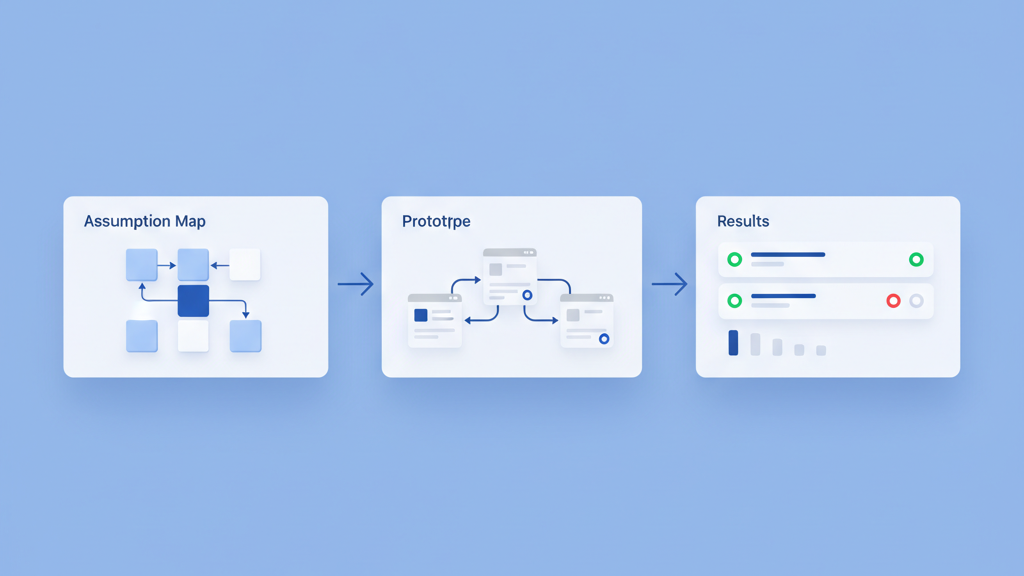
Begin by laying out your riskiest assumptions in a simple map. Name the problem you believe exists, the users who suffer it, and the value you expect to deliver. Then rank assumptions by risk and cost to test. The riskiest items are usually the ones about customer demand and willingness to pay. Do not spend time polishing features until these core beliefs are validated. I recommend a short team session to force clarity and to surface hidden assumptions. Write each assumption as a testable sentence and attach a pass fail signal. This habit prevents the trap of building a product that only you would use. Many teams skip this step and regret it later. The map will become your experiment backlog and it will help the team prioritize cheap tests that prove or disprove core risks quickly.
- List top ten assumptions
- Rank by customer demand risk
- Turn assumptions into testable statements
- Limit focus to three highest risks
Talk To Real Customers Early
Customer interviews are the fastest way to validate whether a problem matters. Recruit people who match your target profile and ask about their real workflows not hypothetical preferences. Use open ended questions and listen twice as much as you speak. Avoid pitching features during discovery conversations. Instead probe how they solve the problem today and what annoys them most. Track patterns across interviews and note which phrases keep repeating. You do not need a large sample to surface major doubts. Five to twelve well chosen interviews can expose fatal flaws. A practical warning is to avoid leading questions that confirm your bias. Record sessions with permission and synthesize themes within 48 hours while memories are fresh. Good interviewing saves a lot of wasted build time later. For a practical follow-up, see A Practical Guide to Customer Discovery for First Time Founders.
- Interview five to twelve target users
- Focus on current behavior not opinions
- Avoid pitching solutions
- Synthesize themes within two days
Build Rapid Prototypes
Move quickly from insights to a prototype that demonstrates core value. The prototype can be a clickable mockup, a concierge service, or a simple landing page that describes the offer. The objective is to create something the user can react to in minutes not months. Keep the prototype minimal and focus on the single value exchange you want to test. If the idea involves a transaction try to simulate payments or bookings to test willingness to pay. Offer a manual version of the service if that exposes the core mechanics. Fast prototypes reduce engineering waste and help refine the user flow. My view is that too much polish early on creates false positive feedback. Keep it rough but honest, and be ready to iterate based on actual user responses. If you need implementation support, explore Mobile app development.
- Choose the simplest prototype type
- Prototype the core value flow
- Simulate payments when possible
- Prefer manual over engineered features
Run Lean Experiments
Design small experiments that link actions to measurable outcomes. Use A B tests for messaging, ads or landing pages for demand, and fake doors to measure clicks that represent intent. Define success metrics ahead of time and set clear thresholds for go no go decisions. Keep experiments short and iterate rapidly based on results. Experimentation is not about proving you are right. It is about finding reliable signals that customers care enough to act. A common mistake is to treat soft engagement as proof of demand. Look for conversions that imply commitment such as sign ups with follow up, paid pilots, or calendar bookings. If experiments keep failing, reconsider the core problem or customer segment rather than adding features.
- Define a single metric per experiment
- Prefer behavioral metrics over opinions
- Set pass fail thresholds early
- Run short two week cycles
Measure Signals That Matter
Choose a small set of metrics that show real progress. Vanity metrics create false confidence. Focus on metrics tied to customer action like conversion rate, repeat usage, time to first value, and revenue per user. Track qualitative signals from interviews to explain why numbers move. Use cohorts to understand if early buyers behave differently from trial users. Record friction points that cause drop off and resolve the biggest blockers before expanding. Be skeptical of one off successes and look for consistent patterns. Many founders celebrate initial sign ups but ignore retention. Retention is often the best early proxy for product market fit. Keep your dashboard simple and revisit which metrics matter as you learn more. A related guide worth reviewing is Uncovering the Untold Tactics: Navigating MVP Iteration for Product-Market Fit.
- Track conversion and retention
- Use cohorts for deeper insight
- Count revenue related actions
- Log qualitative reasons for drops
Close The Loop With Pre Sales
The strongest validation is money or equivalent commitments. Try to pre sell the product as a pilot or early access offer. Use straightforward pricing and clear terms to remove ambiguity. If customers sign contracts or pay deposits you know you solved a real problem. If pre sales fail collect the reasons and address objections directly. Sometimes the issue is timing or trust rather than value and that is useful to learn. A practical tip is to bundle support or onboarding in early deals to increase conversion. Pre sales force conversations about delivery logistics and pricing which reveal hidden costs. In my experience early revenue shapes product priorities better than feature wishlists gathered from free users. Think of pre sales as a learning exercise and a way to fund the next iteration. Teams moving from strategy to execution can review MVP development for startups.
- Offer paid pilots or deposits
- Make pricing simple and transparent
- Collect objections from lost deals
- Use revenue to prioritize roadmap