
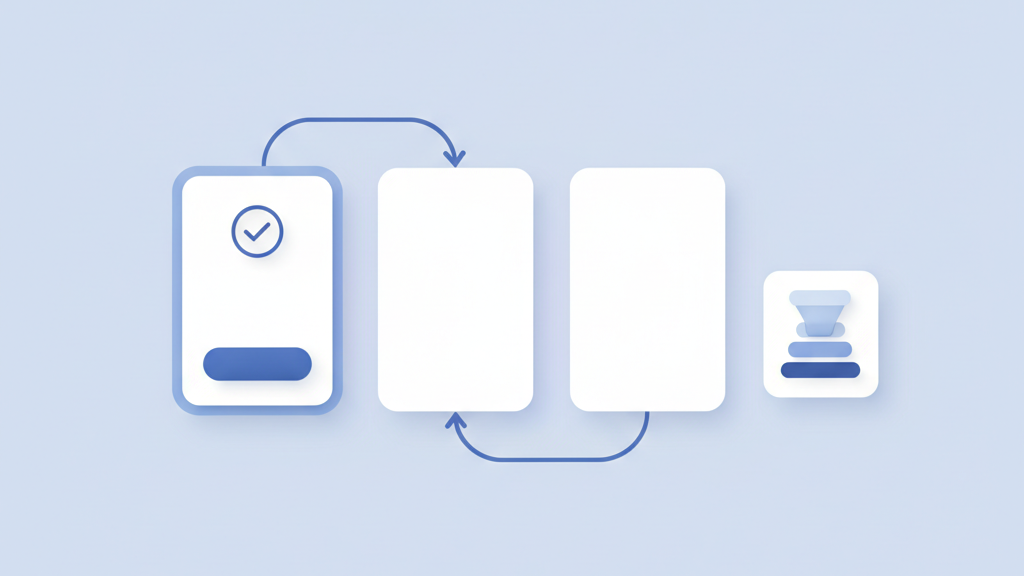
This guide covers best practices for user onboarding in early products and gives hands on steps for founders and product managers. Expect clear advice on reducing friction, setting success criteria, and testing fast. Many startups miss the chance to make a strong first impression by shipping long tutorials instead of one simple path to value. If you want a related deep dive, read Protecting Users Early On: best practices for securing early product user data.
Start With The Core Value
When you launch an early product focus on the core value that new users can experience right away. Map the simplest path from signup to that value and cut every step that does not directly lead to it. Use clear labels and a single focal action on the first screen. Many startups miss this and overwhelm new users with setup tasks and optional features. Prioritize one measurable outcome per flow and instrument it for tracking. Keep language plain and avoid jargon. Offer an escape hatch for returning users so they do not repeat initial steps. Test the path with three to five target users and watch where they hesitate. Use those observations to simplify the screens and rewrite confusing copy. Iterate quickly because early products change fast and first impressions last. For a practical follow-up, see Build A Lean Booking Product For Fast Launch.
- Map one clear path to value
- Remove every non essential step
- Use plain labels and one focal action
- Test with a few target users
Design For Quick Wins
Design the onboarding flow for fast wins and visible progress. Break tasks into tiny steps that users can complete in under a minute each. Show clear progress indicators and acknowledge each completed step. When possible prefill fields or offer choices that reduce typing. Many founders believe long tutorials build trust but they often kill momentum. Use contextual tips instead of long modals and surface help where errors happen. Include a small tour of the main screen but keep it skippable. Test the order of steps with prototypes not code so you can change direction quickly. Focus on actions that lead to adoption rather than exhaustive feature tours. Small victories lead to habit formation and better retention in early cohorts. Do not underestimate the value of speed. If you need implementation support, explore Backend API development.
- Break tasks into minute sized steps
- Show progress and acknowledge wins
- Prefill and reduce typing
- Make tours skippable and contextual
Use Lightweight Data And Testing
Collect the smallest useful data set and use it to run rapid experiments. Avoid heavy analytics wiring at the start. Track a handful of events that map to the key outcome you want new users to reach. Use tools that let you change experiments without a full deploy. Many teams fall into the trap of trying to measure everything and then not acting on any signal. Set simple success criteria and run short A B tests with real users. Pair qualitative notes from sessions with quantitative signals from events. Watch for drop off points and test single variable changes to learn fast. Keep privacy and consent clear so users trust you. Early data is noisy but directional. Treat it as a guide not a gospel. Teams moving from strategy to execution can review MVP development for startups.
- Track a few key events
- Run short A B tests
- Pair qualitative and quantitative signals
- Keep privacy and consent clear
Build A Feedback Loop
Create a tight feedback loop that brings user signals into product decisions. Put channels for feedback inside the product and make it easy to report frustration. Schedule short interviews with new users in the first two weeks and ask them to walk you through their first use. Many product teams rely only on surveys and miss nuance. Use session recordings wisely to see where users hesitate or rage click. Tag feedback with the user segment and the flow they were in. Share a weekly digest with the team and make a visible list of fixes for the next sprint. Celebrate small wins and close the loop by telling users when their reports lead to change. This builds trust and turns early adopters into allies. A related guide worth reviewing is Process for Running Effective Early User Interviews for Product Teams.
- Add feedback channels inside the product
- Run short user interviews early
- Tag feedback by segment and flow
- Share a weekly digest with fixes
Measure What Matters
Pick a few metrics that reflect actual user progress and focus the team on them. Vanity numbers like page views can distract from onboarding performance. Instead track trial to activation conversion, time to first key action, and retention after seven and thirty days. Link experiments to a single primary metric and one secondary metric so results are easy to interpret. Many startups measure everything and then fail to move a single needle. Use funnels to spot leak points and cohort analysis to see if changes stick over time. Build dashboards that show both qualitative notes and quantitative trends. Review metrics in a weekly ritual and decide on one experiment to run between reviews. Clear metrics make prioritization simpler and reduce internal noise.
- Choose a few outcome oriented metrics
- Use funnels and cohort analysis
- Link experiments to primary and secondary metrics
- Review metrics in a weekly ritual