
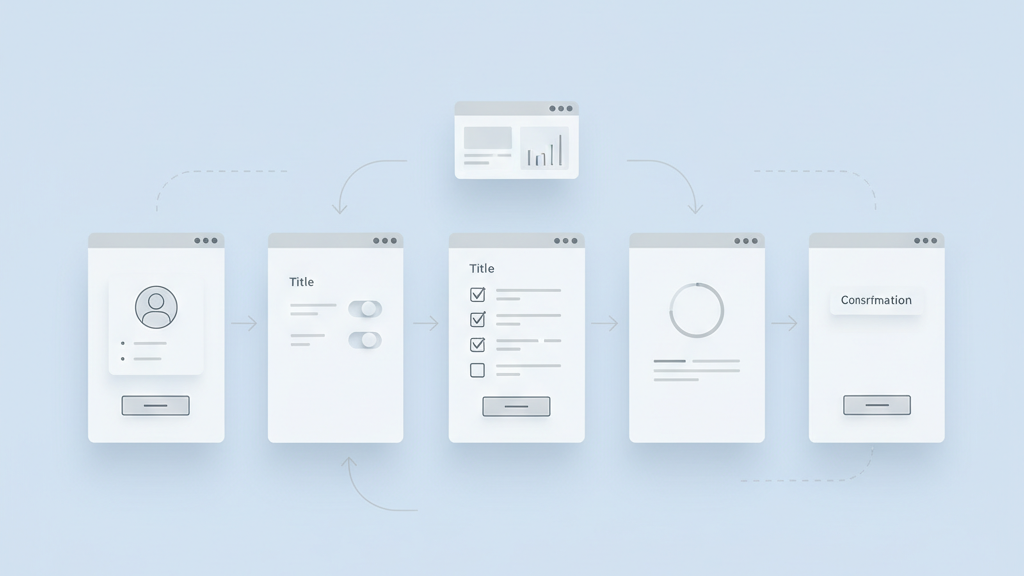
As a founder you rarely have time to build a perfect product. In this post I outline the steps to create a lean prototype for startups and how to run fast learning cycles. The goal is to prove core value with minimal investment. You will see practical ways to map flows, pick simple tools, and run short user sessions. Many startups confuse prototypes with near complete products and spend months on the wrong problems. That is a costly mistake. Read on if you want a repeatable approach that keeps your team aligned and brings quick answers. If you want a related deep dive, read Build A Lean Booking Product For Fast Launch.
Start With The Riskiest Assumption
When time and budget are tight focus on the riskiest assumption that would break the product idea. Define that assumption clearly and write a simple hypothesis. Prioritize features that prove or disprove that hypothesis. Sketch one core scenario that shows the value in under ten steps. Keep scope lean by removing edge cases and cosmetic details. Use paper or a whiteboard to explore variations before touching code. Many startups miss this and build large prototypes that only validate design stamina. A short checklist can help the team agree on what to prototype and what to defer. The goal is to learn not to impress investors. This mindset will steer trade offs during design and development. Accept that some user flows will remain untested at this stage. If you need implementation support, explore MVP development for startups.
- Name the riskiest assumption first
- Write a one sentence hypothesis
- Limit the prototype to one core scenario
- Remove edge cases and polish
- Use a checklist to lock scope
Map The Core User Flow
Map the core user flow and focus on the path that delivers value fastest. Draw a simple flow diagram that starts at entry and ends at the moment of value exchange. Limit the flow to three to seven screens. Each screen should serve a single job and avoid overloading users. Label the primary actions and the expected outcome for each step. This makes it clear what to prototype and what can be mocked. Share the flow with a small group of users or advisors and update it after feedback. Many founders forget to include cancellation and error paths and then get surprise costs later. A clear flow reduces wasted work during development. It also keeps the team aligned on the definition of success. For a practical follow-up, see What Customers Really Want: Decoding User Feedback for MVP Success.
- Draw entry and value points
- Keep screens to a minimum
- Label actions and outcomes
- Mock complex steps
- Review with users quickly
Build Fast With Low Fidelity
Choose low fidelity tools that let you build and change screens quickly. Use sketching apps or simple HTML prototypes rather than full native apps. Reuse existing UI components and patterns that users already recognize. Mock backend services with stubs or spreadsheets to avoid early infrastructure work. Focus on the interactions that prove your hypothesis. Skip polished visuals and animations until you validate the concept. For user research you can use clickable PDFs or interactive images. Many teams waste weeks on visual polish that adds no learning value. Keep the scope small enough that one developer or designer can adjust the prototype between test sessions. Quick changes lead to faster learning cycles and lower cost per insight. Plan simple analytics to capture clicks and errors.
- Use sketching apps or simple HTML
- Reuse familiar UI patterns
- Mock APIs with stubs
- Avoid visual polish early
- Capture basic interaction metrics
Test With Real Users
Recruit a small set of target users and run short test sessions that focus on the core flow. Use tasks that reflect real goals and avoid leading prompts. Observe behavior first and ask questions later. Record sessions when possible and look for hesitation points and confusion. Track time on task for the key steps and count completion rate. Use open ended notes to capture unexpected insights. Offer a simple incentive to increase participation and reduce no shows. Many startups test only with friendly contacts and miss critical differences. Aim for iterative rounds of five to ten users and change the prototype between rounds. Each round should answer a specific question and reduce uncertainty. Treat user feedback as data not as design by committee.
- Recruit true target users
- Run short focused tasks
- Observe before you ask
- Record hesitation and errors
- Iterate after five to ten sessions
Iterate Based On Measurable Signals
Define measurable outcomes before you run tests and tie them to the hypothesis. Choose metrics that are easy to capture like task completion time and key click paths. Use simple tracking or manual tallying if analytics are not yet in place. Review the data with the team after each round and decide which assumption was supported or refuted. Update the prototype to address the highest impact issues. Keep changes focused and avoid adding whole new flows until you validate the core value. Many teams chase vanity metrics early and lose sight of learning. Keep a short log of changes and why they were made. This habit speeds up decision making and creates a clearer record for investors or partners.
- Define clear outcomes up front
- Pick simple measurable metrics
- Tally results manually if needed
- Change the prototype after each round
- Log decisions and reasons
Prepare Handoff And Next Steps
When the prototype validates the core idea plan the handoff to engineering. Create a simple spec that lists screens interactions and known limitations. Share the prototype user notes and metric summaries. Highlight the remaining risks and suggest experiments for the next phase. Keep the spec minimal and actionable and avoid handing over guesses as requirements. Many founders hand off prototypes that are too vague and cause rework. Plan a short alignment meeting to walk engineers through the decisions and trade offs. Set priorities for what must be built in the first production sprint and what can be deferred. Include simple acceptance criteria and expected edge cases. Note technical debt that is acceptable for launch. Teams moving from strategy to execution can review Software maintenance and scaling.
- Create a minimal spec
- Share notes and metrics
- Highlight open risks
- Hold a short alignment meeting
- Set clear priorities for sprint one
Decide On Success And Scale Carefully
Decide what success looks like after the prototype and avoid premature scaling. Use the evidence gathered to inform product market fit conversations and hiring needs. If the prototype shows strong engagement choose a small beta and measure retention. If learning is incomplete plan targeted experiments to reduce the largest unknowns. Document lessons and share them with stakeholders. Many teams skip this step and return to endless feature work. Keep a clear link between prototype outcomes and the next set of deliverables. This avoids jumping to full product mode before you have repeatable signals. Small deliberate steps often beat big leaps in early product stages. Record decisions and the evidence that supported them. Be honest about where uncertainty remains. A related guide worth reviewing is B2B Onboarding Software MVP Product Market Fit Steps That Actually Work.
- Define prototype success criteria
- Start a small beta for retention
- Plan experiments for remaining risks
- Document lessons for stakeholders
- Use evidence to guide hiring and scope