
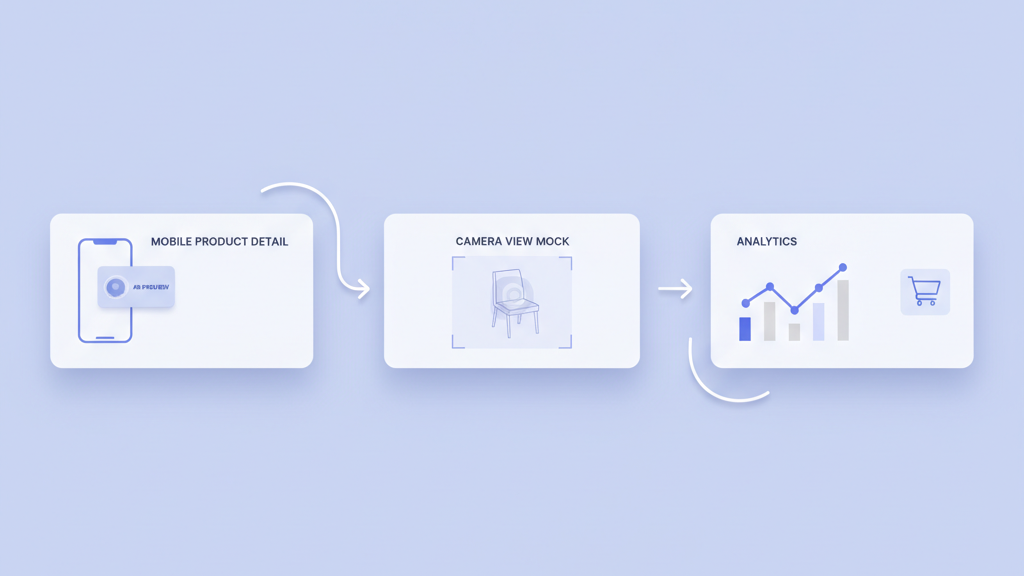
Building an AR shopping platform MVP for immersive retail experiences requires focus on core value and fast learning. Startups often chase perfect visuals and miss product market fit. This guide shows how to scope an MVP that tests the most important assumptions without a large up front budget. You will see how to validate interest, choose technology, and plan a phased rollout. Many founders underestimate integration complexity so plan for it early. The goal is rapid feedback from real users and partners, not a finished product. I offer practical steps and candid warnings based on working with early stage teams in the USA market. Expect trade offs and make decisions that preserve speed and flexibility. If you want a related deep dive, read How To Budget An MVP For Early Teams (enterprise app MVP pricing for small businesses USA).
Clarify The Core Hypothesis
Every MVP needs a single core hypothesis to test. For AR retail the hypothesis might be that shoppers will use a real time preview to reduce returns and increase confidence. Write that hypothesis in one sentence and list the most risky assumptions behind it. These might include consumer willingness to grant camera access, performance of 3D assets on low end phones, and the friction of switching from browsing to an AR view. Prioritize the assumptions by risk and design experiments to falsify or support them. Many teams start building features that do not address the riskiest unknowns. Avoid that trap. Keep the scope focused on proving the hypothesis with the smallest possible feature set. A clear hypothesis helps align engineering, design, and business stakeholders and supports faster decisions when things go off plan. If you want a related deep dive, read Real-Life Case Studies: The Power of MVP Development for Startups.
- State one clear testable hypothesis
- Identify and rank the riskiest assumptions
- Design experiments not features
- Keep scope minimal and measurable
Validate Market Demand Quickly
Validation should happen before heavy engineering. Use simple prototypes and campaigns to learn from real users. Run ad driven landing pages to measure click through and intent. Offer a waitlist or early access to gauge interest. Use a low fidelity AR prototype with video demos to collect qualitative feedback from shoppers and merchants. Engage retail partners early and learn operational constraints like shipping, returns, and catalog complexity. Many startups miss this step and build a product no one needs. Feedback from merchants is as important as consumer data because adoption often depends on inventory quality and asset readiness. Prioritize experiments that generate concrete signals you can act on within two weeks. This reduces wasted development and gives a clearer picture of what to build next. For a practical follow-up, see How to Prioritize Product Features Using Simple Framework That Scales.
- Use landing pages and waitlists
- Make video demos for qualitative feedback
- Engage potential merchant partners
- Run short two week experiments
Choose A Pragmatic Tech Stack
Choose technology that matches your team skills and launch goals. For mobile first experiences consider native AR frameworks for performance and smoother camera access. Web AR can be useful for cross platform reach but test performance on older devices. Use lightweight 3D formats and optimization tools to keep models small and load times fast. Plan for a simple backend that serves assets and tracks events. Off the shelf cloud services can host models and handle conversion tasks to avoid building complex tooling up front. Many startups over engineer their pipeline so focus on just enough automation to scale asset ingestion for your first partners. Finally pick analytics and error tracking now so you can measure adoption and debug common issues in the first release. If you need implementation support, explore Mobile app development.
- Match frameworks to team skills
- Optimize 3D assets for mobile
- Use cloud services for hosting
- Instrument analytics from day one
Design UX For Fast Adoption
User experience matters more than flashy effects in an MVP. Design a simple entry point to AR with clear permission prompts and an easy way to exit. Make onboarding quick and give users a clear benefit in the first 10 seconds. Test interactions like scale, rotate, and place with real users and simplify controls based on common use cases. Provide fallbacks for devices that cannot run AR and show comparative photos or try on features. Consider trust signals like accurate scale indicators and realistic lighting to reduce skepticism. Many teams forget that shopping decisions rely on confidence so include pricing and availability context within the AR view. Keep the UI minimal and focused on the task of evaluating the product in context. A related guide worth reviewing is B2B Onboarding Software MVP Product Market Fit Steps That Actually Work.
- Make camera permissions simple and clear
- Prioritize quick first time value
- Provide fallbacks for unsupported devices
- Include trust signals like scale guides
Define The Minimum Viable Feature Set
Pick features that directly test your hypothesis and nothing more. For retail this often means AR view, a way to place a product in the scene, basic scale and rotation controls, and a simple add to cart flow. Add merchant tools only if partners need them to prepare assets. Postpone advanced features like multi user sync, complex physics, or deep analytics until you have evidence these features will improve conversion or retention. Build the backend so it can be extended but avoid building full scale CMS features before launch. A lean MVP helps you collect real user metrics and iterate fast. Many founders want to impress investors with long lists of features but that rarely helps product validation. For a practical follow-up, see Build A Lean Booking Product For Fast Launch.
- Select features tied to hypothesis
- Defer advanced features until needed
- Build extendable backends not monoliths
- Focus on conversion and retention metrics
Measure What Matters
Define success metrics before you build. Track activation rates for AR sessions, average session duration, conversion after AR use, and return rates for items viewed in AR. Collect qualitative feedback through short in app prompts and user interviews. Monitor performance metrics like model load time and frame rate to avoid poor experiences on common phone models. Use event driven analytics that tie AR actions to orders and returns so you can measure ROI for merchants. Many teams track vanity metrics that do not move the business forward. Focus on a handful of leading indicators that inform product decisions. Set initial targets that are achievable but signal whether the concept is viable for more investment. A related guide worth reviewing is How To Set Product Metrics And KPIs For Startups That Scale.
- Track AR activation and session depth
- Measure conversion tied to AR use
- Monitor performance on low end devices
- Collect qualitative feedback early
Plan A Practical Launch And Scale Path
Launch with a narrow pilot rather than a mass rollout. Pick one or two retail partners with manageable catalogs and motivated teams. Use a controlled pilot to iterate on asset quality, onboarding, and support workflows. Marketing should focus on power users who will give feedback and share the experience. After the pilot, analyze metrics and iterate on weak points before scaling. Prepare a plan for asset ingestion at scale with clear guidelines and simple tooling. Consider partnerships with asset conversion services to reduce friction for merchants. Be realistic about timelines and costs and keep stakeholders aligned on trade offs. Many startups try to scale too early and pay for it in customer support and poor retention. Teams moving from strategy to execution can review Software maintenance and scaling.
- Start with a narrow pilot
- Focus marketing on early advocates
- Prepare asset ingestion workflows
- Scale only after clear pilot success