
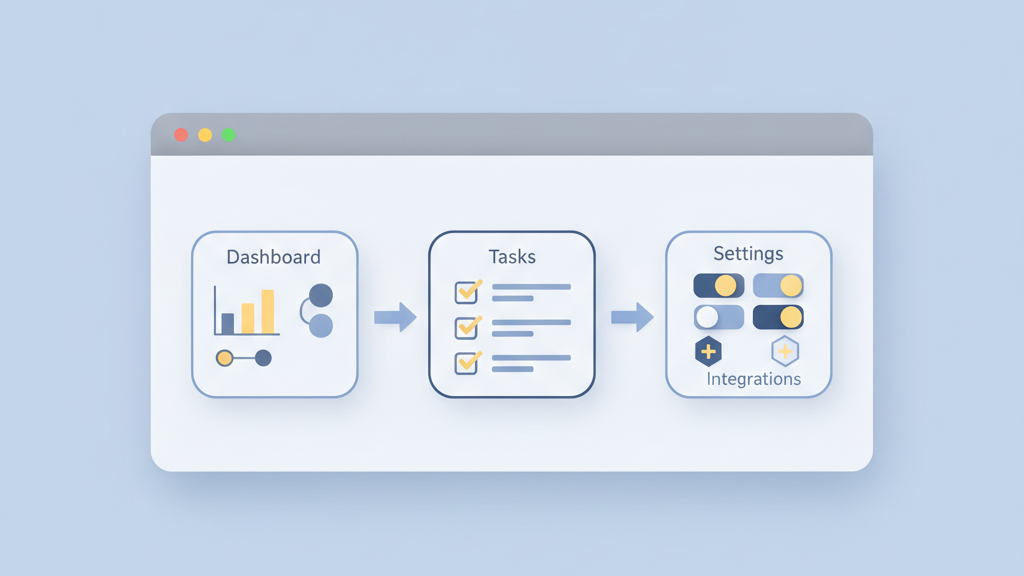
Building a micro SaaS software MVP for niche productivity tools is about speed, focus, and ruthless pruning. Startups often try to please everyone and waste months on features that will not pay. This guide shows a pragmatic path from idea to first paying user. You will learn how to define the smallest valuable product, set validation metrics, design a tight onboarding flow, and run quick rounds of user testing. Many founders miss the value of a simple analytics plan. Track a few signals that matter and iterate based on real behavior. I will share opinions on trade offs and common traps. Expect to prioritize reliability over bells and whistles, and expect trade offs between speed and polish. Bring a clear success metric and a willingness to cut features. This approach works for founders and product managers who want traction fast. If you want a related deep dive, read How To Set Product Metrics And KPIs For Startups That Scale.
Pinpoint The Core User Problem
Start by framing a single real problem that a small group of users feel daily. Avoid broad productivity themes and aim for a specific workflow pain that shows up in minutes or hours lost. Talk to potential users until you can describe the pain in their words, not yours. Many startups skip this and build generic tools that attract no loyal users. Good problem definitions include context, frequency, and current workarounds. Write a short job statement that ties the user to the outcome you plan to deliver. Use that statement to reject feature ideas that do not move the needle. Early interviews should focus on pain triggers and the cost of current workarounds. Prioritize problems that users say they would pay to solve. This focus saves development time and makes your MVP easier to scope and test.
- Interview niche users about specific tasks
- Document frequency and cost of the pain
- Write a single job statement
- Reject features that do not align with the job
- Target payers first not general interest
Define The Smallest Valuable Scope
Translate the user problem into the smallest set of features that deliver real value. This is not a demo version. The MVP must help a user complete the job better than their current workaround. Map the end to end flow and then strip away anything that is not essential to completing the task. Resist the urge to add integrations, complex settings, or performance polish at this stage. Focus on reliability and clarity. Many product teams confuse polish with value and waste weeks. Choose a single platform to start with and build a focused onboarding path that leads the user to the core outcome in minutes. Define success metrics for the MVP that are easy to measure and tie directly to user value. If you need implementation support, explore MVP development for startups.
- Map the full user flow from trigger to outcome
- List must have features and drop the rest
- Choose one platform and one onboarding path
- Set clear success metrics for early tests
- Keep the interface minimal and focused
Prototype And Validate Rapidly
Use prototypes to validate assumptions before writing production code. Interactive mocks or lightweight functional prototypes reveal usability gaps and false assumptions. Run small validation experiments with 5 to 15 target users and watch how they try to accomplish the job. Many founders read feature requests during demos and then build every request. That approach dilutes the MVP. Instead observe where users struggle and whether the core benefit is obvious without heavy explanation. Capture qualitative notes and simple quantitative signals such as time to first success and task completion rate. Iterate the prototype quickly and rerun the same small tests until key metrics improve. Rapid validation saves engineering time and prevents costly rewrites. For a practical follow-up, see Uncovering the Key Metrics: Measuring MVP Success in Startups.
- Build an interactive prototype not a full app
- Run quick tests with a small number of users
- Measure time to success and completion rates
- Iterate the prototype and retest
- Avoid building features from single requests
Ship A Focused MVP And Measure
When development starts keep releases small and frequent. Deliver a clear onboarding that guides the user to the core action. Instrument the product with a handful of events that show whether users achieve the intended outcome. Many teams drown in analytics and track everything. That is a distraction. Track what proves product market fit early like activation rate, retention at key intervals, and time to value. Use simple dashboards to monitor those signals. Plan for weekly check ins on those metrics and for short cycles of fixes and improvements. Expect bugs and be ready to prioritize reliability issues quickly. Early users will forgive rough edges if the core benefit is real. A related guide worth reviewing is B2B Onboarding Software MVP Product Market Fit Steps That Actually Work.
- Release small focused updates
- Instrument a few key events
- Track activation and short term retention
- Use dashboards for weekly reviews
- Prioritize reliability and quick fixes
Price For Clarity And Iterate
Choose a simple pricing model that matches the value delivered. For niche productivity tools value often maps to time saved or reduced errors. Start with a clear per user or per workspace price and avoid complex tiers. Many founders delay pricing and then offer the product for free too long. That habit traps you in feature chasing. Early pricing should be inexpensive but not free. Offer a short trial and ask for early feedback on price sensitivity. Monitor conversion from trial to paid and be prepared to adjust features or limits rather than blur price points. Pricing experiments reveal what users value and guide roadmap decisions more than feature votes.
- Start with a clear simple price
- Avoid long free periods for early users
- Offer a trial and measure conversion
- Adjust limits not price during early tests
- Use pricing feedback to guide features
Plan For Growth Without Losing Focus
Once you hit positive signals plan deliberate growth steps that do not dilute the core value. Add features only if they increase retention or conversion. Build lightweight onboarding variations to test messaging and channels. Many teams expand the product too fast and lose the clarity that attracted early users. Invest in simple automation and a scalable support approach before scaling acquisition. Keep data pipelines simple but reliable so you can identify regressions quickly. Keep a short list of potential product extensions but gate them with user evidence. A steady growth plan beats a scattershot feature push. Keep product decisions tied to measurable business outcomes. Teams moving from strategy to execution can review Software maintenance and scaling.
- Add features only when backed by user evidence
- Test onboarding messaging at scale
- Automate recurring tasks before scaling
- Monitor data for regressions after changes
- Keep growth tied to measurable outcomes