
Every startup faces the same core conflict between speed and quality. You want to ship features fast to find product market fit. This rapid pace usually leads to messy code and temporary fixes. While this is normal, it eventually creates a drag on your development team. If you do not implement a process to prioritize technical debt in early stages, your velocity will drop to a crawl. You will spend more time fixing old bugs than building new features. This guide helps you identify and manage that debt before it becomes a company-killing problem. We will look at how to track these issues and decide what needs fixing now and what can wait. If you want a related deep dive, read B2B Onboarding Software MVP Product Market Fit Steps That Actually Work.
Understanding the True Cost of Startup Shortcuts
Technical debt is often misunderstood as just being bad code. In reality, it is a conscious choice to trade long term stability for short term speed. When you are a small team, you might skip writing comprehensive tests or use a basic database structure to launch a week early. This is a valid business decision. However, many startups miss this nuance and treat all debt as a failure. You should view it as a financial loan. You can use it to grow faster, but you must pay it back with interest later. If you let the interest accumulate without establishing a process to prioritize technical debt in early stages, you eventually go bankrupt. This bankruptcy looks like a product that crashes constantly and a team that is afraid to touch the core codebase. Many founders wait until the system is failing before they address these issues. By that point, the cost of fixing it is ten times higher than it would have been early on. You need to identify the difference between debt that helps you move and debt that will eventually stop you. Not all shortcuts are equal. Some are minor inconveniences while others are structural flaws that will prevent you from scaling. Your goal is not to have zero debt. Your goal is to manage it so it does not control your roadmap. This requires honest communication between the product team and the engineering team. Engineers must explain the risks in business terms, and founders must listen to those warnings. Without this alignment, the engineering team will feel burned out and the product will suffer. If you need implementation support, explore Software maintenance and scaling.
Identifying the Warning Signs of Overdue Debt
Knowing when to pivot from feature development to refactoring is a difficult skill. There are specific signals that indicate your technical baggage is becoming a liability. One of the most common signs is a sudden drop in developer velocity. If a feature that took two days last month now takes two weeks, you have a problem. This usually means the code is too tangled to modify safely. Another sign is the high frequency of regression bugs. This happens when fixing one problem causes three new ones to appear elsewhere. It shows that your systems are too tightly coupled. Many startups miss this signal because they focus only on the total number of bugs rather than where they come from. You should also watch for a long onboarding time for new engineers. If it takes a month for a senior hire to understand the codebase, the logic is likely too complex or poorly documented. These issues are not just engineering complaints. They are business risks that impact your ability to compete. If your rivals can ship faster than you because their code is cleaner, you lose. You need to track these symptoms through regular retrospectives. Ask your team what parts of the code they are afraid to change. The areas of fear are usually where your highest debt lives. Addressing these early prevents a total system rewrite later.
- Development cycles for simple features become unpredictably long.
- Small changes lead to unexpected breaks in unrelated modules.
- The team spends more than half their time on bug fixes.
- New developers struggle to understand the core logic without help.
- The system fails to handle small increases in user traffic.
- Documentation is non existent or completely out of date.
A Framework for Categorizing Technical Issues
To fix the problem, you first need to organize it. The primary process to prioritize technical debt in early stages involves creating a centralized registry. This is just a simple list of every known shortcut, missing test, or outdated library. Each item should be categorized by its impact on the business. We like to use three categories. The first is critical debt. This includes security vulnerabilities or anything that prevents the app from scaling to the next level. These items must be fixed immediately. The second is elective debt. These are shortcuts that make the code harder to read but do not currently break anything. You can leave these alone for a while. The third is accidental debt. This happens when you realize that the original architecture was wrong because the product requirements changed. This is the hardest to fix because it often requires a major overhaul. I believe it is better to be honest about bad code than to hide it. If the team knows exactly where the mess is, they can work around it until there is time for a fix. You should review this list during every sprint planning session. It ensures that technical issues stay visible to the product owners. If debt remains hidden, it will never be prioritized. By making it part of the official backlog, you treat engineering health as a first class citizen alongside new features. This visibility is the only way to ensure the long term health of your software. For a practical follow-up, see Guide To Product Backlog Grooming For First Time Founders.
Using an Impact Versus Effort Matrix
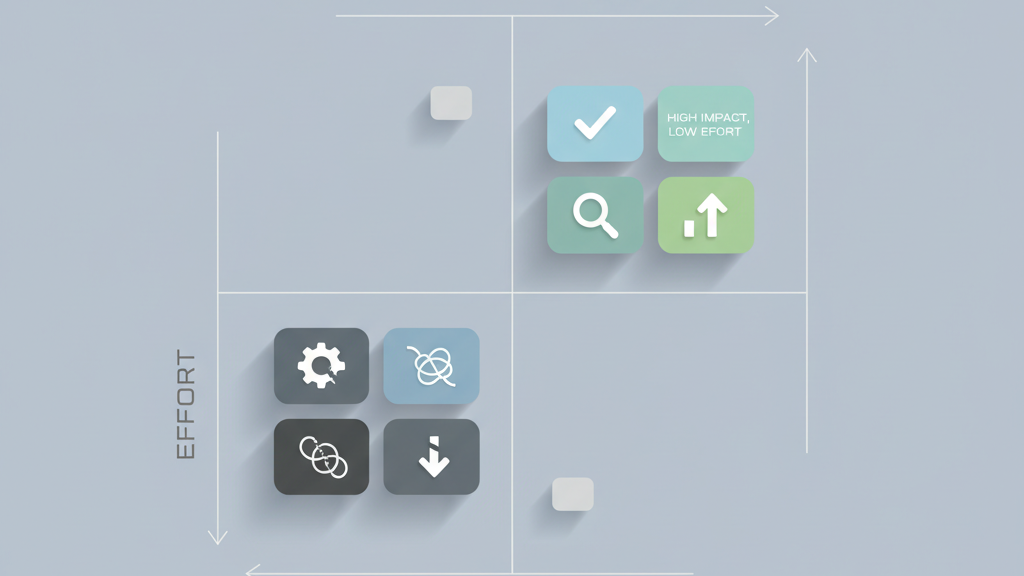
Once you have a list of technical issues, you need a way to decide what to fix first. A simple impact versus effort matrix is the most effective tool for this. You plot each item on a graph. High impact items are those that improve performance, reduce user facing bugs, or significantly speed up the team. High effort items are those that require weeks of work or a total rewrite. Your focus should always be on high impact and low effort tasks. These are your quick wins. Many startups miss this and try to tackle massive refactors that do not actually improve the user experience. This is a mistake. You want to pay off the debt that has the highest interest rate first. If a piece of messy code is in a part of the app that is rarely touched, it is low interest debt. You can leave it for now. If the messy code is in the core payment processing logic, it is high interest debt. Every time you touch that area, you risk a major failure. You should also consider the risk of doing nothing. Sometimes the cost of a rewrite is high, but the cost of the system crashing during a big marketing launch is even higher. Use this matrix to justify your decisions to stakeholders. It turns a technical argument into a logical business case. This makes it much easier to get buy in for maintenance work. A related guide worth reviewing is The Impact of Low-Code Development on Custom IT Solutions What You Need to Know.
- Map each technical issue to a quadrant of the matrix.
- Target low effort and high impact items during minor sprints.
- Avoid low impact and high effort tasks unless they are blockers.
- Quantify impact by looking at support tickets and developer hours.
- Group related small fixes together to save on deployment time.
- Review the matrix monthly as business priorities change.
- Be ruthless about ignoring debt that does not affect growth.
Building a Culture of Continuous Maintenance
The final step is making technical health a part of your daily routine. You cannot treat refactoring as a once a year event. It should happen in small increments during every development cycle. A common rule of thumb is to dedicate twenty percent of every sprint to technical debt. This allows the team to clean up as they go. If you ignore this, the debt will eventually consume your entire schedule. You should also encourage the boy scout rule. This means developers should always leave the code slightly cleaner than they found it. If they are adding a small feature, they should also fix a typo or update a tiny library. These small actions prevent the accumulation of massive problems. It is also important to celebrate these fixes. Often, only new features get the spotlight. If you reward developers for improving system stability, they will take more pride in their work. This cultural shift is the secret to a sustainable product. It ensures that you do not need to pause all development for a month to fix the mess. Startups that thrive are those that balance the need for speed with the discipline of engineering excellence. By following a consistent process to prioritize technical debt in early stages, you build a foundation that can support millions of users without collapsing under its own weight. This approach keeps your team happy and your product competitive for years to come. Teams moving from strategy to execution can review MVP development for startups.