
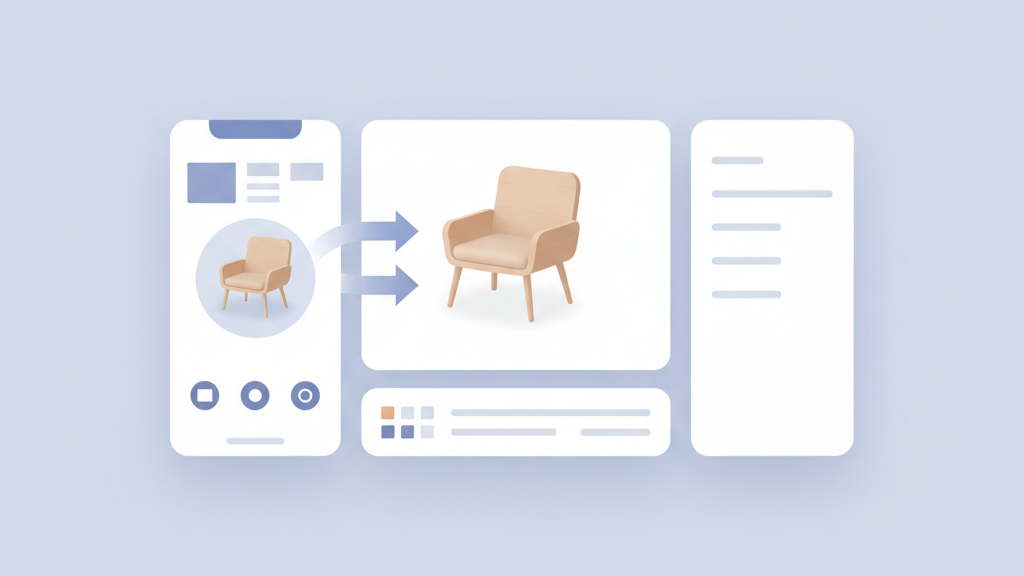
Startups often struggle with the complexity of immersive technology. Using FlutterFlow AR VR app MVP prototyping and development services allows teams to validate ideas without spending six months on a prototype. This approach shifts the focus from writing boilerplate code to refining the user experience. Many founders assume they need a massive team of Unity developers just to test a concept. That is often a mistake. Low code tools now provide enough power to connect spatial filters or interactive dashboards to a live backend. This means you can build a functional product that users can actually test on their phones. The goal is to find out if your solution solves a real problem before you commit to a year of expensive engineering. Early validation is the only way to ensure your product fits the market needs.
The Speed Of Modern Immersive Prototyping
High speed development is the biggest advantage for modern founders. Building an immersive app used to mean hiring specialized engineers who worked in silos for months. Today, you can use FlutterFlow AR VR app MVP prototyping and development services to bridge the gap between visual design and technical execution. This platform handles the heavy lifting of user authentication and database management while you focus on the immersive view. Many startups miss this opportunity because they think low code is only for simple forms. In reality, you can embed custom Flutter widgets that handle camera feeds and 3D overlays. This reduces your time to market by months. You get to test with real users sooner. That feedback is more valuable than any perfectly optimized bit of code that took half a year to write. Early validation prevents you from building features that nobody actually wants to use. It is better to launch a lean product that works well than a complex one that arrives too late to the market. Founders should prioritize the core loop of their application. If the main immersive feature does not work, the rest of the app does not matter. Use the speed of low code to iterate on that core loop every single week. This is how you build a product that people actually love to use. You can change direction quickly if the initial data shows that users are confused. This agility is your biggest competitive advantage against larger companies that move slowly.
Technical Integration And Custom Logic
Integration is where the real magic happens. While the drag and drop interface is great, the ability to inject custom code is what makes this approach viable for immersive projects. You can utilize existing libraries by wrapping them in custom actions. This allows your app to interact with the physical world while maintaining a smooth user interface. Most product managers worry about being locked into a specific ecosystem. You should know that you can export your code at any time. This flexibility is vital for long term scaling. You are not stuck. You are just starting faster. Integrating third party services for spatial audio or cloud anchors is also possible through API calls. This means your initial product can have professional features without the professional price tag. You can build a bridge between the physical and digital worlds using standard web protocols. This makes your application more resilient and easier to maintain. Many founders overlook how important it is to have a clean data flow between the device and the server. Here are a few technical components that usually go into these prototypes:
- Camera permission handlers for mobile devices
- Custom widgets for rendering 3D GLB files
- API connections to cloud based spatial mapping data
- Real time state management for interactive elements
- Deep linking for shared virtual experiences
Reducing Development Costs For Lean Startups
Cost management is a primary concern for every early stage company. Traditional development for immersive technology is expensive because the talent pool is small. When you choose an efficient prototyping path, you essentially lower the barrier to entry. You do not need five different developers for five different platforms. You build once and deploy to both iOS and Android. This cross platform capability is a lifesaver for lean budgets. I have seen founders spend their entire seed round on a single prototype that did not even have a working login screen. Do not let that happen to you. Use the saved budget to hire better designers or to run more marketing experiments. A functional prototype that costs fifty thousand dollars is much better than a broken one that costs two hundred thousand dollars. It is also easier to pitch to investors when you have a working product they can hold in their hands. They care about traction and user engagement more than the specific tech stack you used to get there. Focus on showing growth and real world utility. This is the path to a successful funding round. By keeping your costs low, you extend your runway and give your team more chances to find the right product market fit. Every dollar saved on boilerplate code is a dollar you can spend on finding new customers.
Designing For User Experience In 3D Spaces
User experience in augmented reality is very different from standard web apps. You have to think about lighting and physical space and how the user moves. When using a visual builder, you can iterate on these interactions in real time. If a button feels awkward in a 3D space, you move it. You do not have to wait for a developer to recompile the whole project. This immediate feedback loop is why many experts prefer this method for early stage prototypes. Many startups miss this simple point. They get bogged down in the technical specs of the headset or the mobile camera. They forget that the person using the app just wants it to work without thinking. Simplicity is the hardest thing to achieve in immersive tech. By using a structured development approach, you can focus on making the interface intuitive. If the user gets frustrated within the first ten seconds, they will delete the app and never come back. High retention starts with a seamless onboarding experience that feels natural to the device. You must guide the user through the process of scanning their environment. These are the details that matter:
- Visual cues for surface detection
- Minimalistic overlay menus
- Tutorial screens for gesture controls
- Clear exit points for immersive sessions
- Dynamic lighting adjustment for 3D models
Data Architecture And Future Scalability
Building for the future means planning for data. Even a simple initial product needs a way to store user preferences and session data. Using a backend like Firebase with your frontend makes this process straightforward. You can track how users interact with 3D objects or which spatial filters are the most popular. This data should drive your next round of development. Without it, you are just guessing what the market wants. It is important to stay focused on the core value proposition. Do not add features just because they look cool in a demo. If a feature does not solve a problem, leave it out. The market is full of apps with fancy graphics but no utility. You want to build something that people use every day. This requires a disciplined approach to product management. Start small, gather data, and then expand based on evidence. This is the only way to survive in a competitive landscape. Many founders get distracted by shiny new features that do not add value. You must resist this urge. Keep your initial version focused on solving one specific problem for one specific group of users. This narrow focus allows you to iterate faster and build a more loyal user base. Once you have a core group of fans, you can start to branch out into more complex functionality.
Transitioning From Prototype To Production
Scaling after the initial phase requires a clear roadmap. Once you have proven that users like your concept, you can begin to optimize the performance. This might involve moving some logic from the visual builder to custom backend microservices. The transition is much smoother because you already have a working foundation. You are not starting from scratch. You are just refining. This is the smartest way to build software in the current economic climate. Investors want to see that you can execute quickly and spend money wisely. Using modern development services proves that you are a savvy founder who knows how to use the right tools for the job. Do not get caught up in the build everything from scratch mentality. It is a trap that leads to wasted time and empty bank accounts. Stick to what works and keep your eyes on the user. Performance optimization should be your top priority during the scale phase. Here are the steps to take when you are ready to scale:
- Refining custom code for performance
- Expanding to new hardware platforms
- Implementing advanced analytics tracking
- Enhancing security for user data
- Preparing for higher concurrent user loads