
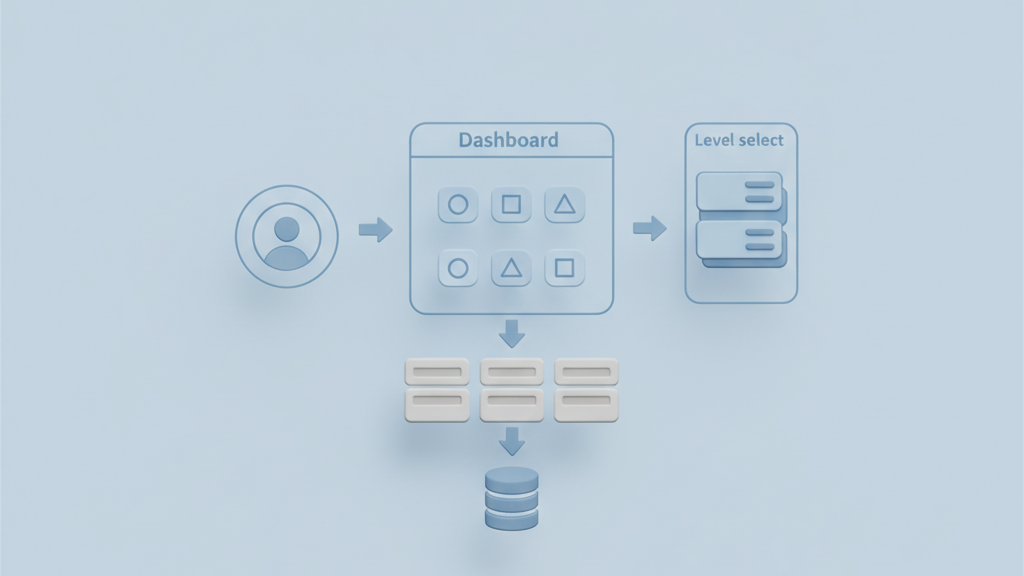
The mobile gaming industry is moving at a breakneck pace. Founders often feel pressured to launch the next viral hit before the window of opportunity closes. Using traditional coding methods can take months or even years. This is where FlutterFlow gaming app MVP development and product roadmap services become essential. By leveraging low code speed with custom logic, you can get a functional game into the hands of users in weeks. Many startups miss this and spend too much time on perfection. This guide explores how to build a lean game and plan for future updates without hitting technical debt walls.
The Strategic Edge of Visual Development for Gaming
Building a game requires a mix of tight logic and engaging visuals. FlutterFlow provides a unique environment where these two worlds meet without the overhead of heavy game engines for simple titles. Many founders think they need complex tools for every idea. If you are building a puzzle game or a card game, you do not need a high end 3D engine. Visual development allows your team to iterate on the user interface while keeping the backend logic separate. This approach reduces the time spent on UI bugs that usually plague early builds. You can see the changes in real time. This speed is a competitive advantage in a crowded market. Many startups fail because they run out of money before they find a fun loop. Speed gives you more chances to pivot based on real user feedback. It allows for a tighter feedback loop between design and deployment. You can test a new mechanic on Monday and have it live by Friday. This agility is why professional services focus on this platform. It bridges the gap between a prototype and a production ready product. Using these tools does not mean you sacrifice quality. You gain the ability to focus your resources on what actually makes the game fun for players.
Defining the Core Loop for Your MVP
The most important part of any game is the core loop. This is the repetitive action that keeps players coming back. When you start your MVP, you must strip away every feature that does not support this loop. If the core action is not fun, adding a global leaderboard or a social chat will not save the app. Focus on the mechanics that define the experience. Many founders get distracted by monetization schemes too early. You should focus on retention first. If people do not play the game for more than two days, your monetization will fail anyway. A solid FlutterFlow gaming app MVP development and product roadmap services package will help you identify these critical components. It prevents feature creep which is the number one killer of early stage projects. You should aim for a polished version of one single feature rather than a messy version of ten features. This creates a better first impression with your initial testers. It also makes the data you collect much cleaner. You will know exactly why people are leaving or staying. High quality MVPs focus on one thing and do it exceptionally well. This creates a foundation that you can actually build upon later.
- Identify the primary action that players perform every minute
- Remove all secondary menus that do not serve the main goal
- Create a simple reward system to encourage return visits
- Ensure the navigation between the home screen and game is seamless
- Track simple metrics like session length and daily active users
Planning for Longevity with Professional Roadmap Services
A successful launch is only the beginning of the journey. To keep players engaged, you need a plan for what comes next. This is why FlutterFlow gaming app MVP development and product roadmap services are bundled together. A roadmap is not just a wishlist of features. It is a strategic document that balances technical needs with business goals. You need to know when you will add multiplayer features or advanced animations. Planning these out early helps you make better architectural decisions today. If you know you want a global shop later, you can set up your database schema to support it now. This prevents expensive rewrites in six months. Many startups miss the chance to plan their scaling strategy. They build a great MVP but then get stuck because the code cannot handle thousands of users. Professional roadmap services look at your budget and your growth targets. They help you decide which features will provide the highest return on investment. This clarity is vital when you are talking to investors. They want to see that you have a vision beyond the first version. A roadmap provides a sense of security for the whole team. It keeps everyone aligned on the long term mission.
Technical Architecture and Performance Warnings
Mobile games are sensitive to performance drops. Even a slight lag can ruin the player experience and lead to bad reviews. When using low code platforms, you must be careful about how you handle data. Loading too many records at once will slow down the interface. You should use pagination and caching to keep the app snappy. Many developers forget to optimize their images. Large assets will make the initial download too slow for most users. You should also be careful with complex animations. FlutterFlow is powerful, but it still runs on the hardware of the phone. We often see apps that try to do too much on the main thread. This leads to dropped frames and frustrated users. A practical warning is to test on older devices early and often. Do not just use the latest phone for testing. Most of your users will have mid range hardware. If it works on an old device, it will fly on a new one. Another common mistake is neglecting the offline experience. Players might want to check their stats while on a train with poor signal. Your app should handle these transitions gracefully without crashing. Good architecture is invisible to the user but obvious when it is missing.
- Use small asset sizes to keep the total app size under the limit
- Implement local state management for instant UI updates
- Avoid nested lists that cause scroll lag on older hardware
- Optimize database queries to reduce latency during gameplay
- Set up error handling for API failures and network drops
Backend Integration and Real Time Data
Modern games rely heavily on real time data for things like scores and events. Integrating tools like Firebase or Supabase is a standard part of the process. These platforms handle the heavy lifting of user authentication and data storage. You can set up listeners that update the UI as soon as a value changes in the database. This creates a live feeling in the app. If a friend beats a score, the player can see it immediately. This level of interaction is what makes mobile games addictive. However, you must manage your costs. Real time listeners can become expensive if you have a huge user base. You should only use them where they add real value to the game. Many startups miss the chance to optimize their backend early. They just connect everything and hope for the best. A better approach is to design your data structure for speed. Keep your documents small and your paths shallow. This makes the game feel faster and keeps your cloud bills low. You should also consider how you will handle cheating. Moving game logic to the backend prevents users from manipulating their scores on the client side. Security is just as important as performance in a competitive gaming environment.
Growth Tactics and Iterative Monetization
Once the MVP is live, the focus shifts to growth and revenue. You should not force ads on players immediately. This often leads to high churn rates before you even understand your users. Instead, try offering value through rewarded videos or small in app purchases. This allows players to choose how they support the game. Use the data from your MVP to see where people get stuck. If a level is too hard, they will quit. If it is too easy, they will get bored. Balancing the difficulty is an ongoing task. This is where your roadmap comes back into play. You can schedule regular updates that keep the content fresh. New levels or characters give people a reason to come back. Many startups struggle with monetization because they do not test different price points. You should experiment with your offerings. Watch how the market responds to different bundles. A professional team can help you set up A and B tests for your shop layout. This data driven approach takes the guesswork out of making money. Growth is not a single event. It is the result of constant small improvements over time.
- Integrate analytics to track where players stop playing
- Test different ad placements to maximize revenue without annoying users
- Add social sharing features to encourage organic growth
- Update the game content every two weeks to maintain interest
- Use push notifications to remind users about daily rewards
- Monitor user reviews to find common pain points and fix them