
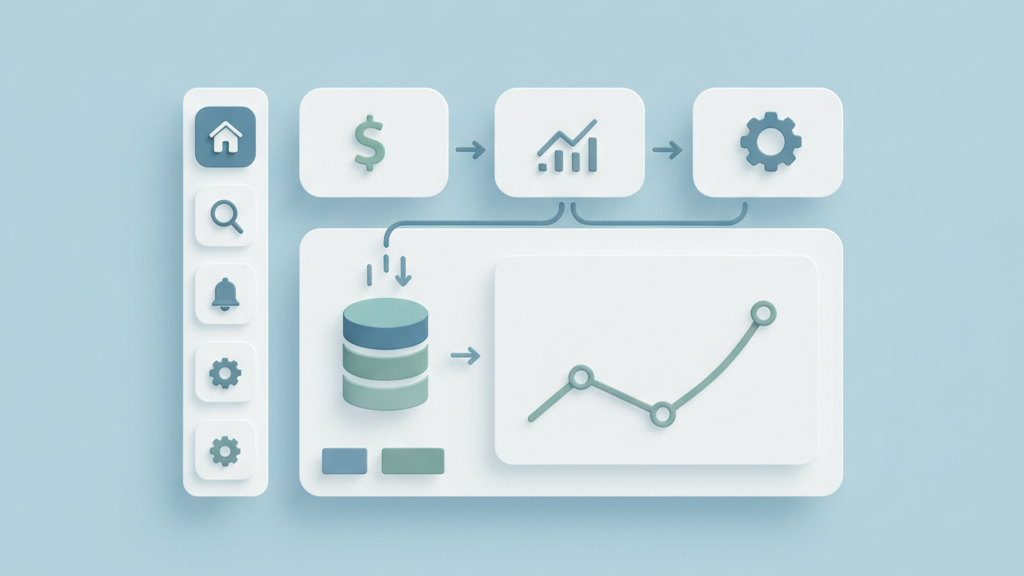
Modern product management requires quick access to accurate data. Most teams struggle with fragmented information spread across multiple tools. Building an analytics dashboard software MVP for product managers provides a centralized solution. It helps teams make better decisions without the noise of overly complex enterprise platforms. This guide explains how to build a lean and effective dashboard that delivers immediate value. If you want a related deep dive, read How to Build an Enterprise Collaboration Software MVP for Remote Teams.
Focusing on Core Product Metrics
Product managers often find themselves buried under mountains of data. They have tools for sales and tools for user behavior. They have tools for support and tools for finance. The problem is that these tools do not talk to each other. This creates a massive blind spot for anyone trying to make quick decisions. Building an analytics dashboard software MVP for product managers is the best way to bridge this gap. You are not trying to replace every other tool. You are trying to create a single source of truth for the most important metrics. Many startups miss this by trying to track too many things at once. They build a complex system that nobody understands. This leads to low adoption and wasted money. A good MVP focuses on the three or four numbers that actually move the needle for the business. This lean approach allows the dev team to focus on data accuracy and system speed. If the numbers are wrong, the dashboard is useless. It does not matter how pretty the charts look. Product managers need to trust the data before they use it to make decisions. Starting small also means you can launch faster. You can get real feedback from your team within weeks instead of months. This focus on immediate utility is the hallmark of a great startup product. Keep the initial scope tight so you can iterate based on real usage. If you need implementation support, explore Software maintenance and scaling.
Technical Architecture for Data Reliability
The technical core of your dashboard must be built for speed and reliability. Data ingestion is often the most difficult part of the project. You need to pull information from various sources without crashing the system. For an analytics dashboard software MVP for product managers, a simple API driven approach is usually best. You can use scheduled jobs to fetch data from external services. This keeps the load on your primary database low. Security must be a top priority from the very first line of code. You are handling sensitive business information. Use industry standard encryption for all data storage. Role based access control is also a must. It ensures that only the right people see the right data. Many teams overlook this and run into trouble later. Choose a tech stack that your developers already know well. This is not the time to experiment with a new programming language. Stick to stable frameworks and libraries. This reduces the risk of bugs and speeds up the development process. You should also consider how the system will scale. Even if you only have a few users now, the architecture should allow for growth. A modular design makes it easy to add new features later without breaking the existing ones. Use a proven database like PostgreSQL or a dedicated time series tool for efficiency. For a practical follow-up, see How to Choose the Right Tech Stack for Your MVP Development.
- Choose a scalable database engine early.
- Implement secure API endpoints for data retrieval.
- Set up automated data backups to prevent loss.
- Use a caching layer to improve dashboard loading times.
- Ensure the system supports multi tenant data isolation.
Prioritizing User Experience and Clarity
The interface of an analytics dashboard software MVP for product managers needs to be intuitive. Product managers are busy people. They do not want to read a manual to find their data. Every click should have a purpose. Use clear labels and avoid industry jargon that might confuse new users. Whitespace is your friend here. It helps the eye focus on the most important numbers. Avoid the temptation to add every filter possible. A few well placed toggles are better than a complex sidebar. Many startups overcomplicate the navigation. Keep it simple. A single primary view with drill down capabilities is often enough. This keeps the initial development cost low. It also makes it easier to test how users interact with the data. If a user cannot find a metric in five seconds, the design has failed. Simple layouts also load faster. Speed is a feature in itself. Users will appreciate a snappy dashboard that gives them answers instantly. Avoid heavy animations or decorative elements that do not serve the data. The goal is to make the data the hero of the screen. Clear typography and high contrast colors help in making the dashboard readable. A clean design reflects a professional product and builds user confidence.
Avoiding Common MVP Development Pitfalls
Many product teams fall into the trap of over engineering their analytics dashboard software MVP for product managers. They try to build a platform that rivals established giants on day one. This is a mistake. It leads to long development cycles and missed market opportunities. You should ignore requests for custom reporting for now. Stick to the core set of metrics that solve the immediate pain point. Another common error is ignoring data latency. If the dashboard takes ten seconds to refresh, users will stop using it. You must also consider the source of your data. If your data sources are messy, your dashboard will be messy. Spend time cleaning your data before it hits the UI. This ensures the information is reliable. Reliability is the most important feature of any data tool. If users doubt the numbers, they will go back to their old spreadsheets. Many founders also forget to implement a feedback loop. You need to know which parts of the dashboard are being used. This information is vital for the next phase of development. Focus on building what is necessary and nothing more. This discipline saves resources and ensures the product remains focused on its primary goal. Teams moving from strategy to execution can review Web app development.
- Avoid building custom report builders in the first version.
- Do not integrate with too many external APIs at once.
- Avoid using overly complex chart libraries that slow down the UI.
- Ensure the data refresh interval matches user expectations.
- Validate all data inputs to prevent display errors.
Iterating Toward a Full Product
After launching the MVP, the real work begins. You must watch how people use the dashboard. Analytics on your analytics tool is a great way to find the most popular features. Do not be afraid to remove features that nobody uses. This keeps the code clean and the user experience focused. Talk to your users directly. Ask them what metrics they still have to calculate manually. This feedback will drive your roadmap for the next few months. You might find that they need a specific export format or a mobile friendly view. These insights are more valuable than any internal brainstorming session. As the user base grows, you can start adding more complex features like predictive analytics or automated alerts. But always keep the core simplicity that made the MVP successful. A lean approach to development ensures you stay within budget while delivering maximum value. Monitor performance as you add new features. Do not let the dashboard become slow and bloated. Every new addition must justify its existence with clear user demand. This methodical growth path helps you build a product that people actually want to use every day. It also allows you to manage development costs effectively as you scale. A related guide worth reviewing is How To Set Product Metrics And KPIs For Startups That Scale.