
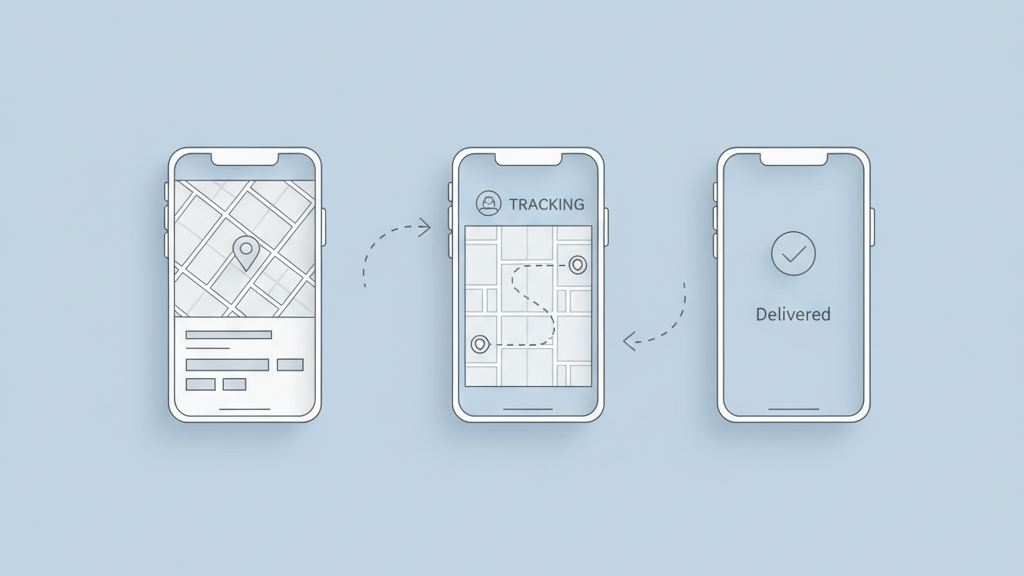
Building a successful delivery platform requires more than just a mobile app. It requires a balance between user experience and complex backend logistics. Many startups fail because they try to build too much at once. Strategic on-demand delivery app MVP planning for product teams focuses on core functionality that provides immediate value. This guide outlines the technical and strategic steps needed to launch a lean product that can scale later. We will look at how to define your core features and set realistic technical goals.
Setting the Foundation for Your Delivery Product
Every successful delivery project begins with a clear understanding of the market. You must identify exactly who you are serving before writing a single line of code. Many founders make the mistake of copying high budget competitors like Uber Eats or DoorDash. This is a trap that leads to bloated software and wasted capital. Effective on-demand delivery app MVP planning for product teams starts with a narrow focus. You might choose to serve only a specific neighborhood or a niche category of goods. This constraint allows you to test your logistics without the pressure of a massive infrastructure. Many startups miss this and try to launch city wide on day one. It is much better to have ten happy customers in one block than a hundred frustrated users across a whole state. You should also consider the regulatory environment in your target area. Laws regarding gig workers and food safety vary significantly. Understanding these rules early will prevent expensive legal pivots later. Focus on solving one problem exceptionally well. If you can move a package from point A to point B reliably then you have a product. Everything else is just an extra feature that can wait for version two.
Defining Essential Features for the First Launch
The biggest challenge in any MVP is deciding what to leave out. Your product needs to satisfy three distinct groups. These groups include the customers, the couriers, and your internal staff. Each group requires a different interface with specific tools. For the customer, a simple ordering flow is more important than a fancy recommendation engine. For the courier, a clear list of tasks and navigation is vital. Your internal team needs a basic dashboard to manage disputes and monitor system health. I often see teams spend months building complex loyalty programs. This is a mistake for an MVP. Focus on the following core components to ensure your platform actually works:
- A simple registration process for all user roles
- Real time location tracking using basic GPS integration
- A secure payment gateway that supports major credit cards
- Push notifications for order status updates
- A basic order history screen for users and riders
- A simple admin tool to manually assign orders if needed
Navigating Technical Architecture and Scalability
The tech stack you choose today will dictate your speed for the next year. It is tempting to use the newest tools on the market. However, stability is your most important asset. Most delivery apps rely on heavy real time data. This means your backend needs to handle frequent updates without crashing. I suggest starting with a monolithic architecture that is easy to deploy and monitor. You can break it into microservices later when your traffic justifies the complexity. Database choice is also critical. You need something that handles geographic queries efficiently. PostGIS is a popular choice for this reason. Another warning is to watch your third party API costs. Mapping services and SMS gateways can become very expensive as you grow. Start with a clear plan for how you will manage these expenses. It is better to use a slightly less polished map if it saves you thousands of dollars in the early stages. Always prioritize security for user data and payment info. A single data breach can end a startup before it even gets off the ground. Keep your code clean and your documentation updated. This makes it easier for new developers to join the team as you scale.
Managing Logistics and Real Time Operations
Logistics are the silent killer of delivery startups. Your app can look beautiful but it fails if the food arrives cold or the package is lost. You need a system that handles the middle mile efficiently. This involves calculating estimated arrival times and routing couriers effectively. Do not try to build a custom routing algorithm for your MVP. Use existing tools to calculate the best paths. The real challenge is managing the human element of the network. Couriers are the backbone of your service. You must ensure the app provides them with everything they need to succeed. This includes the following items:
- Clear pickup and drop off instructions with gate codes
- An easy way to contact the customer through the app
- A button to signal an emergency or a delay
- Evidence of delivery through photos or digital signatures
- A transparent view of their earnings for each trip
The Feedback Loop and Product Iteration
Once the app is live, your real work begins. The goal of an MVP is to learn as quickly as possible. You should monitor how users interact with the interface. Are they getting stuck on the payment screen? Is the map showing incorrect locations? These are the questions that drive on-demand delivery app MVP planning for product teams during the second phase. Use simple analytics tools to track user behavior. You do not need a massive data science team yet. Simple heatmaps and session recordings can reveal a lot of information. Talk to your couriers and your customers. They will tell you exactly what is wrong with the product. I believe that manual feedback is often more valuable than automated metrics in the early days. You might find that a feature you thought was essential is never used. Be prepared to pivot or remove features that do not add value. This keeps your product lean and your maintenance costs low. Every change you make should be based on real world data rather than guesses. This iterative process is the only way to build a sustainable business in a crowded market.
Budgeting and Timeline Expectations for Startups
Building a delivery app is a significant investment. You must be realistic about your budget and your timeline. A high quality MVP usually takes three to six months to build. Trying to rush this process often leads to buggy software and a poor user experience. You should allocate a portion of your budget to marketing and operations. An app with no users is just a set of expensive files. Many product managers forget that they need to pay for servers and customer support from day one. I suggest keeping your initial team small. A lead developer, a designer, and a product manager are usually enough to get started. Avoid hiring too many specialists until you have a proven model. Keep your overhead low so you can survive the first few months of slow growth. Transparency with your investors about these costs is vital. They need to know that you are spending money on things that matter. Focus on building a solid core that can be expanded later. A successful launch is about quality, not quantity. If your MVP works well, the growth will follow naturally.