
Early validation saves time and money. These steps to validate technical feasibility before building MVP show how to test assumptions, surface risks, and pick the right scope. I focus on simple checks you can run in weeks. Many startups skip this work and then face major rework. This guide highlights lightweight research, targeted prototypes, and decision gates that fit a tight product schedule. You will get a practical path for moving from idea to a low risk technical plan. Use the checklist here to brief engineers and investors. Expect to iterate as you learn and keep the scope narrow when uncertainty is high. If you want a related deep dive, read How To Validate Market Fit FlutterFlow travel booking app MVP product strategy and validation service.
Start With The Right Questions
The first step is to frame the technical unknowns. Avoid vague wishes and list concrete questions around performance, integrations, data, and security. Each question should map to a small experiment or investigation. For example ask if the chosen database can handle peak writes, or if a third party API provides the data shape you need. Keep these investigations time boxed. Assign a clear owner for each unknown and pick a success criteria that is measurable. This forces design trade offs early and prevents big surprises later. If you skip this you will face hidden costs. Founders should expect to refine questions after early tests and act on the results rather than defend the original plan. If you need implementation support, explore Backend API development.
- List technical unknowns by category
- Turn each unknown into an experiment
- Set measurable success criteria
- Time box investigations
- Assign owners and due dates
Map Critical User Flows To Tech Risks
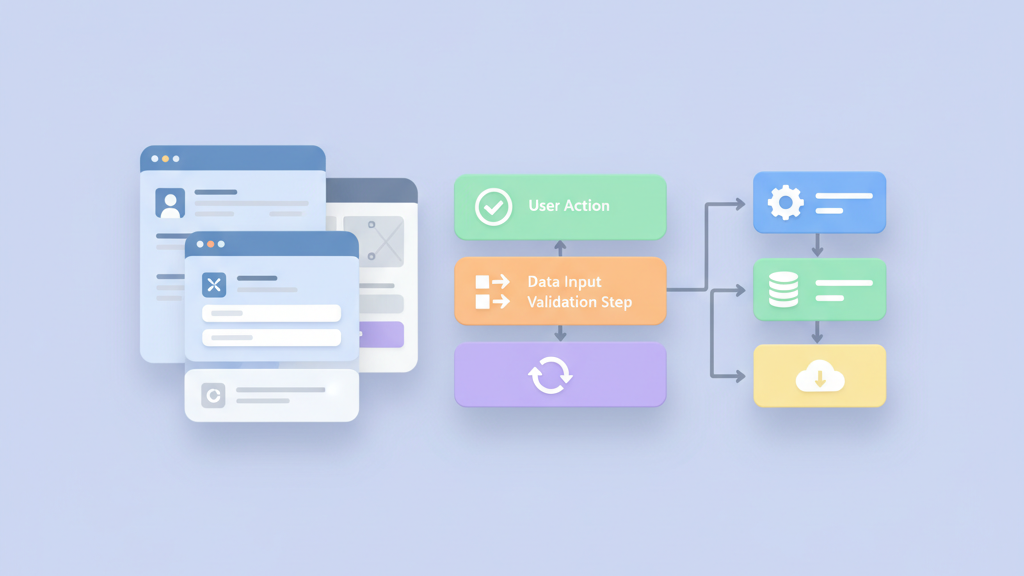
Translate your top user journeys into technology sketches. Focus on the flows that must work to prove product market fit. Draw a simple end to end path for each flow and call out the integrations or systems involved. This reveals choke points such as heavy compute steps or multiple external dependencies. Rank flows by business impact and technical uncertainty. Pay attention to data movement and where latency could ruin the experience. Document expected throughput numbers and error tolerances. This exercise makes it clear where to concentrate validation efforts and where you can accept prototype level quality for the MVP. For a practical follow-up, see Uncovering the Untold Tactics: Navigating MVP Iteration for Product-Market Fit.
- Choose top 3 user journeys
- Sketch end to end data and services
- Mark high uncertainty steps
- Estimate throughput and latency
- Prioritize flows by impact
Run Focused Technical Research
Do short targeted research on the most uncertain components. Look at similar products and public case studies for real world numbers. Check vendor limits and read API docs for rate limits and data formats. Build tiny spike projects to prove feasibility rather than full implementations. These spikes should return simple metrics and logs you can analyze. When possible reuse open source tools or managed services to reduce unknowns. Document costs and operational needs you discover during research. A clear result from research prevents optimistic assumptions from becoming expensive surprises. In my experience a two week research sprint answers most critical questions. A related guide worth reviewing is Real-Life Case Studies: The Power of MVP Development for Startups.
- Search for case studies and benchmarks
- Read vendor limits and API docs
- Build short spike projects
- Capture simple metrics and logs
- Estimate ongoing costs
Prototype The Riskiest Parts
Create prototypes that focus only on the riskiest technical pieces. Avoid full product mock ups. For example if real time updates are critical build a tiny demo that sends and receives messages at expected scale. If data quality is uncertain ingest sample feeds and validate schemas. Use the prototypes to test error cases and recovery steps. Keep them disposable and well time boxed. Record observations and success criteria. Often a prototype shows that a simpler approach will do and lets you avoid unnecessary architecture complexity. Prototypes also provide tangible evidence for stakeholder conversations and investor demos.
- Prototype only the risky component
- Test real scale where possible
- Validate error handling
- Keep prototypes disposable
- Use results to simplify design
Design A Minimal Architecture With Constraints
Draft a minimal architecture that meets your prototype findings. Choose managed services when they reduce operational risk. Define clear constraints like daily request budgets or storage limits. Explicit constraints help the team make consistent trade offs and avoid feature creep. Sketch interactions between components and highlight where retries, rate limiting, and monitoring will live. Plan for graceful degradation so the system can continue to serve core value when non critical parts fail. This pragmatic architecture should be just enough to build an MVP and easy to evolve after product market fit. Teams moving from strategy to execution can review MVP development for startups.
- Pick managed services to reduce ops
- Define explicit system constraints
- Sketch component interactions
- Design for graceful degradation
- Keep the architecture minimal
Set Testing And Measurement Gates
Define what success looks like before you build. Choose metrics for performance, reliability, and cost. Add test plans that cover peak load, error handling, and integration failures. Plan for synthetic tests and small user pilot runs. Use staging environments that mirror production constraints. Decide pass fail thresholds and what to do if a gate fails. These gates reduce the chance of shipping unsafe systems. Many teams skip thorough testing for speed and then must pause development to fix issues. A short pilot with real users is often the fastest route to confident validation.
- Choose clear metrics and thresholds
- Include load and failure tests
- Use staging that mirrors production
- Run small user pilots
- Plan remediation steps for failures
Make The Go No Go Decision
Bring together findings from research, prototypes, and tests to decide if you should build the MVP as planned. Use the success criteria you set to judge outcomes. If a risk failed ask if you can reduce scope or use a managed solution. If you need major changes factor in schedule and cost impacts. Communicate trade offs clearly to stakeholders and document unresolved risks with mitigation plans. This decision is not permanent, but it should be explicit. A cautious go with a narrower scope is usually better than a risky full launch. Founders who document the decision path avoid repeating the same mistakes later.
- Compare results to success criteria
- Consider scope reduction options
- Assess schedule and cost impact
- Document unresolved risks
- Communicate the decision and next steps