
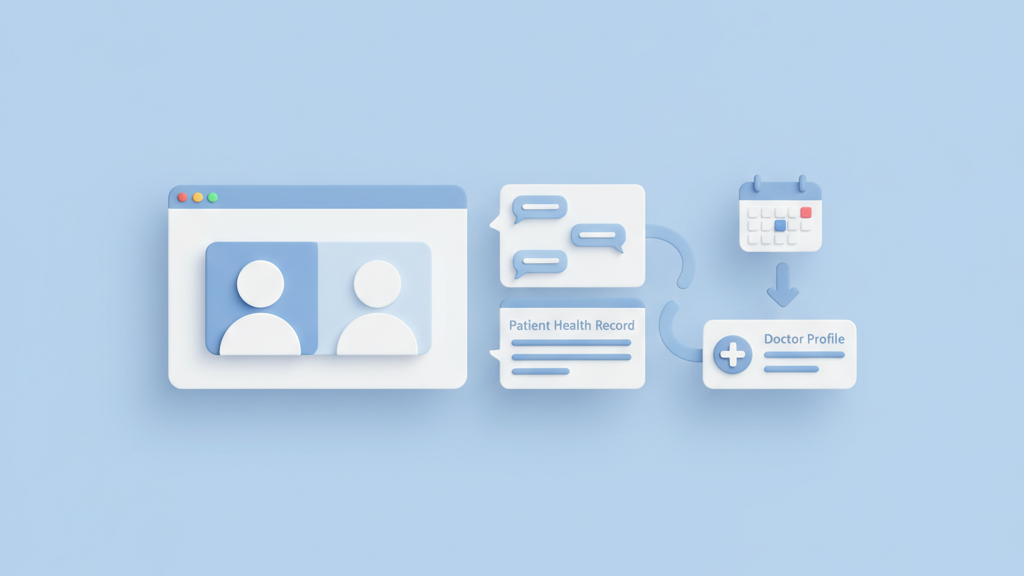
Launching a healthcare platform in the United States requires a balance between speed and strict regulatory compliance. Many founders rush into development without considering the specific legal needs of the American medical system. A well structured telehealth app MVP roadmap for US startups acts as a guide to avoid common pitfalls. This roadmap ensures that you build a product that is both functional and secure from the first day. By focusing on essential features and security, you can enter the market quickly while protecting your users. We will look at how to prioritize your development tasks to reach a successful launch.
Understanding the Regulatory and Security Foundation
The first step in your journey involves the complex world of American healthcare laws. You cannot treat security as an afterthought in this industry. HIPAA compliance is the absolute baseline for any platform handling patient data in the US. Many startups miss this and try to use standard cloud services that do not offer a Business Associate Agreement. You must ensure every service provider in your stack signs this agreement. Security involves more than just encryption during transit. You need to consider how data is stored and who has access to it within your own team. Beyond federal laws, you must account for state level regulations regarding medical practice. Every state has different rules about where a doctor must be located and what kind of care they can provide via video. Do not ignore these details early on. It is much harder to fix a broken security architecture later than it is to build it right the first time. Focus on creating a secure vault for patient information before you even design the first screen. This foundation builds trust with both patients and medical providers who are wary of data breaches. Your roadmap should allocate significant time for security audits and penetration testing before the first user logs in. It is better to delay a launch by a week than to leak sensitive medical records on day one. High security is not a feature but a requirement for survival in the American market.
Defining the Core Patient Experience
When you build the patient side of the application, simplicity is your best friend. Patients often come to these platforms when they are stressed or feeling unwell. They do not want to navigate a complex interface with dozens of menu options. Your MVP should focus on a very narrow set of actions. The ability to find a provider and book an appointment is the most important flow. You must make the video experience seamless across different devices and network speeds. Many startups try to build their own video engines. This is a mistake for an MVP. Use established and compliant video APIs that handle low bandwidth situations gracefully. The roadmap should prioritize features that reduce the friction between a patient having a symptom and talking to a doctor. Automated reminders are also vital because missed appointments cost money and waste time. Many founders ignore the payment process until the end. You should integrate a secure payment gateway early to ensure you can actually generate revenue. Keep the onboarding process short. If a patient has to fill out twenty forms before they see a doctor, they will leave your app and call a local clinic instead. Your goal is to prove that your digital experience is better than a traditional office visit.
- Secure user registration and profile management
- Real time provider availability and booking system
- High quality video conferencing with low latency
- In app secure messaging for follow up questions
- Automated appointment reminders via email or SMS
- Integrated payment processing for insurance or cash pay
Designing the Provider Workflow for Efficiency
Doctors and nurses are often the most difficult users to please. They are usually overworked and deal with clunky software in their daily hospital work. Your platform should feel like a tool that saves them time rather than a chore they have to complete. The provider dashboard needs to show their daily schedule at a single glance. They should be able to join a video call with one click. Clinical documentation is another area where MVPs often fail. Providers need a simple way to take notes during the session without losing eye contact with the patient. You do not need a full electronic health record system for your MVP. You just need enough functionality to allow them to do their jobs safely. Many startups try to automate too much medical logic early on. It is safer and more effective to let the doctors lead the process while the software stays in the background. A major opinion in the industry is that the best healthcare apps are the ones that get out of the way of the doctor. Focus on clear notifications so providers know when a patient is waiting in the digital lobby. If the provider experience is poor, you will struggle to keep medical talent on your platform. A happy doctor leads to a better patient outcome and higher retention for your startup.
Managing Technical Debt and Interoperability
The technical side of your roadmap must address how your app talks to the rest of the medical world. In the US, interoperability is a major focus for regulators and insurers. You will eventually need to share data with other systems using standards like FHIR or HL7. For an MVP, you do not need to integrate with every hospital database. However, your database schema should be designed with these standards in mind. This prevents a massive rewrite when you decide to scale. Choosing the right tech stack is critical for future growth. Many founders choose technologies based on what is popular rather than what is stable. For healthcare, stability and long term support are more important than using the latest experimental framework. You should also plan for robust logging and monitoring. If a video call drops, you need to know exactly why it happened. This data helps you improve the product and provides an audit trail for compliance. Use cloud providers that have specific healthcare clouds. These services often come with pre configured security settings that make your life easier. Do not try to manage your own servers unless you have a dedicated security team. Outsourcing the infrastructure management allows your developers to focus on the unique parts of your application.
- Selection of a HIPAA compliant cloud infrastructure provider
- Design of a modular database for future FHIR compatibility
- Implementation of end to end encryption for all data
- Integration with third party prescription and pharmacy APIs
- Setup of automated logging for security and audit purposes
- Development of a scalable API for future mobile apps
Planning for Post Launch Growth
Once the MVP is in the hands of real users, your roadmap shifts from building to listening. The first three months after launch are the most critical. You will likely find that users interact with the app in ways you did not expect. Some features you thought were important might be ignored completely. Other small details might become major pain points. You should have a plan to gather feedback through surveys and direct interviews. Do not be afraid to pivot if the data shows a better path. Many startups fail because they stick too closely to their original plan even when it is not working. Your roadmap for phase two should remain flexible. It should focus on solving the problems identified during the MVP phase. You might find that you need better insurance verification or a way to handle multi language support. As you grow, you will also need to consider the cost of scaling. Video minutes and data storage can become expensive as your user base increases. Optimization of these costs should be part of your long term strategy. Always keep a close eye on the regulatory landscape as it changes. New laws can impact how you store data or how you charge for services. Continuous improvement is the only way to stay competitive in the fast moving US healthcare market.