
Estimating social media app mvp development cost is often the hardest first step for founders. This guide breaks down the main cost drivers, realistic ranges, and common traps. It is written for startup founders and product managers who need practical budgets and trade offs. Read on to avoid common mistakes and to plan a lean launch that proves product market fit fast.
Main Cost Drivers And How They Add Up
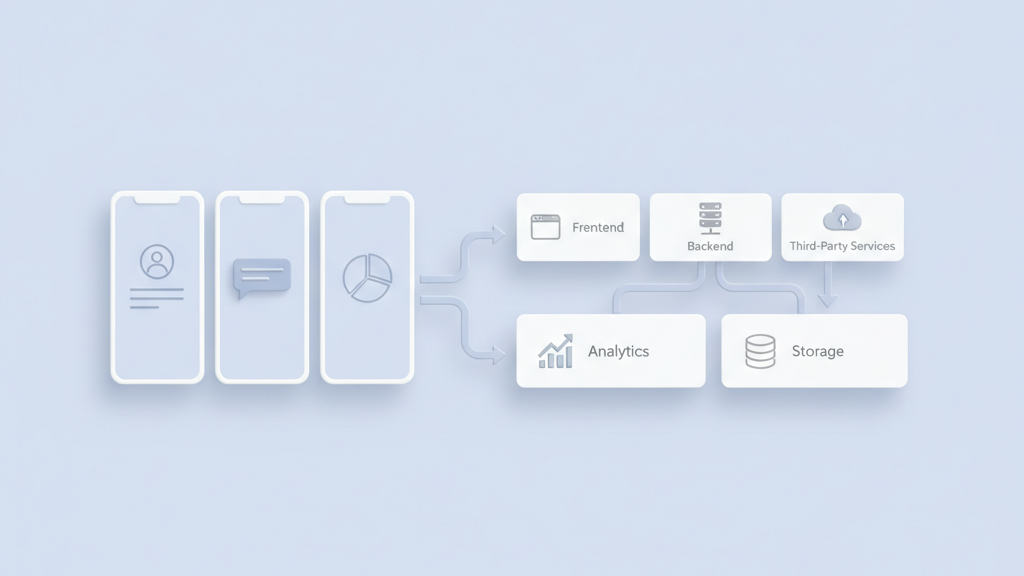
Deciding budget starts with a clear scope and honest priorities. Many startups treat an MVP as a permanent feature set instead of a learning experiment, and that raises cost and slows feedback. Core cost drivers include feature complexity, integrations with external services, platform choice, and expected scale. Design fidelity and backend architecture influence engineering time. Security, analytics, moderation, and legal compliance add further work. Do not forget post launch support and iterative testing. In practice sharp prioritization beats overengineering. Build the smallest set of features that prove key hypotheses. This approach keeps the runway intact and lets you test product market fit without overspending. If you want a related deep dive, read B2B Onboarding Software MVP Product Market Fit Steps That Actually Work.
- List core hypotheses before features
- Prioritize flows that prove value
- Avoid premature high fidelity design
- Plan for moderation and compliance
Feature Choices And Real World Estimates
Feature selection is the single fastest way to change your estimate. A basic feed with text and images costs far less than one with live streaming, advanced filters, or AI driven recommendations. Authentication and social graphs are easy to underprice because they cause complex edge cases. Video upload and processing create storage and transcoding fees that compound over time. Push notifications and in app messaging add integrations. Reusable components speed later work but add upfront design time. Estimate features in hours and price out alternatives. Use prototypes to validate assumptions. Many teams try to test too many things at once and that nearly always doubles cost and delays learning. If you need implementation support, explore Backend API development.
- Start with a single core flow
- Prototype to validate expensive features
- Avoid video and live features early
- Estimate third party service fees
Team Models And Typical Rate Expectations
Who you hire affects the burn rate and the speed of delivery. Freelancers lower upfront spend but increase coordination work. Agencies bring process and faster delivery at higher cost. A lean USA focused team for an MVP usually has one product lead, one designer, two engineers, and a QA or generalist. Native mobile work is costlier than web first strategies. Senior engineers cost more per hour but reduce surprises in architecture heavy areas. Outsourcing parts of the stack can cut budget, but watch for quality and alignment issues. My practical advice is to put senior talent on architecture and risky integrations and use mid level support where repeatable work exists. For a practical follow-up, see Startup MVP Launch Budget Estimate For USA: A Practical Guide.
- Match seniority to risk areas
- Consider web first to save cost
- Use short contracts with clear milestones
- Factor in project management time
Timeline, Hidden Fees, And Ongoing Costs
Timelines shape cost through sustained team engagement and the need for fixes. A six month plan can be more efficient than a rushed three month sprint, but a longer runway helps you learn without burning out resources. Hidden fees include hosting, CDN, analytics, push notification services, and legal costs for privacy compliance. Post launch support, monitoring, and bug fixes are ongoing expenses. Testing across multiple devices and maintaining a device lab also add time. If you expect rapid growth you may need scalable infrastructure early which increases cost but avoids outages. Many founders forget these items and face emergency expenses later. Plan milestone based reviews so you can adjust before costs escalate. Teams moving from strategy to execution can review Software maintenance and scaling.
- Budget hosting and CDN costs
- Reserve funds for support and bugs
- Include analytics and monitoring fees
- Plan device testing early
Practical Budgeting Tips For A Lean Launch
A practical budget keeps the product honest and focused on learning. Start with a realistic range and aim to validate the riskiest hypothesis first. Reserve a contingency for unplanned work and early customer support. Use phased payments tied to milestones to keep vendors and contractors aligned. Track metrics that matter for fundraising such as cost per retained user and time to first value. Offer early access to a limited group to test flows before wide release. Many founders over polish before feedback, which wastes time and money. My opinion is to ship a useful but simple product fast, then iterate based on real user data and retention signals. A related guide worth reviewing is A Practical Process for Iterating Product Features Based on Feedback.
- Set a clear validation goal for the MVP
- Use milestone based payments
- Keep a contingency fund
- Measure cost per retained user