
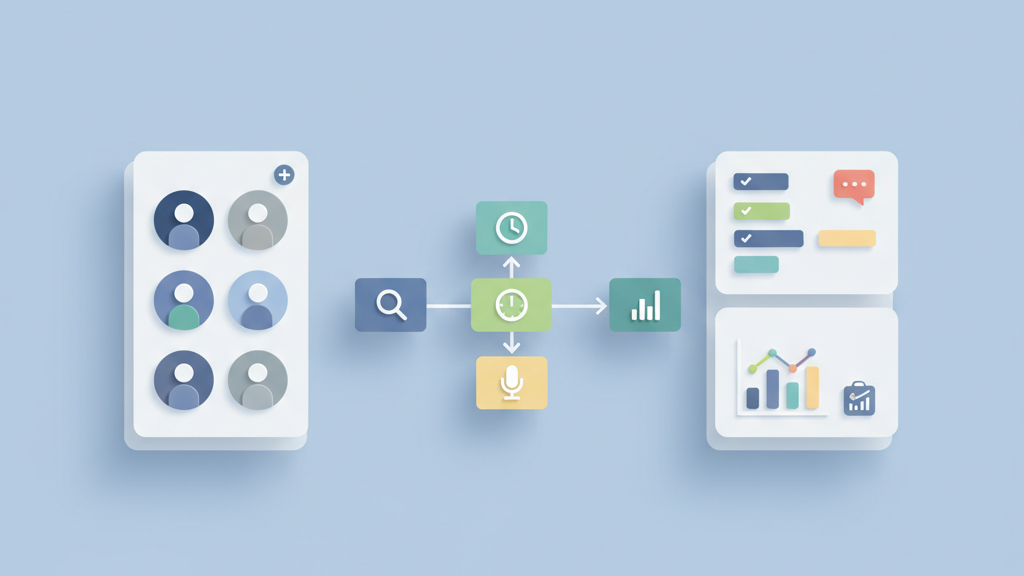
Early customer input shapes product direction and saves time and money. This guide lays out a clear process for running effective early user interviews that founders and product managers can use from day one. You will find advice on who to talk to, how to recruit, what to ask, and how to turn notes into decisions. Many startups miss simple steps that reduce bias and speed learning. Read on to get a tested routine you can adopt the same week. If you want a related deep dive, read How to Prioritize Product Features Using Simple Framework That Scales.
Why Early Interviews Matter
Early conversations reveal assumptions and highlight real pain points that product teams often miss. Interviews done before you build features give open ended insights that surveys rarely capture. They help prioritize what to test and whom to target next. Bias and wishful thinking are easy to hide inside a product roadmap, so hearing natural language from people removes a layer of illusion. A short series of focused talks will show common threads and rare edge cases. Many founders treat interviews as validation only and then ignore negative signals. That is a costly mistake. Use early interviews to map problems, refine hypotheses, and set measurable goals for experiments. For a practical follow-up, see How To Set Product Metrics And KPIs For Startups That Scale.
- Identify core assumptions to test
- Listen for repeated language and phrases
- Use interviews to prioritize features
- Watch for emotional intensity
- Turn quotes into hypothesis prompts
Prepare and Recruit With Purpose
Preparation decides the success of any user research session. Define a small set of research goals and ideal participant traits before you recruit. Avoid broad targeting that creates noise. Use existing networks, social media groups, and small incentive budgets to reach likely users. Screen with two or three simple questions to ensure they fit your profile. Schedule shorter sessions to increase show rates and reduce fatigue. Share a neutral intro that explains you are learning and not selling. Many teams under recruit or chase perfect samples. It is better to run several quick interviews with varied people than to wait for a perfect cohort. A related guide worth reviewing is How To Budget An MVP For Early Teams (enterprise app MVP pricing for small businesses USA).
- Write two clear research goals
- Create a short screener survey
- Use modest incentives to boost attendance
- Aim for diversity in user types
- Book 30 to 45 minute slots
Design a Flexible Interview Script
A script keeps conversations focused while allowing discovery. Start with context questions that let participants describe their workflows in their own words. Move to problem exploration and then to reaction prompts for early concepts. Use prompts that invite stories rather than yes or no answers. Include follow ups that probe frequency and impact. Keep the script short and numbered so any researcher can follow it. Avoid leading language and remove jargon that signals desired answers. Practice the script with a colleague to tighten timing. A flexible script helps you compare answers across interviews while still letting surprising insights surface.
- Open with a warm context prompt
- Ask for stories about recent experiences
- Probe frequency and workarounds
- Avoid leading or confirmatory questions
- Allow time for silence and clarification
Run Interviews Like a Conversation
During the session, prioritize listening over proving ideas. Start on time and set a brief expectations note that you are learning. Use a mix of open ended and targeted questions and follow the participant lead when a tangent reveals value. Take rapid notes and flag quotes that feel noteworthy. If you record, ask permission up front and explain how you will use the data. Avoid selling or defending features while the person speaks. If the interview veers into product critique, convert comments into problem statements. Small gestures like mirroring language and confirming understanding increase trust. Real learning happens when you let participants teach you about their context and constraints. If you need implementation support, explore MVP development for startups.
- Begin with a clear expectations line
- Ask permission to record when needed
- Take short quotes during the talk
- Restate points to confirm meaning
- Resist defending the product
Analyze Quickly and Iterate
Speed matters when turning interviews into product moves. Synthesize notes the same day while memory is fresh. Use a simple affinity method to group themes and surface patterns. Convert themes into testable hypotheses and rank them by expected impact and difficulty. Share a short summary with the team that includes top quotes, priority hypotheses, and suggested experiments. Run small validation tests and then repeat interviews to see if changes shift behavior. Keep an analysis record so insights do not disappear into slides. Many teams collect interviews and never act on them. That is wasted effort and a lost learning opportunity. Teams moving from strategy to execution can review Mobile app development.
- Synthesize notes within 24 hours
- Group insights by theme
- Create testable hypotheses from quotes
- Prioritize experiments by impact
- Share concise summaries with stakeholders