
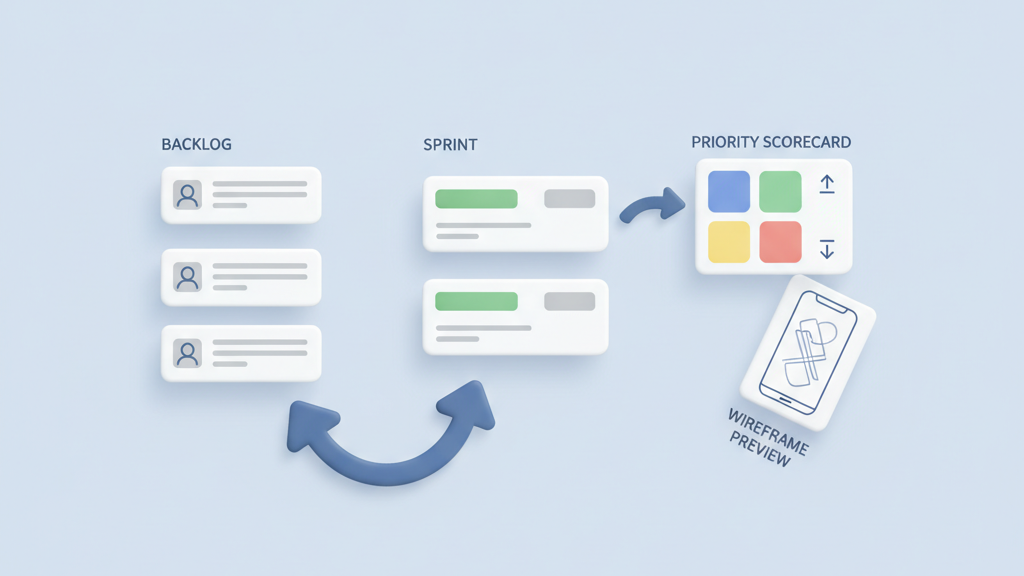
This guide to product backlog grooming for first time founders gives a clear starting point. Many founders confuse grooming with wishful roadmapping. Grooming is a regular habit that keeps the backlog healthy and the team focused. In this intro I will set expectations and give a short checklist you can follow in the first month. The aim is to make grooming predictable and useful. You will learn how to prepare, who to invite, what to review, and when to stop. This is practical advice for founders who are wearing many hats. Many startups miss this step and pay later with stalled sprints and unhappy customers. The tone is pragmatic and a little opinionated. Treat grooming as a product maintenance task and not as a one off planning event. If you want a related deep dive, read How To Set Product Metrics And KPIs For Startups That Scale.
Why Backlog Grooming Pays Off
Backlog grooming keeps work ready and aligned with product goals. A tidy backlog reduces sprint churn and helps the team estimate faster. For first time founders this process is a high leverage habit. It reveals stale ideas, duplicates, and risky assumptions early. It also forces a conversation about value and effort on a regular cadence. Grooming helps avoid last minute scope fights and keeps stakeholder expectations realistic. Do not treat grooming as a single meeting that fixes everything. Instead make it a lightweight recurring practice that surfaces the right details at the right time. Many startups miss this and then complain about missed deadlines. In my view grooming is part planning and part quality control. It is not glamorous but it prevents much pain later. Start small and iterate on the format so it fits your team rhythm. For a practical follow-up, see How to Choose the Right MVP Development Company for Your Startup’s Unique Needs.
- Keep the backlog lean
- Surface risky assumptions early
- Reduce sprint churn
- Improve estimation speed
- Align work with goals
Who Should Attend And Why
Invite only essential people and keep sessions short. The core group should include a founder or product lead, an engineer, and a designer or UX advocate. Stakeholders can join to clarify priorities but they should not dominate the session. The goal is to refine items and make them actionable for the next few sprints. If you invite too many people grooming becomes a debate festival. If you invite too few you may miss important context. For first time founders this balance is hard and that is okay. Try a three person default and add others when a specific topic needs attention. Many startups use a rotating subject expert to limit meeting size. Keep a clear agenda and a timebox so the team learns to come prepared. This makes the process predictable and less painful. If you need implementation support, explore MVP development for startups.
- Invite a small core team
- Rotate subject experts
- Timebox the session
- Keep stakeholders optional
- Have a clear agenda
How To Prepare The Backlog
Preparation separates useful grooming from noise. Start by pruning obvious duplicates and outdated ideas. Triage incoming requests into categories like bug, improvement, research, and feature. Add minimal context to items so reviewers can make quick calls. Attach acceptance criteria and a short value statement for high priority work. Estimate or at least size items roughly so you can group work that belongs together. Flag items that need user research or technical spikes. For founders who are new to this try a weekly light triage that filters the backlog and a deeper grooming session every two weeks. Many teams forget to prepare and spend most of the meeting reading tickets aloud. That is a waste of time. Preparation makes grooming fast and decision oriented. Teams moving from strategy to execution can review Software maintenance and scaling.
- Prune duplicates and stale ideas
- Tag items by type
- Add brief acceptance criteria
- Rough size items
- Flag research needs
A Simple Agenda That Works
Use a repeatable agenda and keep it short. Start with a quick alignment on goals for the next sprint. Then review high priority items and check acceptance criteria. Discuss estimates and break large items into smaller user focused pieces. Spend a little time on bugs that block progress. Finish by deciding what becomes ready and what needs more research. Record decisions and update tickets during the meeting so nothing is forgotten. For first time founders this clear structure prevents scope creep and endless debate. If a topic needs more time assign a follow up owner instead of extending the meeting. I think a good grooming session lasts under an hour for small teams and not more than ninety minutes for larger groups. Consistency beats perfection in the early stages.
- Align on upcoming goals
- Review top items only
- Break large work into stories
- Decide readiness before ending
- Assign follow up owners
Prioritization Techniques For Early Products
Prioritization should be simple and repeatable. Use value versus effort as a first cut. Add a risk filter for new tech or untested ideas. For customer driven early products ask which requests unlock revenue or retention. Use scoring only as a guide and not as a rule. For founders who must choose between growth and stability be explicit about the trade off. Weight urgent customer issues differently than long term bets. Many startups go wrong by favoring shiny features over technical health. I prefer to reserve time each sprint for technical work and defects. That keeps velocity sustainable. Revisit priorities after customer interviews and after any major engineering discovery. The goal is to make trade offs visible and fast. A related guide worth reviewing is A Practical Guide to Customer Discovery for First Time Founders.
- Score by value versus effort
- Filter by technical risk
- Prioritize revenue or retention
- Reserve time for technical work
- Revisit after discoveries
Tools And Artifacts To Keep
Keep a small set of tools and artifacts that the team actually uses. A backlog board with clear columns is essential. Use tags or labels for priority, type, and readiness. Maintain short templates for user stories and acceptance criteria. Keep a separate list for research and spikes. Track decisions in a lightweight log that links to tickets. Avoid overengineering with complex scoring spreadsheets that nobody looks at. For first time founders simple visibility is more valuable than fancy metrics. Many founders try every new tool and end up with fragmented notes. Pick one source of truth and stick to it for one quarter. This reduces context switching and makes grooming faster.
- Use a clear backlog board
- Apply consistent labels
- Keep story templates
- Maintain a decision log
- Limit tool sprawl
Common Pitfalls And How To Avoid Them
Be aware of common pitfalls and address them early. The first is treating grooming as optional. When grooming stops the backlog grows messy. The second is letting stakeholders turn grooming into a feature wishlist meeting. Keep the session focused on readiness. The third is skipping preparation and using the meeting to read tickets. That wastes developer time. The fourth is using complex prioritization models without data. Keep prioritization lightweight until you have signals. For founders there is also the trap of acting on gut alone. Combine intuition with quick customer checks. Many startups miss the maintenance work and then pay with slowed delivery. Make grooming a habit and not a one off event.
- Do grooming regularly
- Prevent wishlist sessions
- Prepare before meetings
- Keep prioritization simple
- Balance instinct with data