
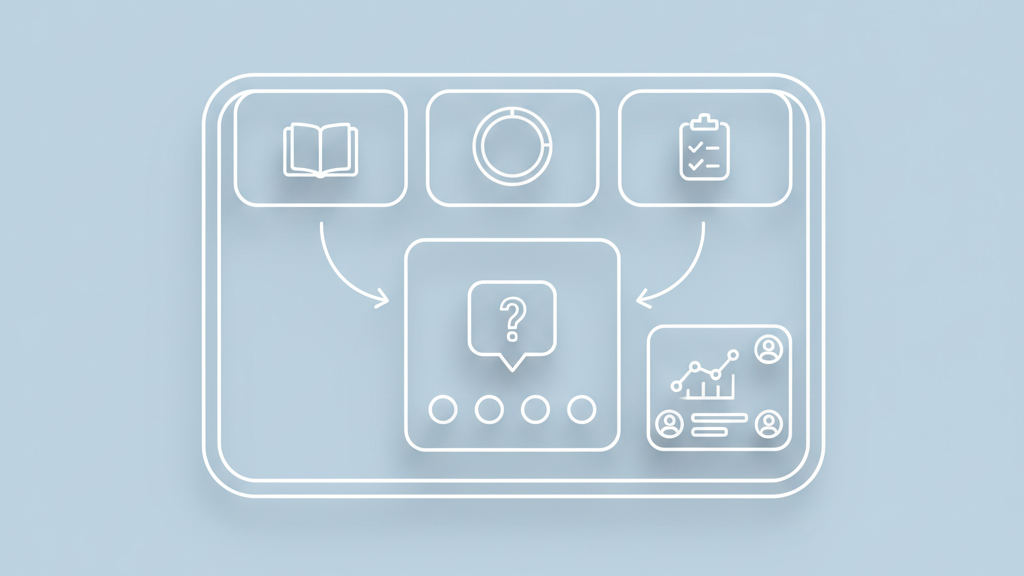
This guide covers e learning app MVP curriculum and engagement strategies for startup founders and product managers. It focuses on a tight scope that proves learning value and drives repeat use. You will learn how to pick core skills to teach, structure short lesson flows, and add lightweight engagement hooks that matter. Many startups miss clarity on which learning outcomes to validate first. This piece gives clear trade offs and a simple roadmap to test learner demand without overbuilding. If you want a related deep dive, read How To Validate Market Fit FlutterFlow travel booking app MVP product strategy and validation service.
Define Clear Learning Outcomes And Target User Jobs
Start by naming the single skill or outcome you want learners to achieve with the MVP. Avoid broad ambitions. Pick a measurable job to be done that matters to a target user persona. For example help new managers run a first one on one meeting well or teach product managers how to write a user story. Write acceptance criteria for what counts as success. Use those criteria to design content scope and engagement hooks. Validate early with interviews and a clickable prototype. Many teams skip acceptance criteria and then build features that do not prove learning. Aim for clarity over completeness. That approach keeps build time low and feedback focused. For a practical follow-up, see What Customers Really Want: Decoding User Feedback for MVP Success.
- Pick one measurable learning outcome
- Define learner acceptance criteria
- Map to a clear user persona
- Validate with interviews
- Keep scope tightly bounded
Design A Minimal Yet Effective Curriculum Structure
Design lesson units that fit into short sessions and form a clear progression. Use microlearning modules that take five to ten minutes each. Sequence content so each unit practices a single concept and builds on the prior one. Include one formative assessment per module to check comprehension. Provide a single capstone task that uses the skills together. Avoid long video lectures and long reading blocks in the MVP. Focus on practice and feedback loops that show progress. For many learners a short practical task beats passive content. Keep content reusable so you can swap modules based on user feedback. If you need implementation support, explore Backend API development.
- Use microlearning modules
- Sequence by skill progression
- Include practice tasks
- Add one capstone activity
- Avoid long passive content
Create Fast Content That Is Editable And Iterative
Build content with tools that let you update quickly without engineering cycles. Use JSON driven lesson templates, markdown content stores, or a simple CMS that supports versioning. Start with a small library of templates for explanation, example, practice, and quiz types. That makes it cheaper to A B test phrasing, examples, and exercise difficulty. Track which tasks learners fail most often. Prioritize updates to items with the highest drop off. Many startups waste time perfecting assets before they know what works. Ship imperfect content that you can improve based on real usage data.
- Use editable content templates
- Store content externally from code
- Create a small library of task types
- A B test phrasing and difficulty
- Prioritize fixes by drop off data
Lightweight Assessment And Feedback Loops
Include quick checks that measure learning without heavy grading overhead. Use auto scored quizzes for facts and short rubrics for applied tasks. Offer immediate, actionable feedback after each practice item. Feedback should tell learners what to try next and where to review. Show a simple progress indicator that ties to the acceptance criteria you defined earlier. Capture qualitative signals with a one question rating after key tasks. That feedback helps you iterate content and understand if the curriculum leads to the desired outcome. Be cautious about high friction assessments early on. Complex scoring adds delays and can kill engagement.
- Use auto scored quizzes
- Provide immediate actionable feedback
- Show progress against acceptance criteria
- Capture quick qualitative ratings
- Avoid heavy grading in the MVP
Engagement Strategies That Respect Learner Time
Focus on a few engagement features that drive repeat use and habit formation. Choose one social or gamified mechanic and one personal reminder system. For example a streak tracker and a weekly digest that highlights progress are often enough. Personalize next steps based on learner performance so suggestions feel relevant. Avoid adding leaderboards or complex rewards before you know they improve outcomes. Many founders love flashy gamification but ignore whether it helps actual learning. Test small features with a subset of users before rolling them out widely.
- Pick one simple gamification element
- Add personalized next step suggestions
- Use low friction reminders
- Test social features with a small cohort
- Prioritize features that increase practice
Measure What Matters With Simple Analytics
Track a handful of metrics that map directly to your learning outcome. Focus on completion rate of core modules, success on assessments, and short term retention over days. Capture user flows so you know where learners drop off and why. Instrument cohort analysis to compare content variants or onboarding flows. Use event level data but avoid metric overload. Too many dashboards lead to indecision. Set a baseline and define a clear hypothesis for each experiment. Iterate only when data shows a meaningful change. Practical warning Many teams obsess over vanity metrics and miss the signals that show real learning.
- Track core module completion
- Measure assessment success
- Analyze learner drop offs
- Compare cohorts for experiments
- Avoid metric overload
Scope The MVP And Build A Lean Roadmap
Decide what to build now and what to defer based on the acceptance criteria and the metrics you will use. The MVP should include the smallest set of lessons that prove the outcome plus basic feedback and a simple engagement hook. Defer advanced features such as full social feeds or adaptive learning engines. Plan experiments in two week sprints. Each sprint should deliver a testable change and clear success criteria. Keep the product roadmap focused on reducing uncertainty rather than adding features. This mindset helps you reach product market fit faster and with less wasted engineering time. A related guide worth reviewing is Uncovering the Untold Tactics: Navigating MVP Iteration for Product-Market Fit.
- Ship the smallest testable curriculum
- Include one engagement hook
- Defer complex adaptive features
- Plan short experiments
- Roadmap for learning not features
Launch, Collect Feedback, And Iterate Quickly
Launch to a narrow audience that matches your target persona. Use direct outreach and small paid pilots to get initial users. Collect qualitative feedback through short interviews and in app prompts. Prioritize fixes that improve the acceptance criteria or increase practice frequency. Run rapid content updates and small UX tweaks to test hypotheses. Keep a habit of shipping small changes every week. Many founders wait for perfection and lose momentum. Quick iterations based on real learners will reveal what drives value and what is merely nice to have. Teams moving from strategy to execution can review MVP development for startups.
- Release to a targeted pilot audience
- Combine interviews with usage data
- Prioritize fixes that affect outcomes
- Ship small updates weekly
- Use paid pilots to validate demand