
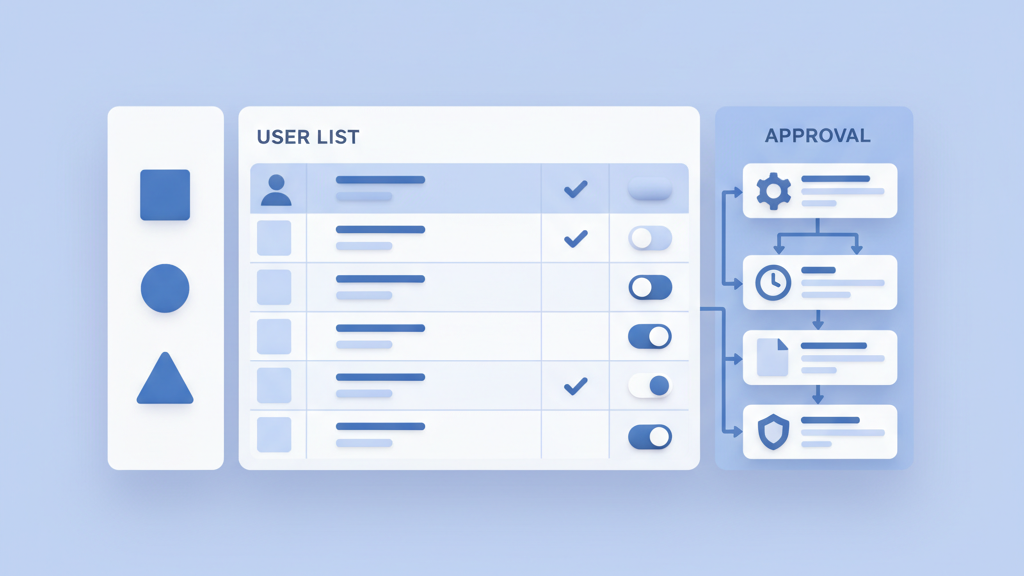
Starting to design a corporate platform as a product leader requires a shift in mindset. You are not building for a single user. You are building for an entire organization. This means balancing user needs with complex procurement requirements. Many startups miss this balance and focus too much on small features. They forget that enterprise buyers care about security and scalability more than flashy buttons. A successful build should solve a painful problem while fitting into existing workflows. It needs to be simple enough to launch fast but robust enough to pass a security review. You should avoid the trap of trying to please every single person in the room during your first sales calls. Instead, find the one core problem that costs the company the most money or time. When you focus on that one thing, your design becomes much clearer. You stop worrying about minor visual details and start focusing on data accuracy and system uptime. This guide will walk you through the essential steps to build a product that large companies actually want to buy and use.
The Core Philosophy of Enterprise Design
Enterprise tools often feel heavy and bloated. This is usually because product managers try to solve every problem at once. When you begin your journey with enterprise SaaS software MVP design for product managers, your goal is to find the smallest slice of value that justifies a purchase. This usually means picking one specific workflow and making it ten times better than the current spreadsheet solution. You must resist the urge to add every integration on day one. Enterprise buyers do value connectivity, but they value reliability more. Focus on the data flow and the permissions model before you think about aesthetic polish. Many teams waste months on custom themes when they should be perfecting the role based access control. You have to remember that your users are employees who are paid to do a job. They want to get in and get out. They do not need fancy animations or social features. They need a tool that works every single time without crashing. If you can prove your product saves an hour a day for a team of ten, you have a solid business case. This focus on utility over vanity is what separates successful enterprise startups from the rest. Spend your time understanding the pain points of the people on the front lines. Talk to them about where their current process fails. Then, build the simplest version of a solution that fixes those specific failures. This approach helps you launch faster and gives you real world data to guide your next set of features.
Security and Compliance as Fundamental Features
Security is never an afterthought in the enterprise world. You cannot launch a product and add single sign on later. Most corporate IT teams will block your tool if it lacks basic compliance standards. This makes your initial design phase more about technical foundations than just user interface. You need to account for data encryption and audit logs from the start. Product managers often find this frustrating because it slows down the initial build. However, a secure foundation is actually a competitive advantage. It allows you to close larger deals faster because you pass the vendor risk assessment. When you design for large companies, you are dealing with sensitive data that belongs to their customers. A single breach can end your company before it starts. This is why we recommend building in a way that respects standard frameworks like SOC2 or GDPR from the first day. Even if you do not get the certification yet, having the architecture ready will save you from a massive rewrite later. Many startups fail here because they treat security as a feature to be added later. In reality, security is the price of admission. It should influence how you handle user sessions and how you store files. If you can show a potential buyer that your product is built with their security in mind, you build trust much faster. This trust is the most valuable currency you have when you are a small company selling to a giant one.
- Implement Single Sign On using standard protocols like SAML or OIDC
- Create an audit trail that logs all user actions for compliance
- Design a clear data isolation strategy for multi tenant environments
- Include a basic permissions system to manage different user roles
Navigating Complex Stakeholder Needs
In enterprise software, the person who buys the tool is rarely the person who uses it. This creates a unique challenge for design. You have to satisfy the executive who wants high level reporting. You also have to please the end user who wants a fast interface. If you focus only on the buyer, the users will hate the tool and churn will follow. If you focus only on the user, the buyer will not see the ROI and will not renew. Your MVP must bridge this gap. Include at least one dashboard that shows the value your software provides to the organization. This helps the product manager prove the product works during the pilot phase. Avoid overcomplicating these views. Simple charts that show time saved or money earned are usually enough to keep a buyer happy. You should also consider the administrative user who has to manage everyone else. This person needs tools to invite users and reset passwords. If you forget the admin experience, your own support team will be buried in tickets. A good enterprise product manager spends time with every level of the organization. They understand the different goals of each stakeholder. They know that the CIO cares about integration while the department head cares about efficiency. By designing for these different perspectives, you create a product that is sticky within the organization. This makes it much harder for a competitor to come in and replace you.
Integration over Isolation for Faster Adoption
Enterprise teams do not want another isolated tool to manage. They already have a stack of software for communication and data. Your MVP should play well with others to gain adoption. This does not mean you need fifty integrations. It means you need the right ones. Think about where your users spend their day. If they live in Slack or Microsoft Teams, your product should send notifications there. If they use a specific CRM, your data should sync with it. This connectivity makes your software feel like a part of the team instead of a chore. Many product managers get distracted by shiny features and ignore the plumbing. But in the enterprise world, plumbing is what keeps people using the product. A tool that connects to the existing ecosystem is much more valuable than a tool that requires manual data entry. You should look for ways to automate the flow of information. If a user has to copy and paste data from one screen to another, your design has failed. The goal is to reduce friction and eliminate extra steps. This often means providing clear APIs or webhooks so that other developers in the customer company can build on top of your work. When you make your product extensible, you make it essential. This is how you move from being a simple tool to becoming a platform that the company relies on for their daily operations.
- Prioritize one or two deep integrations over many shallow ones
- Provide clear API documentation for internal engineering teams
- Enable simple data exports to CSV or Excel for manual reporting
- Ensure the tool can ingest data from common enterprise sources
The Importance of Onboarding and Implementation
Most enterprise SaaS failures happen during the first thirty days. If a team cannot figure out how to set up the software, they will move on. For an MVP, your onboarding process is just as important as the core functionality. You might think a self service model is best, but many enterprise customers expect a guided experience. Design your product to support this high touch model. Include tools that help your own customer success team set up accounts quickly. This might look like a bulk user upload feature or a configuration wizard. Many startups miss this part and spend all their time on the end user features. They end up with a product that is hard to sell because it is too hard to install. You need to think about the implementation timeline. A large company might take weeks to approve a new piece of software. If the actual setup then takes another month, the momentum is lost. Your design should aim to get the user to their first success as fast as possible. This might mean providing templates or pre populated data. It might mean having a sandbox environment where they can test things out without breaking their real data. The faster you show value, the more likely the customer is to expand their use of the product. Focus on removing every hurdle that stands in the way of a successful launch within their organization.
Scaling from Pilot to Production
An MVP is meant to be a starting point. For enterprise SaaS, this means preparing for scale. Even if you only have one customer today, you should design for ten tomorrow. This applies to both the code and the user interface. Avoid hard coding values that should be settings. Make sure your navigation can handle an increasing amount of data. A list that looks good with five items might break with five hundred. Product managers should keep a close eye on performance metrics during the pilot phase. If the software slows down as the customer adds data, the pilot will fail. Enterprise users have a very low tolerance for lag and bugs. Reliability is the best feature you can offer in your initial design. You also need to think about how you will handle support as you grow. If your MVP requires manual intervention for every small change, you will quickly run out of time. Build self service features for the common tasks. This allows your team to focus on building new value instead of fixing old problems. Every design choice you make now should be evaluated based on how it will look and perform a year from now. This long term thinking is what differentiates a sustainable product from a flash in the pan. By focusing on scalability and reliability, you build a product that can grow with your customers and support a healthy business for years to come.