
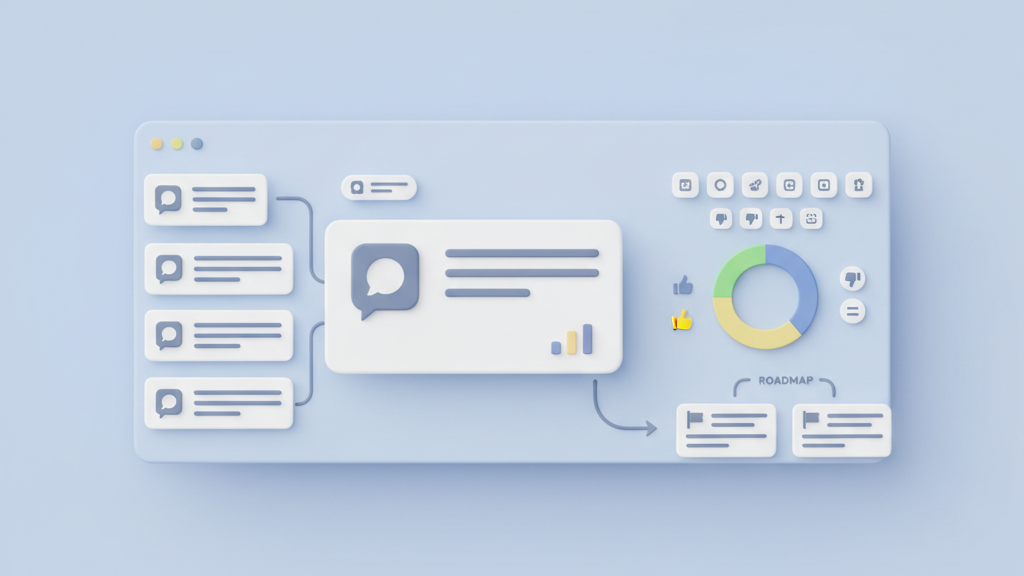
This guide explains how to collect actionable user feedback during beta in a way that produces clear signals for product decisions. It covers planning, tools, tester recruitment, session techniques, and analysis. The aim is to reduce noise and surface real opportunities. Read on if you want faster learning and fewer false leads. If you want a related deep dive, read What Customers Really Want: Decoding User Feedback for MVP Success.
Plan Your Beta With Clear Goals
Before you start invite your team to align on learning goals and metrics. Decide whether you want to validate core onboarding, performance, or user value. Pick a small set of north star metrics and a handful of supporting signals that map to product outcomes. Define the tester profile and the minimum sample sizes you need for meaningful patterns. Choose feedback channels and a cadence for reviews so nothing piles up. Prepare consent and privacy language for recordings and surveys. Assign owners for each product area so feedback gets routed fast. Many startups miss this and end up chasing noise instead of insight. Plan a short beta window so you build momentum and can iterate quickly. For a practical follow-up, see How To Set Product Metrics And KPIs For Startups That Scale.
- Define two to three clear learning goals.
- Choose measurable signals and a minimum sample size.
- Assign owners for feedback intake and triage.
- Prepare consent language for recordings and surveys.
Set Up Tools That Make Feedback Actionable
Pick tools that capture context and reduce friction for testers. Use in app feedback widgets so users can send screenshots and steps. Add session recordings for complex flows and hook up event analytics to track where users get stuck. Centralize items in a single dashboard and apply a tagging taxonomy from day one. Integrate with your issue tracker so critical bugs move into sprints without manual copying. Automate reminders for incomplete reports and confirmations to testers who submit items. Run a short pilot to test the flow and tune notifications. Avoid heavy tools that require long setup for testers. Many teams lose feedback due to broken notification settings, so check alerts before launch. If you need implementation support, explore Mobile app development.
- Use in app widgets for contextual reports.
- Record sessions with consent for tricky flows.
- Connect analytics to track where tests fail.
- Centralize feedback in one dashboard.
- Integrate with your issue tracker for fixes.
Recruit Testers Who Represent Your Users
Recruit a mix of users that represent target customers and edge cases. Use existing customers, waitlists, email lists, and targeted outreach to build a balanced cohort. Screen candidates with a short qualification survey to capture role, company size, and experience. Offer incentives that match the effort you ask for and be explicit about the time commitment. Keep a backup pool to replace dropouts and monitor retention so you can maintain sample sizes. Schedule some live sessions for deeper interviews and ask testers to perform tasks rather than answer abstract questions. Many startups rely only on friends and get biased signals, so aim for diversity and real contextual use. Teams moving from strategy to execution can review MVP development for startups.
- Screen testers with a short qualification survey.
- Mix existing customers with new recruits.
- Match incentives to the effort requested.
- Keep a backup pool to replace dropouts.
- Schedule live interviews with a subset.
Run Clear Feedback Sessions And Triage Fast
Run a mix of asynchronous feedback and short live sessions to capture both breadth and depth. Trigger short surveys after key actions and follow up with interviews for unclear responses. Ask testers to think aloud and record sessions when permitted. Use task based prompts to observe behavior rather than scripted praise or complaints. Timestamp recordings and note moments that show confusion or workarounds. Triage incoming reports daily and mark reproducible bugs for immediate fixes. Share patches with the same testers when possible to validate solutions. Many founders forget to close the loop and lose goodwill, so send quick thank you notes and show impact to keep engagement high.
- Use short surveys after key user actions.
- Run task based interviews with a small group.
- Record sessions with permission and timestamp issues.
- Triage feedback daily and escalate reproducible bugs.
- Close the loop with testers after fixes.
Analyze Feedback And Turn It Into Work
Move from raw comments to concrete work by grouping and tagging similar items. Rank issues by frequency, user impact, and implementation effort. Map each item to an outcome like activation, retention, or revenue so you focus on business impact. Separate quick wins from strategic initiatives and assign owners with clear acceptance criteria. Create simple dashboards to track trends in sentiment and feature requests over time. Capture hypotheses for product changes and design small experiments to test them. Document decisions and communicate why you chose a path so the team and testers understand trade offs. Many teams collect feedback but fail to document trade offs, which wastes time and kills momentum. A related guide worth reviewing is The Strategic Guide to Building a Fintech Lending App MVP on FlutterFlow.
- Tag and group similar feedback items.
- Prioritize by frequency, impact, and effort.
- Map items to business outcomes for focus.
- Create dashboards to show trends over time.
- Capture hypotheses and run small experiments.